By Jawaria
A well-planned bedroom interior design can completely change how your room looks, feels, and functions. Your bedroom should be more than a place to sleep—it should feel comfortable, peaceful, organized, and personal. From choosing the right colors and furniture to improving lighting and storage, even small changes can make a noticeable difference. Whether you are decorating a small bedroom, updating a master bedroom, or starting with an empty room, these bedroom interior design ideas will help you create a stylish space without making it feel overcrowded.
1. Start With a Calm Color Palette
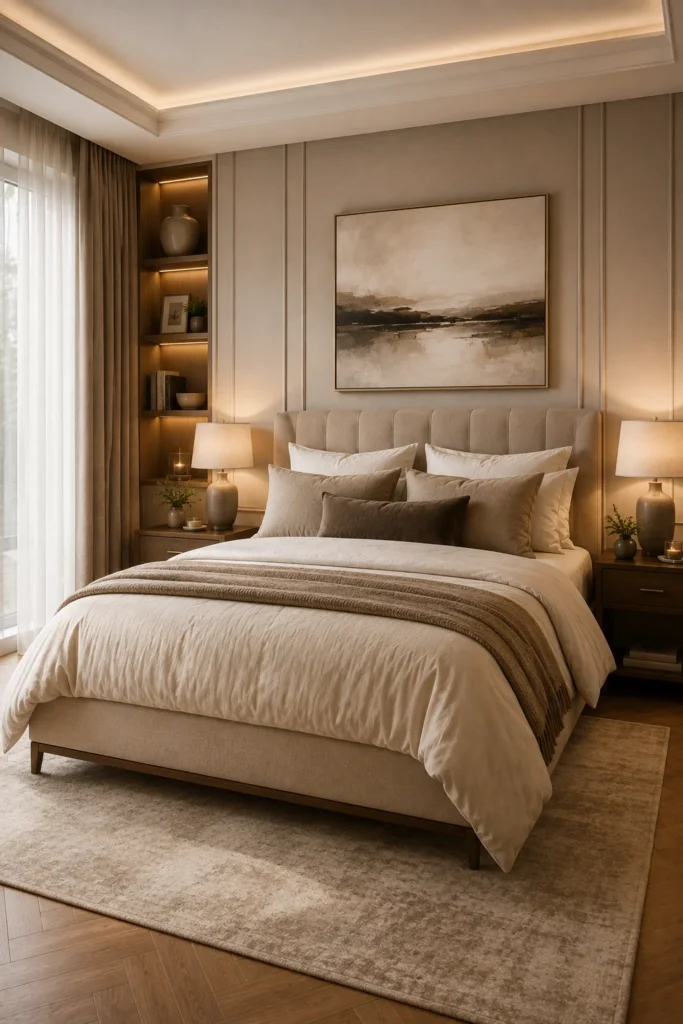
Color is one of the most important elements of bedroom interior design because it establishes the overall mood of the room. Soft neutral shades such as warm white, cream, beige, taupe, light gray, and muted brown can make a bedroom feel peaceful and timeless. If you prefer more personality, introduce colors such as sage green, dusty blue, terracotta, blush, or deep navy through accent walls, bedding, artwork, or decorative accessories. Try limiting your main palette to two or three complementary colors. Too many strong colors can make a bedroom look visually busy, while a carefully selected palette creates a more coordinated appearance.
2. Make the Bed the Main Focal Point
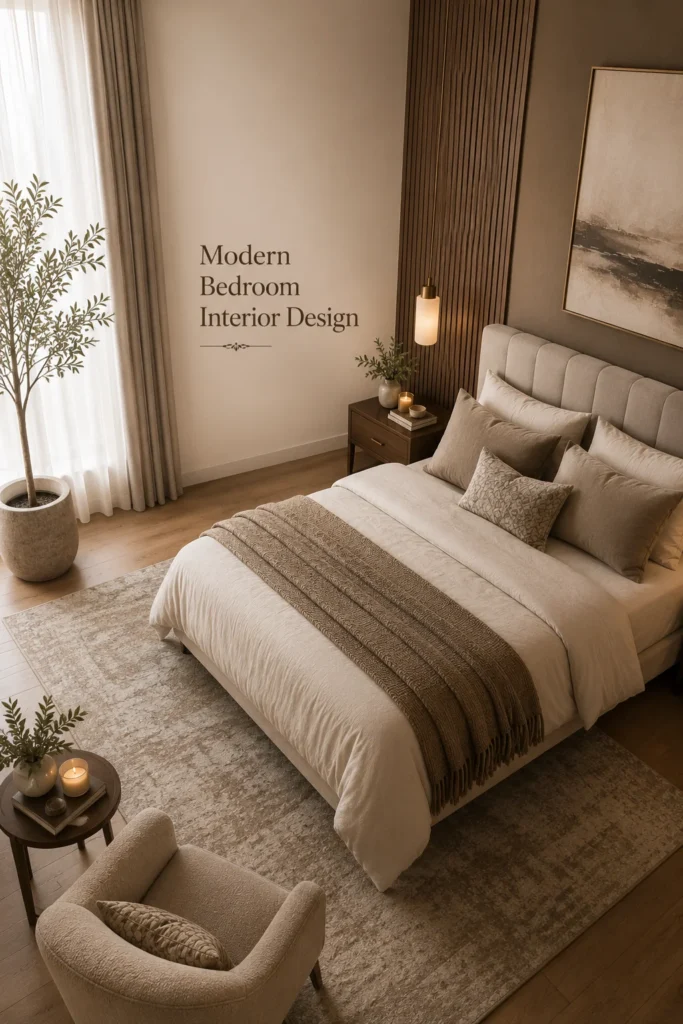
The bed is naturally the centerpiece of most bedrooms, so use it as the starting point for your design. A beautiful upholstered, wooden, or modern panel headboard can instantly strengthen your bedroom interior design. Position the bed against the most visually important wall whenever the room layout allows.
You can make the sleeping area more attractive with:
- Layered pillows
- Soft throws
- Comfortable bedding
- Matching bedside tables
- Wall sconces or pendant lights
- Artwork above the headboard
Keep the styling balanced without placing so many accessories on the bed that it becomes difficult to use.
3. Layer Your Bedroom Lighting
Good lighting makes a bedroom more functional during the day and more relaxing at night. Instead of depending on a single ceiling fixture, use multiple light sources. A strong bedroom interior design usually combines ambient, task, and accent lighting. A ceiling pendant or chandelier can provide general illumination, while bedside lamps or wall sconces are useful for reading. LED strips, floor lamps, or small decorative lights can create a softer atmosphere in the evening. Warm lighting is particularly effective in bedrooms because it creates a cozy and welcoming feeling.
4. Choose Furniture According to Room Size
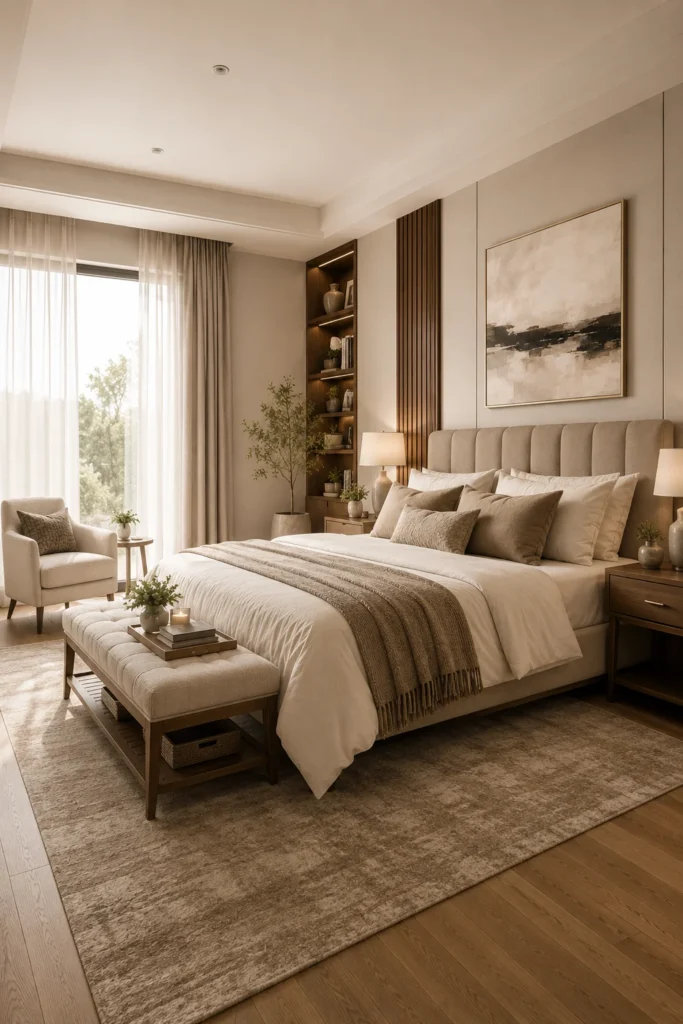
Furniture should complement the dimensions of your bedroom rather than dominate it. A large bed, oversized wardrobe, multiple chairs, and bulky side tables can quickly make a smaller bedroom feel cramped. Instead, select furniture that gives you enough storage and comfort while preserving open floor space.
For small-bedroom interior design, consider:
- Slim bedside tables
- Beds with built-in drawers
- Wall-mounted shelves
- Sliding-door wardrobes
- Floating desks
- Storage benches
- Multipurpose furniture
In larger rooms, you can introduce additional pieces such as an accent chair, vanity, bench, or reading area while maintaining comfortable walkways.
5. Create a Beautiful Headboard Wall
The wall behind the bed provides an excellent opportunity to add character without filling the entire room with decoration. Modern bedroom interior design often uses the headboard wall as a statement feature. You could decorate it with wooden slats, wallpaper, molding, textured panels, stone-look finishes, or a contrasting paint color. For a minimalist look, keep the wall simple and add one large artwork above the headboard. For a more luxurious interior, extend upholstered or wooden panels from floor to ceiling.
6. Incorporate Natural Materials
Natural textures can make a bedroom feel warmer and more comfortable. Wood furniture, linen bedding, woven baskets, cotton curtains, wool rugs, jute accessories, and stone details work beautifully in many bedroom interior design styles. You do not need to use every natural material in one room. Instead, introduce two or three textures and repeat them subtly throughout the space. For example, a wooden bed frame could be paired with linen curtains and a woven bench to create a cohesive natural aesthetic.
7. Add an Area Rug for Comfort
An area rug can visually anchor the bed while making the floor feel softer. Choose a rug large enough to extend beyond the sides of the bed instead of using a very small rug that disappears underneath it. Neutral rugs are ideal for calm interiors, while patterned rugs can introduce personality into otherwise simple rooms. A rug is particularly valuable when your bedroom has tile, hardwood, or another hard flooring surface because it creates warmth around the sleeping area.
8. Use Curtains to Enhance the Room
Curtains influence both the appearance and comfort of a bedroom. Floor-length curtains generally make walls appear taller and create a more polished bedroom interior design. Mounting the curtain rod slightly above the window can further enhance the illusion of height. Consider layering sheer curtains with blackout curtains. The sheer layer lets natural light enter during the day, while blackout curtains provide additional privacy and help create a darker sleeping environment. Choose curtain colors that coordinate with your walls, bedding, or accent pieces for a unified look.
9. Design Smarter Bedroom Storage
An attractive bedroom can quickly lose its appeal when clothes, bags, and accessories are left around the room. Smart storage should therefore be incorporated into the design from the beginning. Built-in wardrobes are excellent when space allows. In smaller rooms, use vertical storage to take advantage of wall height.
Other practical storage solutions include:
- Under-bed drawers
- Storage ottomans
- Bedside tables with drawers
- Wall cabinets
- Floating shelves
- Baskets
- Wardrobe organizers
Effective storage helps maintain a clean and calming bedroom without sacrificing style.
10. Introduce Mirrors Strategically
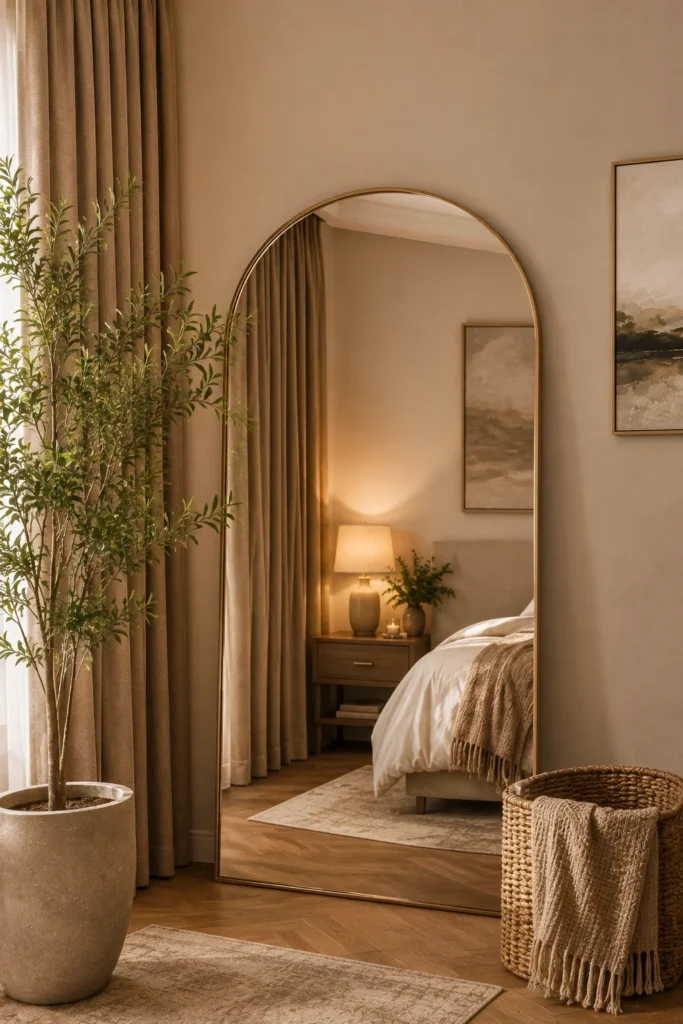
Mirrors are particularly useful in small or darker bedrooms. A large mirror reflects light and can make the room appear more spacious. Place one opposite or near a window to maximize natural light. Full-length mirrors can also become decorative features. Try a rounded mirror, arched design, frameless wall mirror, or floor-standing mirror depending on your preferred bedroom interior design style. Avoid covering every wall with mirrors. One thoughtfully positioned piece is often enough.
11. Add Greenery for a Fresh Look
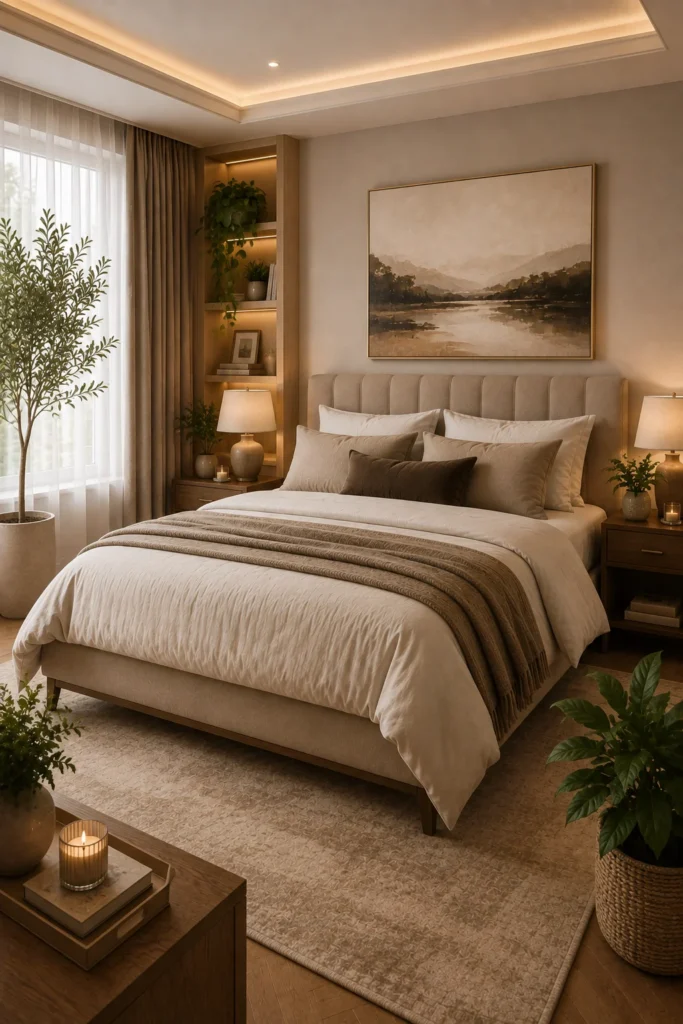
Plants can introduce natural color and texture into a bedroom. A small plant on a bedside table, a taller floor plant in an empty corner, or several simple plants on shelves can make the room feel fresh without overwhelming the interior. If maintaining real plants is difficult, good-quality artificial plants can provide a similar decorative effect. Choose pots that coordinate with the rest of your bedroom colors so the plants feel like part of the overall design rather than random additions.
12. Create a Cozy Reading Corner
If your bedroom has enough space, turn an unused corner into a small relaxation zone. Add a comfortable chair, small side table, floor lamp, and perhaps a soft rug or throw. This creates a place for reading, enjoying coffee, or relaxing away from the bed. In a larger master bedroom interior design, two accent chairs with a small table can create a beautiful lounge-style arrangement. For compact rooms, even one small chair near a window can provide the same effect.
13. Keep Wall Décor Balanced
Wall décor should enhance the room rather than compete with everything else in it. Choose artwork that reflects the colors and mood of your bedroom. Abstract prints, botanical artwork, photography, textured wall pieces, and simple framed illustrations are all versatile choices. One large artwork often looks cleaner than several tiny frames scattered across the wall. Alternatively, create a carefully arranged gallery wall if you want a more personalized bedroom interior. Remember to leave some walls partially empty. Negative space is important because it prevents the room from looking cluttered.
14. Mix Textures for a More Luxurious Look
A beautiful bedroom does not need dozens of colors. Texture can provide visual interest while allowing you to maintain a simple palette.
For example, combine:
- Crisp cotton bedding
- Velvet cushions
- Knitted throws
- Linen curtains
- Wooden furniture
- Soft rugs
- Metallic lighting fixtures
These different surfaces create depth and help make a neutral bedroom interior design feel rich rather than plain. The key is balance. Repeat similar materials or colors in several places so the room remains cohesive.
15. Personalize Your Bedroom Interior Design
Trends can provide inspiration, but your bedroom should ultimately reflect your personality and lifestyle. Display a few meaningful photographs, books, artwork, decorative objects, or souvenirs rather than filling every surface. If you enjoy minimalist interiors, focus on clean lines, hidden storage, and a restricted color palette. If you prefer a cozy style, add layered textiles, warmer colors, artwork, and decorative lighting. A successful bedroom interior design combines aesthetics with everyday comfort. The room should look beautiful while still being easy to live in.
Bedroom Interior Design Ideas for Small Spaces
Small bedrooms require particularly careful planning. Start with the essential furniture and remove anything that does not serve a clear purpose. A bed with integrated storage can reduce the need for additional cabinets, while floating furniture keeps more floor visible. Light colors can make walls feel less visually heavy. Mirrors and good natural lighting can further increase the sense of openness. Consider using the vertical space above desks, bedside tables, and wardrobes for extra storage. Most importantly, avoid overdecorating. A few well-selected items often produce a more elegant result than filling every available surface.
Modern Bedroom Interior Design
Modern bedrooms are usually characterized by clean lines, uncluttered surfaces, comfortable furniture, and carefully selected decorative details. For a contemporary look, consider combining warm neutral walls with wooden furniture, black accents, soft textiles, and minimalist lighting. Modern bedroom interior design does not have to feel cold. Introducing warm woods, curved furniture, textured fabrics, and ambient lighting can create a modern space that still feels inviting.
Luxury Bedroom Interior Design
Luxury is often created through proportion, materials, and attention to detail rather than excessive decoration. Consider a large upholstered headboard, layered bedding, elegant bedside lighting, floor-to-ceiling curtains, sophisticated wall panels, and high-quality rugs. Symmetry can also strengthen a luxury look. Matching nightstands and lamps on both sides of the bed create a balanced, hotel-inspired arrangement. Stick to a refined color palette and let premium-looking textures provide the visual interest.
Common Bedroom Interior Design Mistakes to Avoid
Even beautiful furniture can look disappointing when the overall room is poorly planned. One common mistake is selecting furniture before measuring the space. Always confirm dimensions and walking clearance before purchasing large pieces. Another issue is relying on a single harsh ceiling light. Layered lighting creates a much more comfortable environment. Avoid pushing too many decorative pieces into the room, using rugs that are too small, hanging curtains too low, or mixing too many unrelated colors and materials. Most importantly, remember that comfort should influence every design decision.
Final Thoughts
Creating beautiful bedroom interior design does not require completely rebuilding your room. Thoughtful changes such as improving the lighting, updating bedding, adding a statement headboard, introducing storage, or changing the color palette can dramatically improve the space. Begin with functionality, choose a cohesive style, and gradually layer furniture, lighting, textiles, and décor. Whether your goal is a modern bedroom, luxurious master suite, cozy retreat, or practical small bedroom, balance is essential. The best bedroom is one that looks stylish while providing a comfortable and calming environment you genuinely enjoy spending time in.
Frequently Asked Questions
What is the best color for bedroom interior design?
Soft neutrals such as cream, beige, warm white, light gray, and taupe are versatile choices. Muted greens, blues, and earthy colors can also create a peaceful atmosphere.
How can I make my bedroom look luxurious?
Use layered bedding, floor-length curtains, an attractive headboard, warm lighting, coordinated furniture, a large rug, and carefully selected decorative accessories.
How can I improve a small bedroom interior?
Choose multifunctional furniture, use vertical storage, keep the palette light, introduce mirrors, avoid oversized furniture, and minimize unnecessary décor.
What should be the focal point of a bedroom?
The bed usually works best as the main focal point. A statement headboard, textured wall, artwork, or decorative lighting can emphasize it.
How do I make my bedroom feel cozy?
Use warm lighting, soft bedding, rugs, curtains, cushions, natural materials, and a warm or neutral color palette.
What are the most important elements of bedroom interior design?
The main elements include furniture layout, color, lighting, storage, bedding, window treatments, textures, wall décor, and personal accessories.