A small bedroom becomes difficult to decorate when every piece of furniture competes for the same limited floor space. A bed, wardrobe, nightstand, dresser, laundry basket, and personal belongings can quickly make the room feel crowded, even when it is reasonably organized.
The most useful small bedroom decor ideas do more than add attractive objects. They make the existing room work more efficiently. Furniture needs to fit the available space, storage needs to remain accessible, and decorative elements need enough breathing room to remain visually effective.
The best approach is to work from the largest elements to the smallest. Establish the small bedroom layout first, select appropriately scaled furniture, solve storage problems, and then add color, lighting, textiles, artwork, and accessories. This prevents decoration from becoming another source of clutter.
Start With the Layout Before Adding Decor
Before choosing paint colors or decorative accessories, determine how the bedroom needs to function. Start with the bed because it is usually the largest piece of furniture and the primary visual anchor. Its position affects the remaining walking space, access to the wardrobe, placement of bedside furniture, and amount of usable wall space. Try to maintain a practical route between the bedroom entrance, bed, closet, and other frequently used areas. You do not need a huge empty floor area, but the room should not require you to squeeze around furniture every time you enter or leave. Think of the room in functional zones:
- Sleeping zone: bed, bedside surface, and nighttime lighting.
- Clothing zone: wardrobe, closet, dresser, or clothing storage.
- Getting-ready zone: mirror, accessories, and personal-care items.
- Relaxation zone: only if the room genuinely has enough space for a chair or small seating area.
Not every bedroom needs all four zones. In a very small room, the sleeping and clothing zones may be the only priorities. One of the most effective small bedroom decorating ideas is therefore surprisingly simple: remove furniture that does not serve an important purpose. A room can look more sophisticated when it contains fewer appropriately scaled pieces rather than many smaller pieces competing for attention. The layout should also account for how drawers and doors open. A dresser may fit against a wall, for example, but become impractical if its drawers block the main walking route when opened.
Choose Furniture That Fits the Room
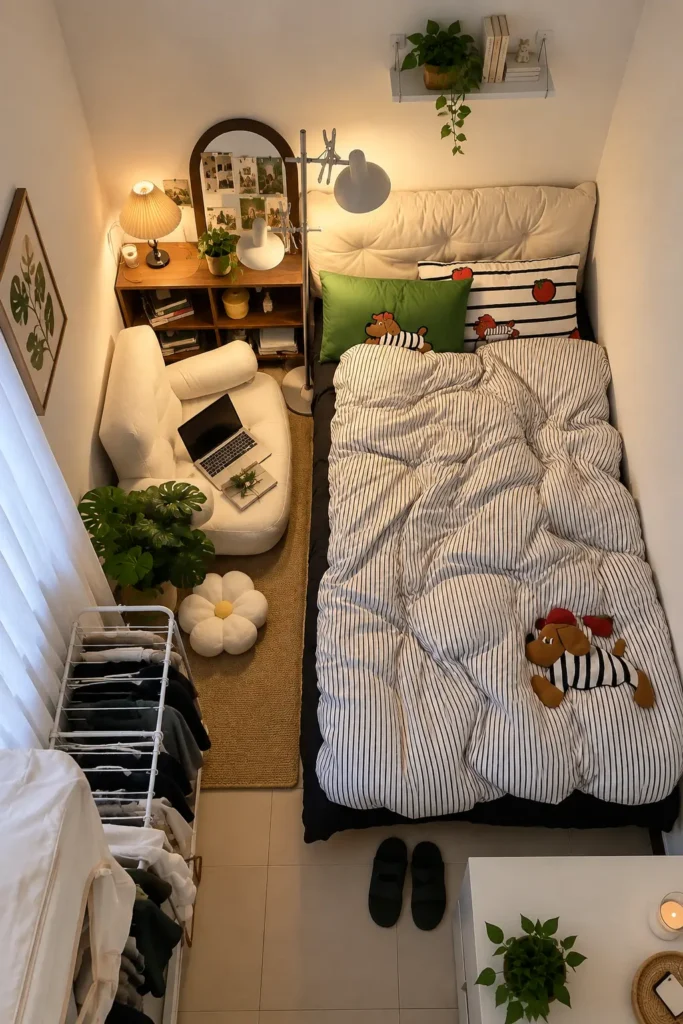
Furniture scale matters more in a small bedroom than decorative style. A beautifully designed oversized dresser can still be the wrong choice if it consumes most of the available floor area. Conversely, a narrower piece may provide enough storage while leaving more room for movement. Before buying anything, measure the available space and consider how doors, drawers, and wardrobe doors open. Furniture needs room not only to stand in the bedroom but also to function. Space-saving furniture can be especially useful when it replaces rather than adds to existing pieces. A bed with integrated storage, for example, can combine sleeping and storage functions. A bench with internal storage can provide seating and a place for blankets or accessories. The same principle applies to nightstands. If a conventional bedside table leaves barely any room to walk, a narrow table or floating shelf may provide the surface you need without taking up as much floor space. A useful test is:
What does this piece allow me to remove or improve?
If the answer is nothing, the room may not need it.
Use vertical space to keep the floor clear
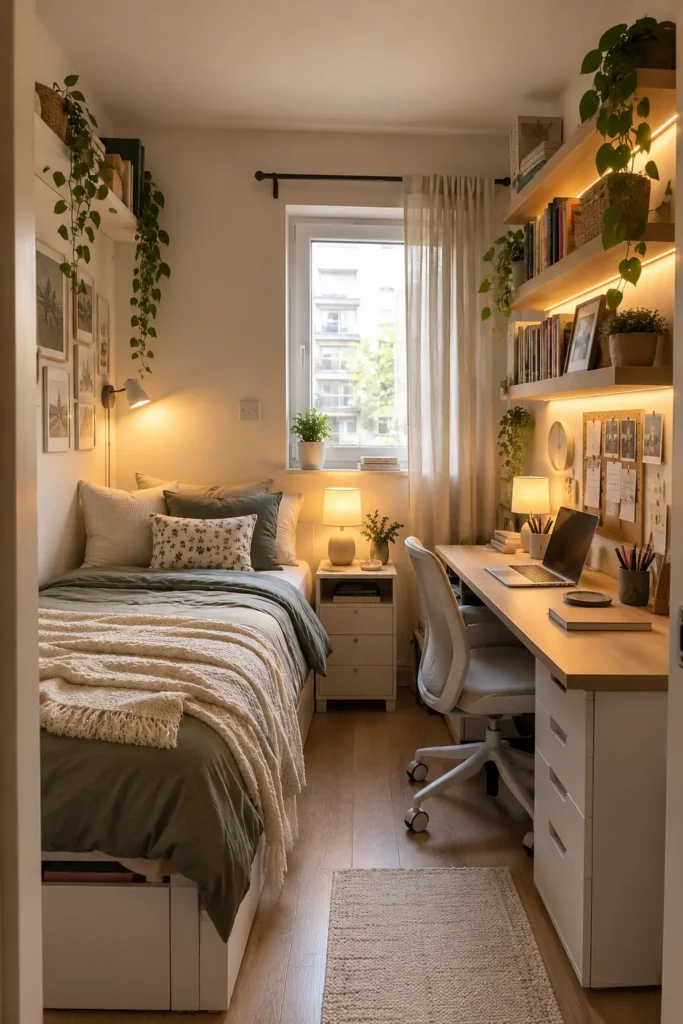
When floor space is limited, look upward. Wall-mounted shelves, tall wardrobes, floating nightstands, hooks, picture ledges, and other forms of vertical storage can provide useful storage without expanding the furniture footprint. IKEA’s small-space bedroom examples demonstrate how walls can provide storage when floor space is limited, including shelves and pegboard-style organization. Use vertical storage according to frequency of use. Everyday belongings should remain easy to reach, while seasonal clothing, spare bedding, and rarely used items can occupy higher shelves.
This also creates an opportunity to combine storage and decoration. A carefully arranged shelf can hold books, framed photographs, and a few decorative objects while providing useful storage. Avoid filling every wall simply because the wall is available. Empty wall space contributes to visual balance and prevents a small bedroom from feeling overloaded.
Turn Storage Into Part of the Decor
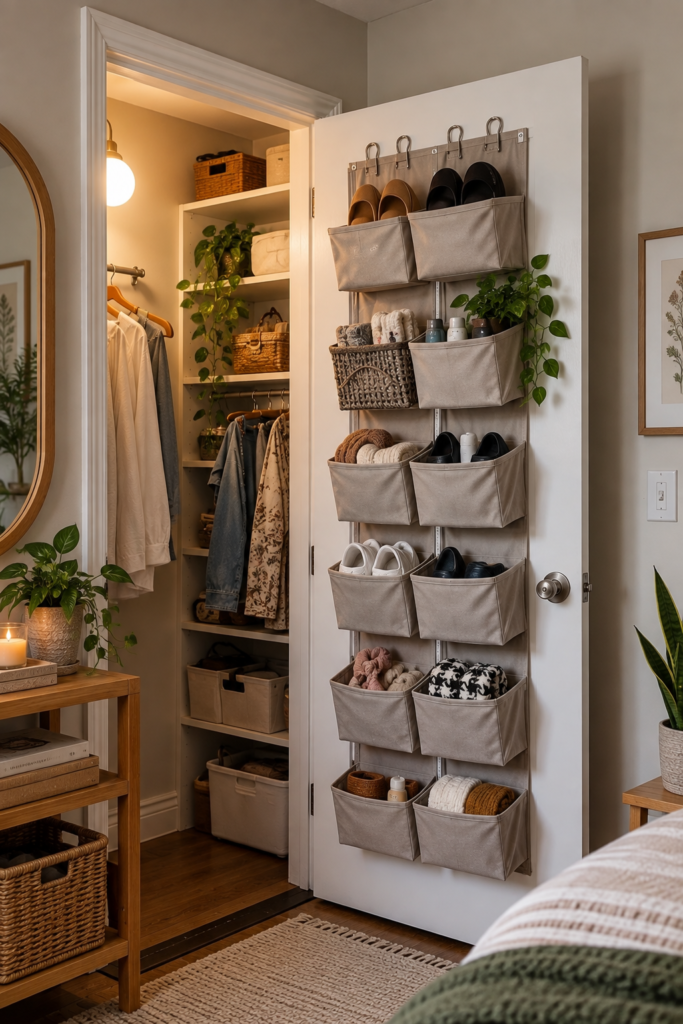
Storage does not have to look like an afterthought. In a small bedroom, storage is often one of the largest visual elements, so its appearance matters. A wardrobe, dresser, shelving unit, or storage bed should work with the overall small bedroom design instead of competing with it. Closed storage is particularly useful for everyday belongings that would otherwise create visual clutter. Drawers and cabinets allow the decorative elements of the room to remain visible without exposing every item you own.
Open storage has a different role. It works best for belongings that are visually appealing or frequently accessed. Books, baskets, framed photographs, and selected accessories can become part of the room’s decor. A combination of open and closed storage is often more practical than choosing only one. Before buying organizers, declutter first. Separate belongings into categories such as:
- Keep
- Relocate
- Donate or sell
- Recycle or dispose
- Seasonal storage
This prevents you from buying containers for belongings you do not actually need.
Make the area under the bed useful
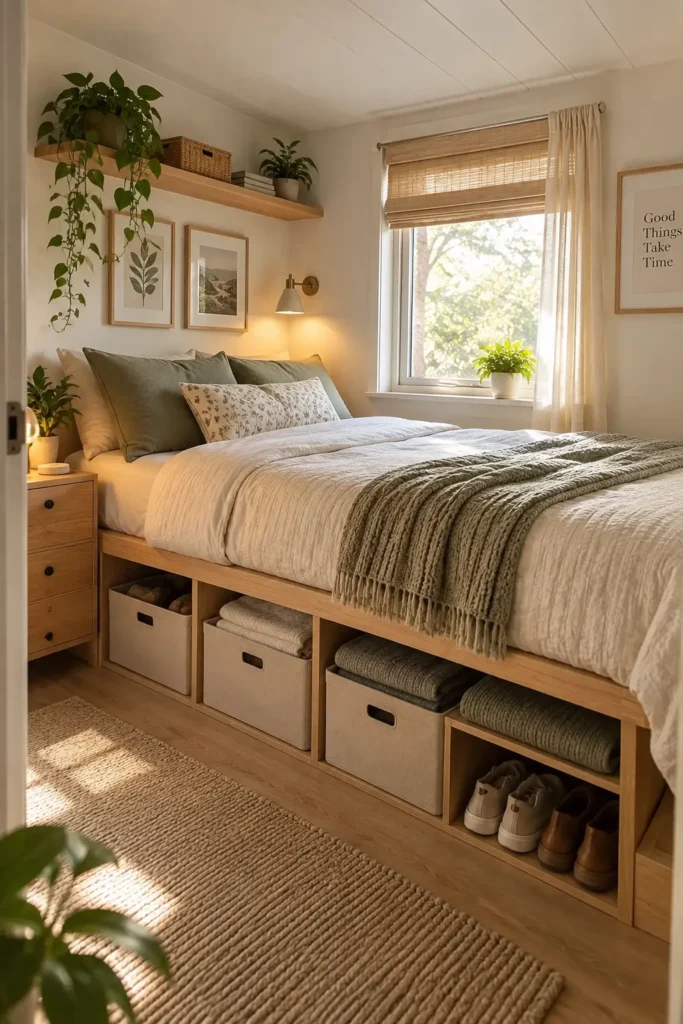
The space beneath the bed is easy to overlook, yet it can provide valuable hidden storage. Use it for items that do not need daily access, such as:
- Extra bedding
- Seasonal clothing
- Occasional accessories
- Luggage
- Less frequently used textiles
Choose storage according to the bed’s available clearance and access. If the bed sits tightly against a wall, a storage system that requires access from both sides may be inconvenient. An ottoman or lift-up storage bed can also provide concealed storage without adding another cabinet to the room. IKEA’s small-bedroom examples demonstrate the use of beds with hidden storage to address limited storage capacity.Under-bed storage works best when the contents are categorized. Instead of placing miscellaneous belongings into one large container, group similar items so you can find them without emptying everything.
Use Color and Visual Continuity to Open Up the Room
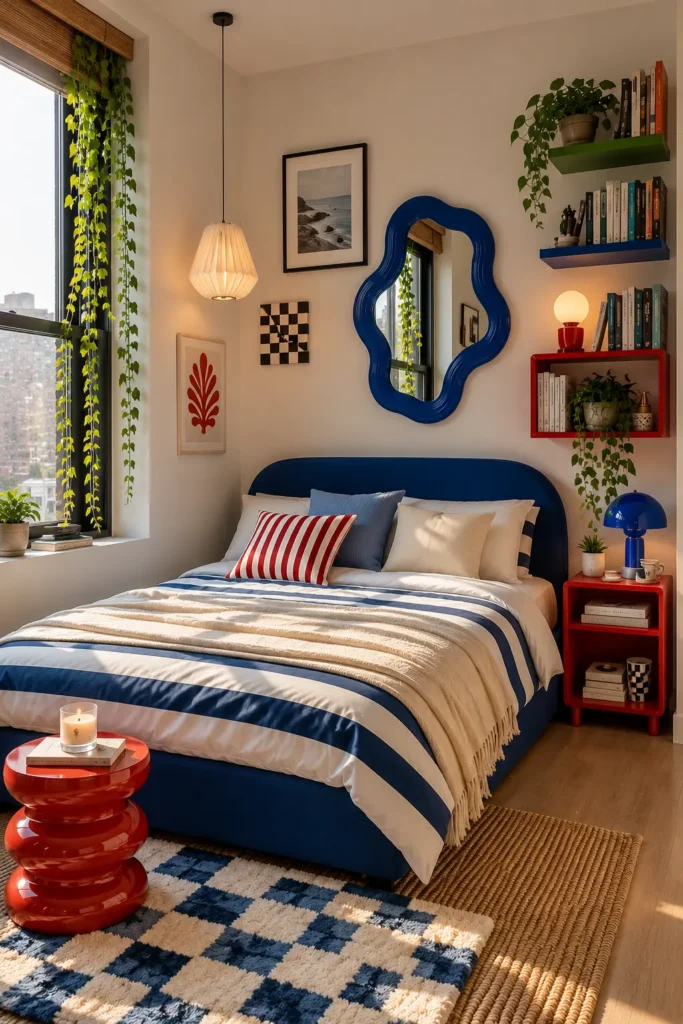
Color can change how a small bedroom feels without changing its physical dimensions. Light colors can help reflect available light, but you do not have to make every small bedroom white. Soft neutrals, muted blues, gentle greens, warm beige, and other restrained palettes can create visual continuity. One useful strategy is to avoid excessive contrast between large surfaces. When walls, bedding, curtains, rugs, and furniture contain too many unrelated colors, the eye may read them as separate visual blocks. A more cohesive color scheme allows the room to feel connected.
Architectural Digest’s small-bedroom design guidance discusses coordinated tones and visual continuity as approaches for creating a greater sense of openness. It also discusses mirrors as tools for increasing the perception of depth. That does not mean the room should be bland. Use one or two stronger accent colors through pillows, artwork, a throw blanket, a rug, or a small decorative object. The result can still feel expressive without making every surface compete for attention. Mirrors can also serve both practical and decorative purposes. A wall-mounted mirror takes less floor space than a freestanding option and can reflect light and surrounding surfaces.
Layer Lighting Without Taking Up Floor Space
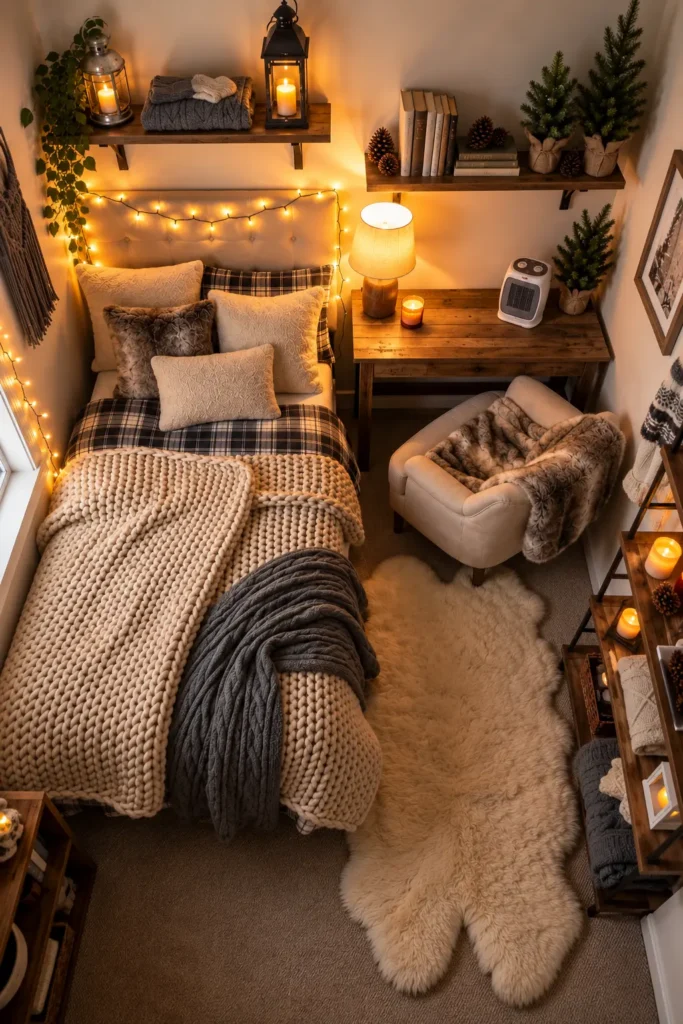
Lighting is one of the most useful small bedroom decor ideas because it influences both function and atmosphere without requiring much floor space. Start with the room’s general lighting, then consider where additional illumination is actually useful. Bedside lighting is particularly important. If a conventional table lamp consumes most of the available nightstand, consider a wall-mounted sconce or another compact solution. This leaves the bedside surface available for essentials such as a phone, book, glasses, or a small decorative object. Architectural Digest’s small-bedroom storage guidance identifies wall sconces as one way to save nightstand surface area.
If the bedroom contains a dressing area, add focused lighting there rather than relying entirely on one overhead fixture. Lighting can also create visual layers. A combination of ambient, bedside, and accent lighting can make the room feel more intentional than a single harsh light source. The goal is not to fill the ceiling and walls with fixtures. It is to make sure each light has a purpose.
Decorate the Walls Without Overcrowding Them
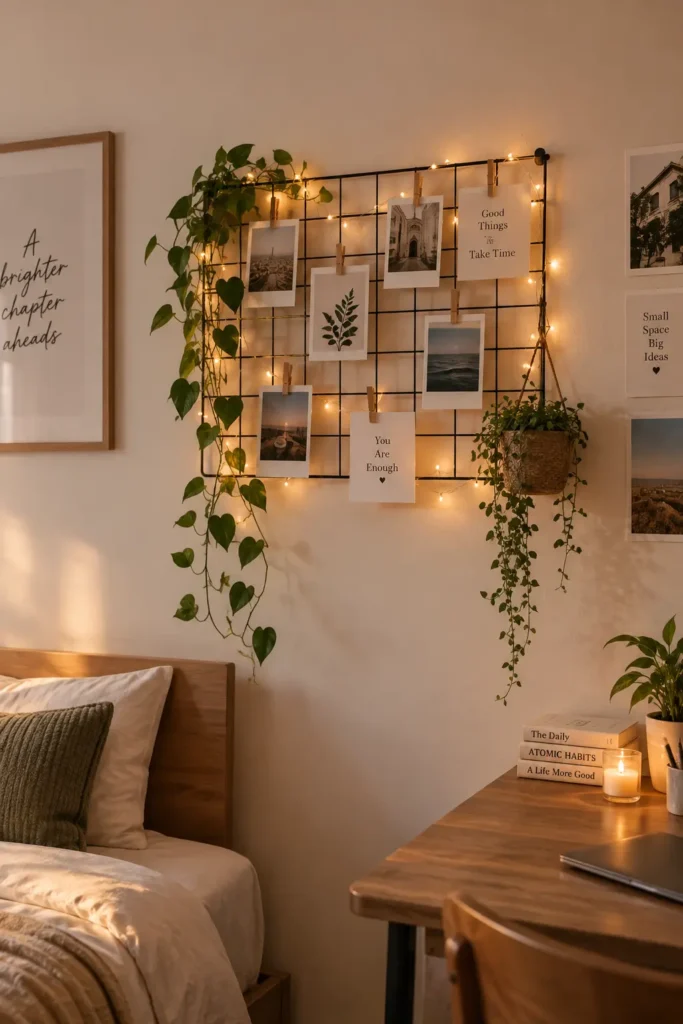
Wall decor can provide personality without consuming floor space, which makes it especially useful in small bedrooms. A large artwork above the bed can sometimes have more impact than several small frames scattered around the room. A picture ledge can provide a flexible display area for framed photographs and small objects. A mirror can also function as bedroom wall decor while serving a practical purpose. Another option is to create a restrained gallery wall. Keep the arrangement visually connected through a repeated frame finish, color family, subject matter, or spacing. Avoid hanging something on every available section of wall.
A small bedroom needs some visual rest. Leaving one wall relatively quiet can make the decorated wall feel more intentional. Vertical artwork can emphasize the room’s height, while horizontal arrangements can visually reinforce the width of a narrow room. The choice should respond to the room’s proportions rather than following a universal rule.
Add Textiles and Accessories With Intention
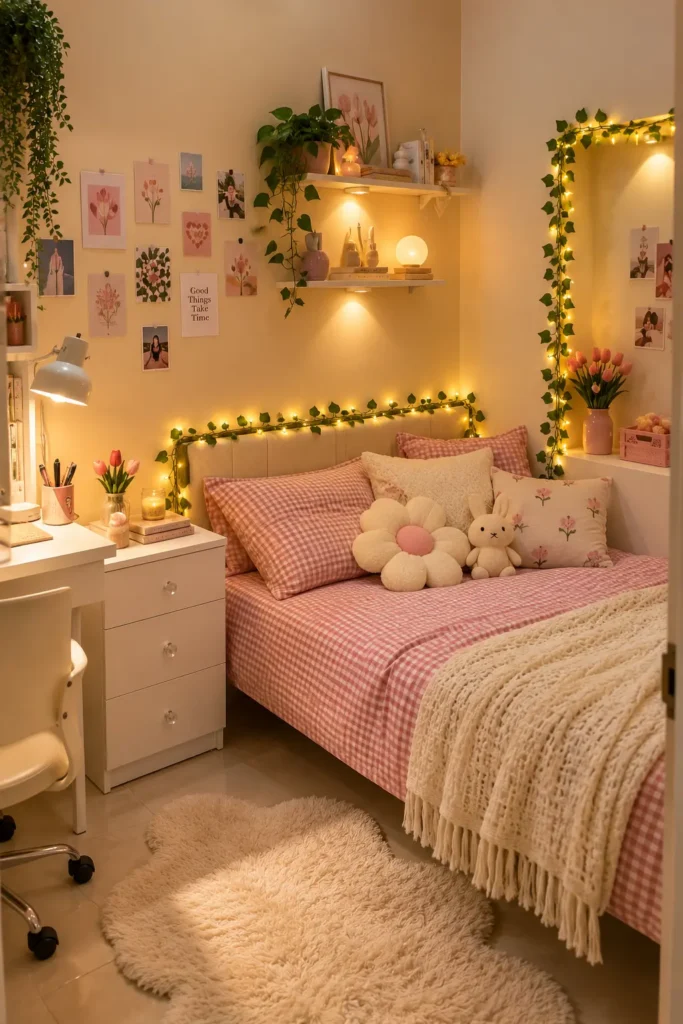
Textiles are often the easiest way to add warmth to a small bedroom without adding substantial furniture. Bedding, curtains, rugs, cushions, and throws can introduce color and texture while keeping the basic furniture simple. The key is coordination. Instead of choosing every textile independently, select a small palette and repeat it throughout the room. For example, a neutral base can be paired with one accent shade repeated in the bedding, artwork, and a small accessory. Layering textures can add depth without requiring many decorative objects. A textured throw, woven basket, soft bedding, or rug can provide visual interest while remaining functional.
Keep accessories selective. A small bedroom does not need decorative objects on every nightstand, shelf, dresser, and windowsill. Choose pieces that contribute something specific: function, texture, color, memory, or visual interest. One carefully chosen object can often have more impact than several unrelated decorations.
Small Bedroom Decor Ideas for Different Budgets
A small-bedroom refresh can be approached at several spending levels.
No-cost small bedroom decor ideas
Start by removing unnecessary items and rearranging what you already own. Move furniture away from areas that block movement, relocate belongings that do not belong in the bedroom, edit crowded shelves, and remove decorative objects that no longer contribute to the room. Sometimes the biggest visual improvement comes from subtraction.
Low-cost improvements
If the layout already works, small additions can make a noticeable difference:
- Cushion covers
- A throw blanket
- Simple wall art
- Drawer organizers
- Storage boxes
- Hooks
- A picture ledge
- A wall mirror
- Better-scaled bedside lighting
The important point is to purchase according to an identified need rather than shopping for decor first.
Moderate improvements
Consider replacing one poorly scaled furniture item with something more suitable. A narrow dresser, storage bed, floating nightstand, compact wardrobe system, or wall-mounted storage solution can address a specific space problem.
Higher-investment improvements
For homeowners with persistent storage limitations, built-in wardrobes, custom shelving, integrated storage, or a redesigned furniture layout can provide a more permanent solution. These improvements make the most sense when the underlying problem is structural rather than decorative.
Common Decorating Mistakes That Make Small Bedrooms Feel Smaller
Some decorating choices can unintentionally make a small bedroom feel more crowded.
- Using oversized furniture: Large furniture can leave little usable floor space and make movement awkward.
- Adding too many small pieces: Several tiny tables, baskets, stools, and decorative objects can create more visual clutter than one appropriately scaled piece.
- Filling every wall: Walls need breathing room too. Excessive shelving and artwork can make the room feel visually busy.
- Using too many unrelated colors: Strongly contrasting large surfaces can break the visual continuity of a small room.
- Leaving everyday items exposed: Open shelves are attractive until they become storage for everything. Closed storage can help keep everyday clutter visually contained.
- Ignoring lighting: A poorly lit bedroom can feel smaller and less inviting even when the furniture layout is functional.
- Buying storage before decluttering: Containers cannot solve an excess-of-belongings problem by themselves.
- Choosing decoration over function: A beautiful chair that blocks the wardrobe is still a poor choice for the room.
The strongest small bedroom decor ideas should make the room easier to use, not merely more attractive in photographs.
Build a Bedroom That Stays Organized
Decorating the room is only half the job. The arrangement also needs to be easy to maintain. Give frequently used items a permanent location. If clothing regularly ends up on a chair, the storage system may not be convenient enough. If accessories continuously accumulate on the nightstand, their designated storage may be too far away. Make the organization match real behavior. Keep everyday belongings accessible. Store seasonal items in less accessible locations. Use closed storage for visually distracting categories and reserve open shelving for selected items.
This is where bedroom organization becomes part of the decorating process. An attractive room will quickly lose its visual appeal if everyday belongings have nowhere convenient to go. A simple reset routine can prevent the room from gradually becoming crowded again. Return clothing to its storage location, clear the bedside surface, put accessories away, and relocate anything that does not belong in the bedroom. Ultimately, the strongest small bedroom decor ideas are not about squeezing more into a limited room. They are about deciding what deserves space and making the room’s major elements work together. Start with the layout. Choose furniture that fits. Use walls and under-bed areas intelligently. Keep storage practical. Then add color, lighting, artwork, textiles, and personal details selectively. A small bedroom can have plenty of personality without needing plenty of stuff.
FAQ about Small Bedroom Decor Ideas
How do I decorate a very small bedroom?
Start with the layout and the largest furniture pieces. Keep only furniture that serves a real purpose, use vertical storage, consider under-bed storage, and choose a restrained color palette. Add personality through bedding, artwork, lighting, and a few carefully selected accessories.
What colors make a small bedroom look bigger?
Light and cohesive colors can help create an open visual effect, but a small bedroom does not have to be entirely white. Soft neutrals, muted colors, and tonal palettes can reduce visual breaks and make the room feel more cohesive.
How can I decorate a small bedroom without making it cluttered?
Prioritize function first and decoration second. Use closed storage for everyday belongings, keep open displays selective, avoid filling every wall, and coordinate colors and textures instead of introducing many unrelated elements.
What furniture should I avoid in a small bedroom?
Avoid furniture that is oversized for the room, blocks walking routes, prevents wardrobe or drawer access, or performs a function that another piece already provides. Furniture should be selected according to both its footprint and usefulness.
How can I add storage without making my bedroom look crowded?
Use vertical storage, under-bed storage, wall-mounted shelves, floating furniture, and storage-integrated furniture. Closed storage is particularly useful for reducing visible clutter.
Are mirrors a good idea for small bedrooms?
Yes. A wall-mounted mirror can provide a practical dressing function while using very little floor space. Mirrors can also reflect light and surrounding surfaces, helping create a greater perception of depth.
Should I use open shelving in a small bedroom?
Open shelving can work well for books, photographs, and selected decorative items. However, because everything remains visible, it can make the room look busy if it becomes a storage location for miscellaneous belongings.
What should I decorate first in a small bedroom?
Begin with the bed and furniture layout because these determine the room’s available space. After that, solve storage problems, establish a color palette, plan lighting, and then add decorative details.