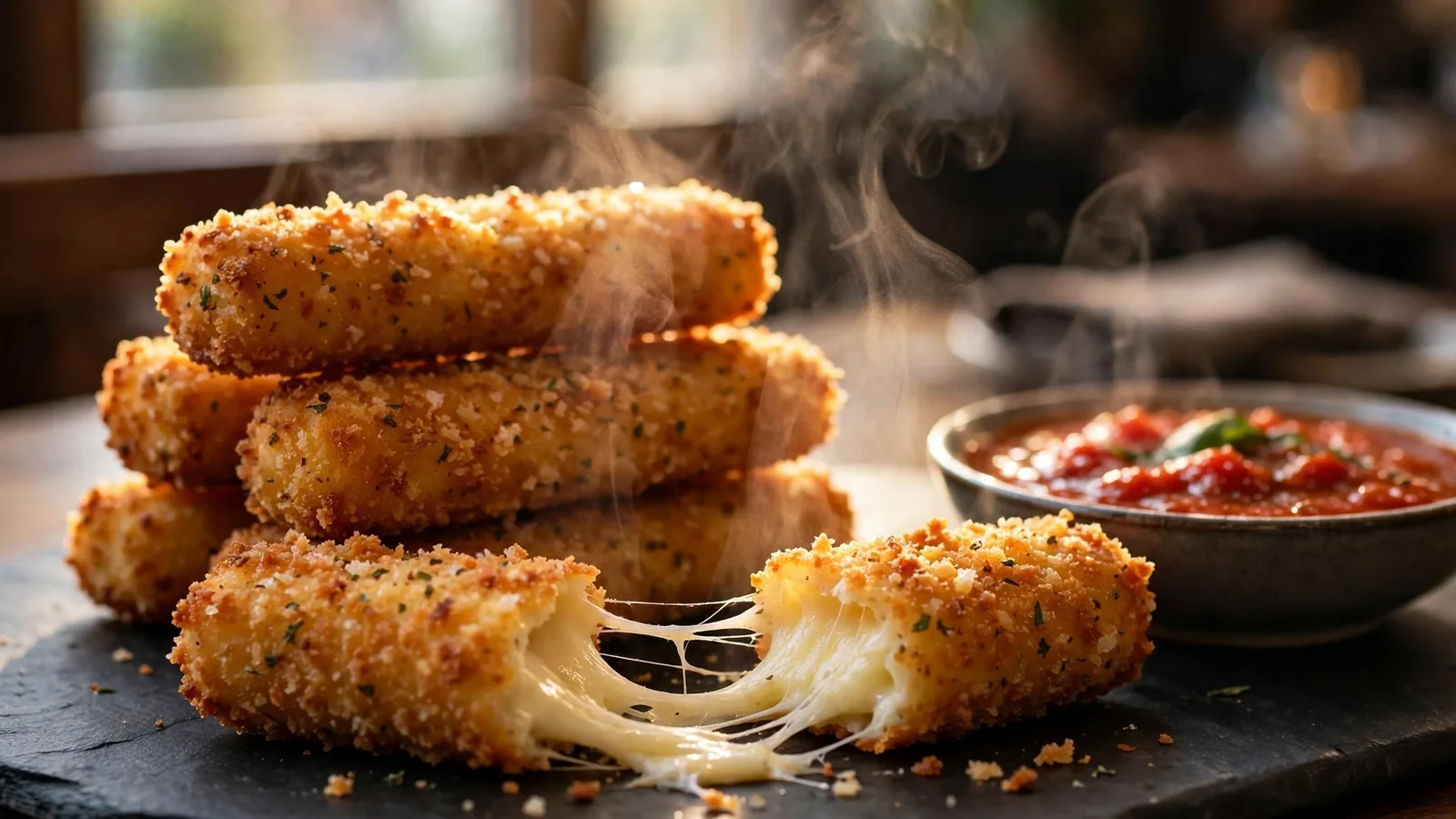
A homemade cheese stick is a finger of low-moisture mozzarella, double-coated in seasoned breadcrumbs, frozen solid, and cooked hot and fast so the crust sets before the cheese melts. Freeze the breaded sticks for at least 2 hours, then air fry at 390°F for 5–7 minutes for a crisp shell and a proper gooey pull.
If your past attempts ended with hollow shells and a puddle of cheese, this recipe fixes that. It comes down to three things: dry cheese, a thick double coating with sealed ends, and a fully frozen center. Get those right and the cheese stays put, the crust shatters, and the pull is exactly what you hoped for.
What Cheese Should You Use for a Homemade Cheese Stick?
Use low-moisture mozzarella string cheese for the most reliable cheese stick: already portioned, firm, and drier than fresh mozzarella, so it holds up to breading and heat. A low-moisture block, cut into ½-inch fingers, works well too. Skip fresh mozzarella — it releases too much water and the coating slides off.
Ingredients for Homemade Cheese Sticks
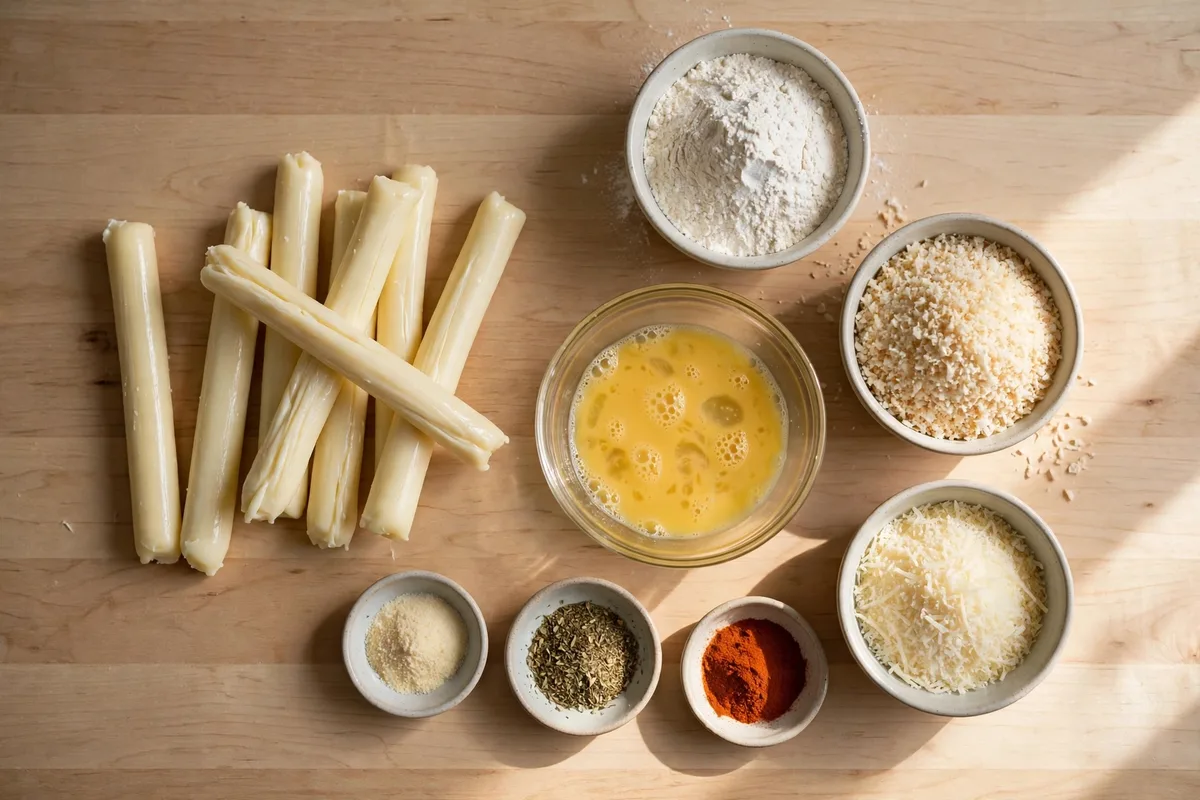
- 12 low-moisture mozzarella string cheese sticks (about 10 oz total)
- ½ cup all-purpose flour
- 2 large eggs
- 1 tablespoon water or milk
- 1 cup panko breadcrumbs
- ¼ cup finely grated Parmesan cheese
- 1 teaspoon Italian seasoning
- 1 teaspoon garlic powder
- ½ teaspoon onion powder
- ½ teaspoon paprika
- ½ teaspoon fine sea salt
- ¼ teaspoon black pepper
- Neutral oil spray (non-aerosol) or a light brush of olive oil
- Warm marinara sauce, for serving
Yield: 12 sticks (24 if you cut them in half) · Prep: 20 minutes · Freeze: 2 hours minimum · Cook: 5–7 minutes
How to Make a Crispy Cheese Stick at Home
Read through the steps once before you start. The rhythm is simple — flour, egg, crumbs, egg, crumbs — but the freeze time is what keeps the cheese inside. If you love crunchy fried snacks, these crispy corn nuggets use the same dredge-and-fry logic and make a great companion platter.
Step 1: Dry the cheese
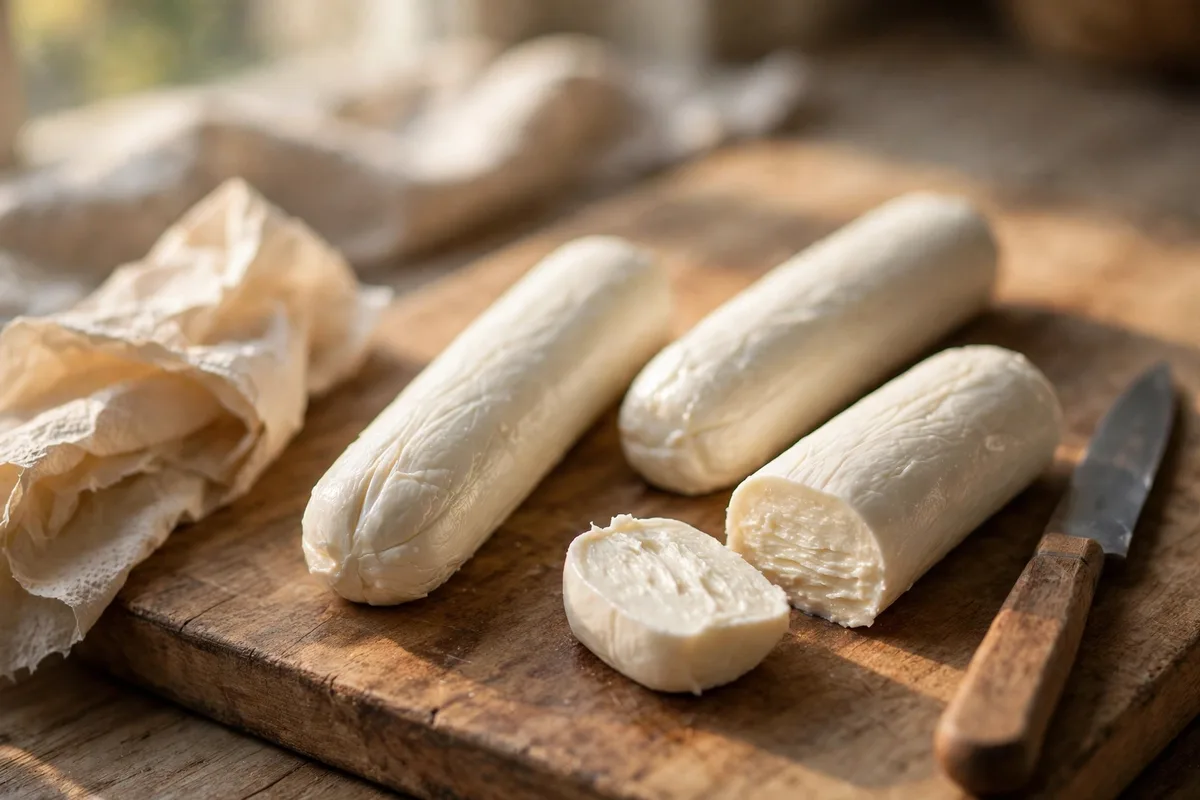
Unwrap the mozzarella sticks and pat them dry with paper towels — flour cannot grip a slick surface. For bite-size pieces, cut each stick in half now; shorter pieces are easier to seal.
Step 2: Set up the breading station
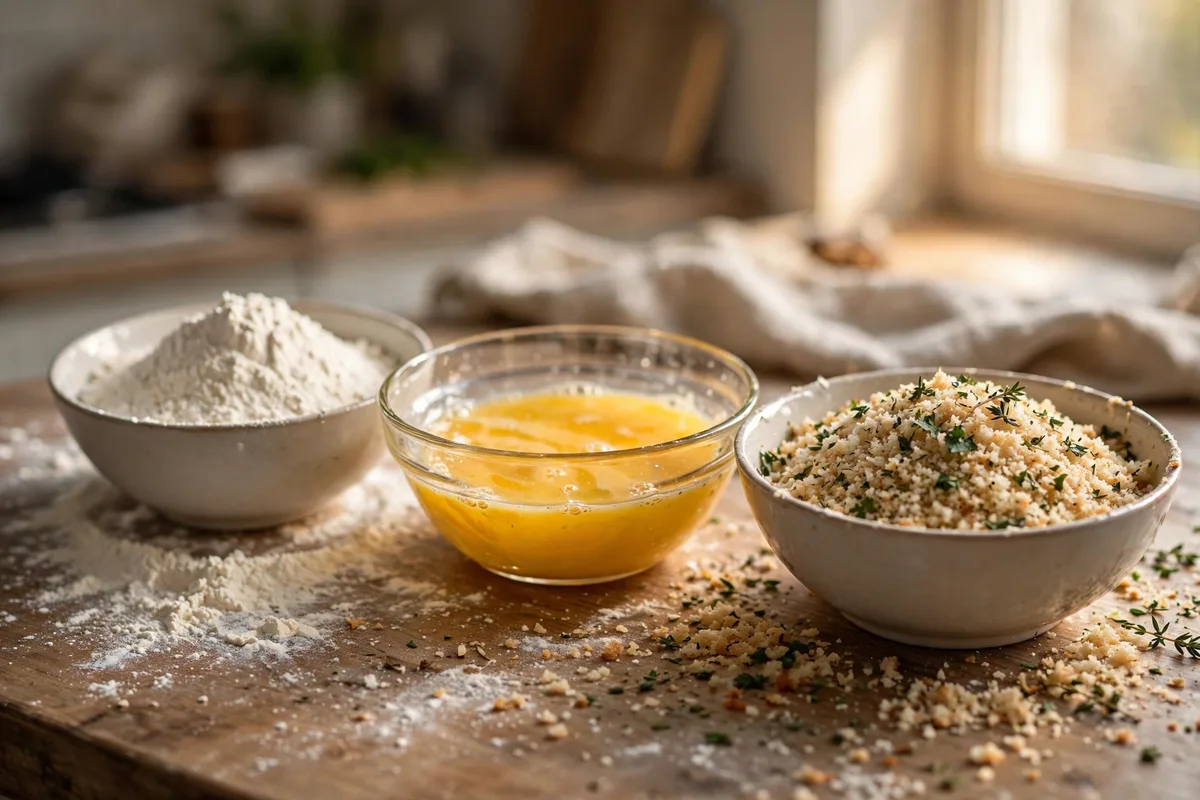
Line up three shallow bowls: flour in the first; eggs whisked with the water or milk in the second (the splash thins the egg so it coats evenly); panko, Parmesan, and all the seasonings stirred together in the third. Keep one hand for wet and one for dry.
Step 3: Give every stick a flour coat
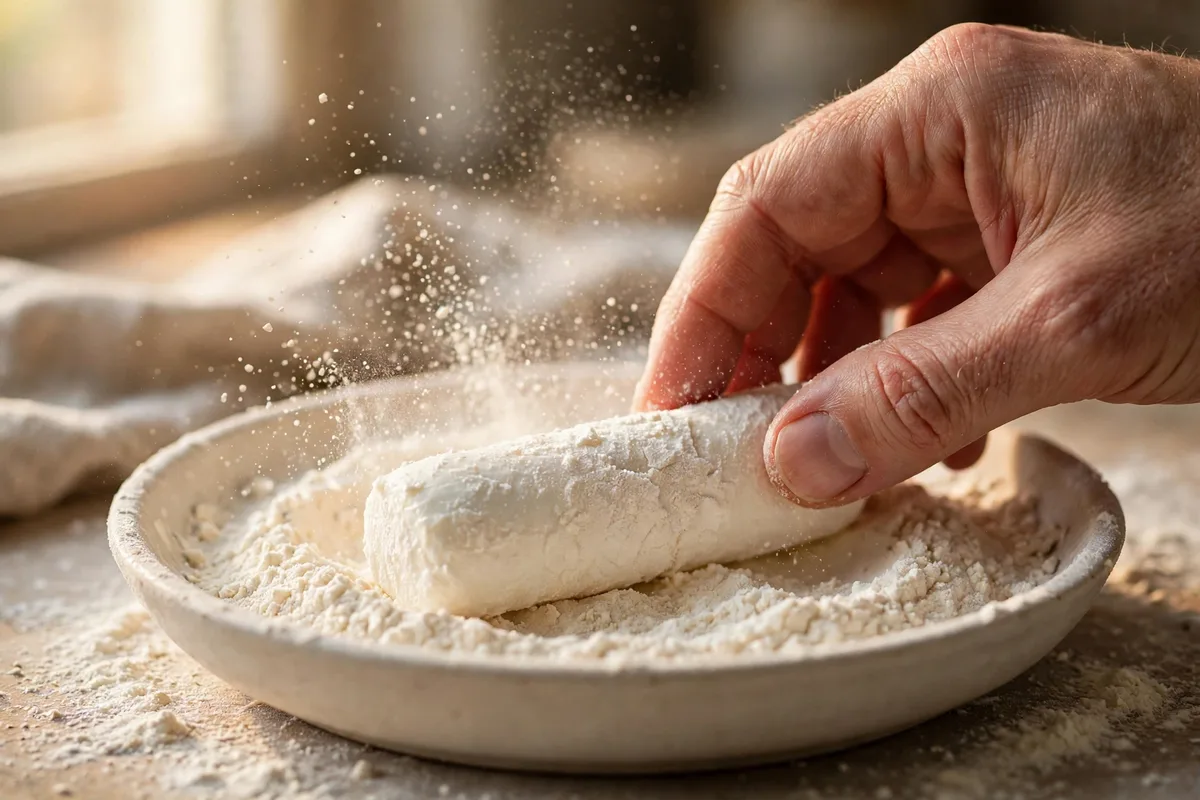
Roll each dry stick in the flour and tap off the excess — this primer gives the egg wash something to cling to. A thin, even dusting is enough; clumps turn gummy.
Step 4: Dip in the egg wash
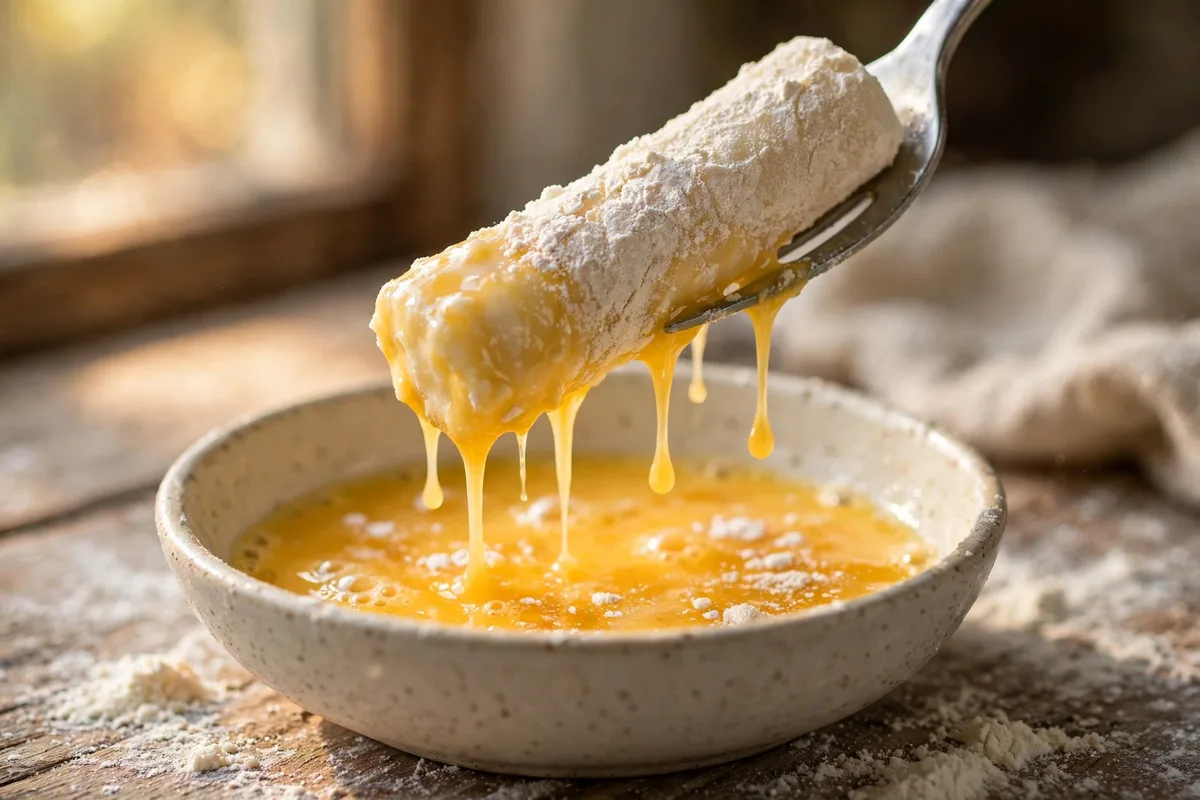
Dip the floured stick fully into the egg wash, covering every side, then let the excess drip off. Dragging egg into the crumb bowl clumps the crumbs and leaves patchy spots.
Step 5: Press on the first crumb coat
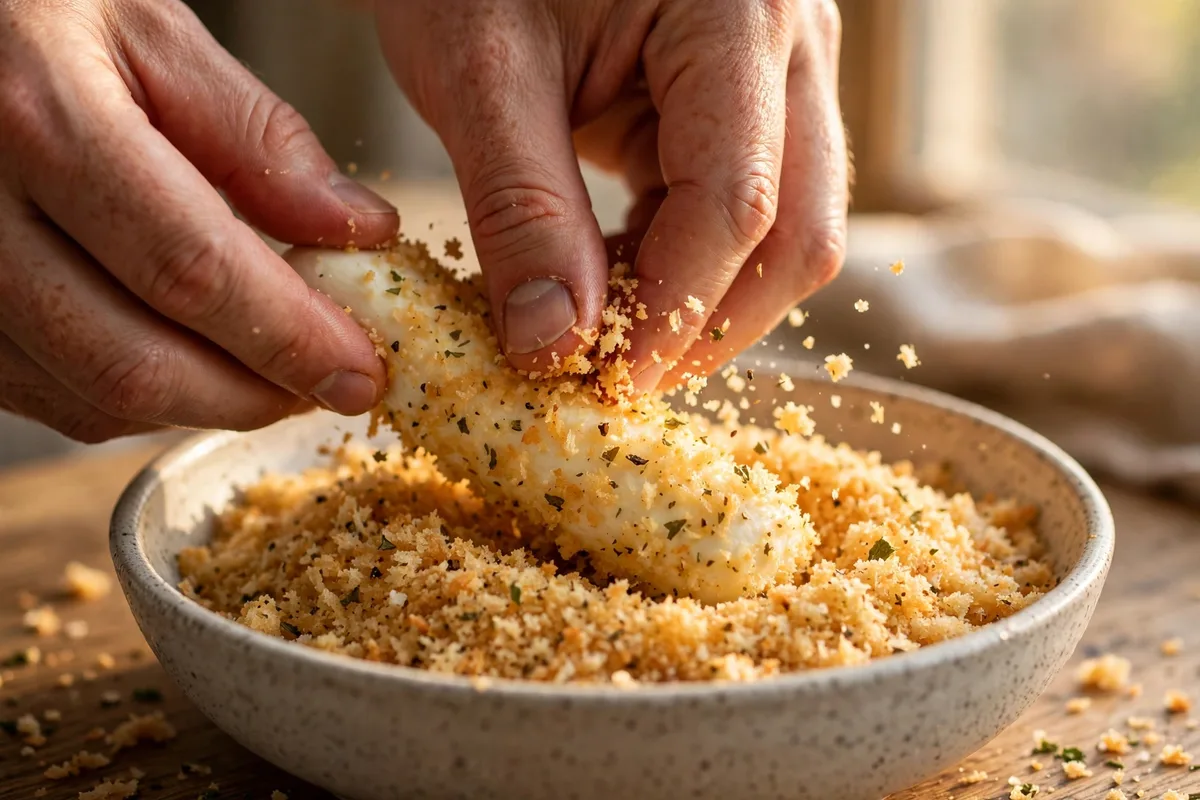
Roll the stick in the seasoned panko and press firmly so the crumbs bond. Panko gives a lighter, crunchier crust, and the Parmesan helps it brown while adding salty depth.
Step 6: Double-coat and seal the ends
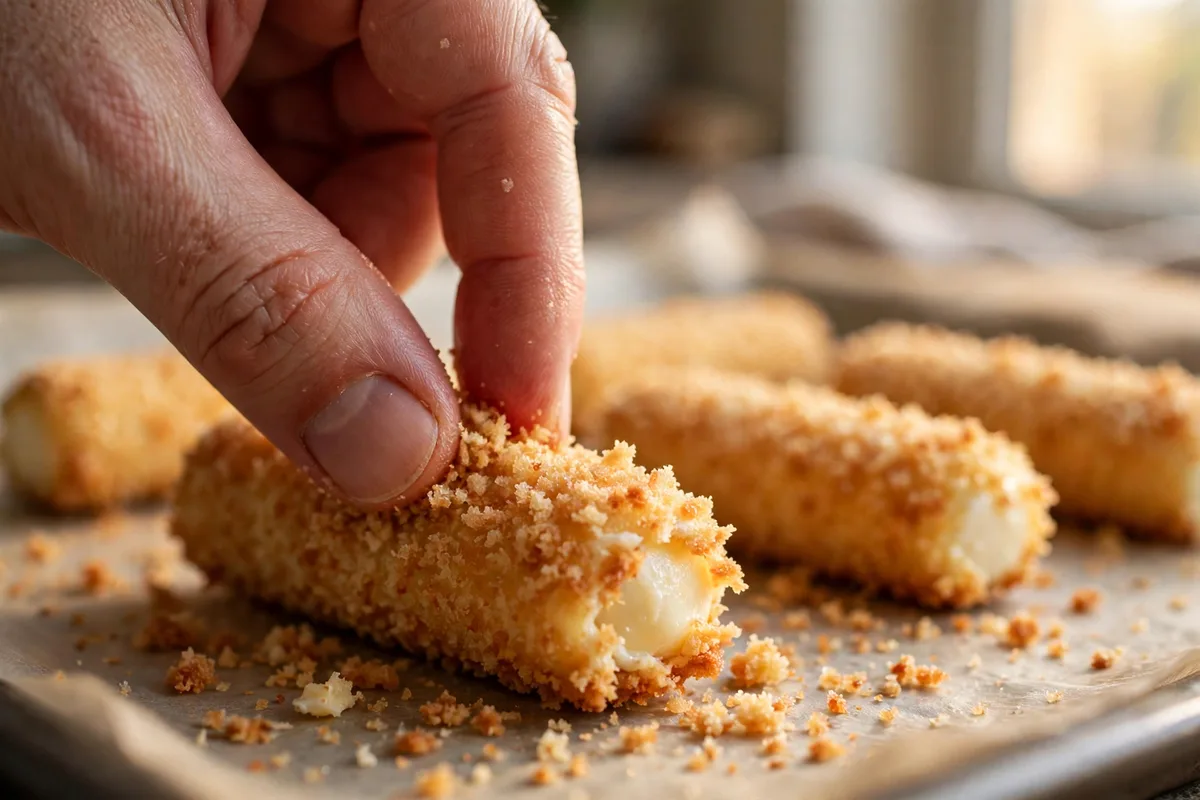
This is the step that stops blowouts. Dip the breaded stick back into the egg wash, then into the crumbs again. Press extra crumbs onto both ends like little caps and patch any thin spots — cheese escapes through gaps, so seal the ends as carefully as the sides.
Step 7: Freeze until rock solid
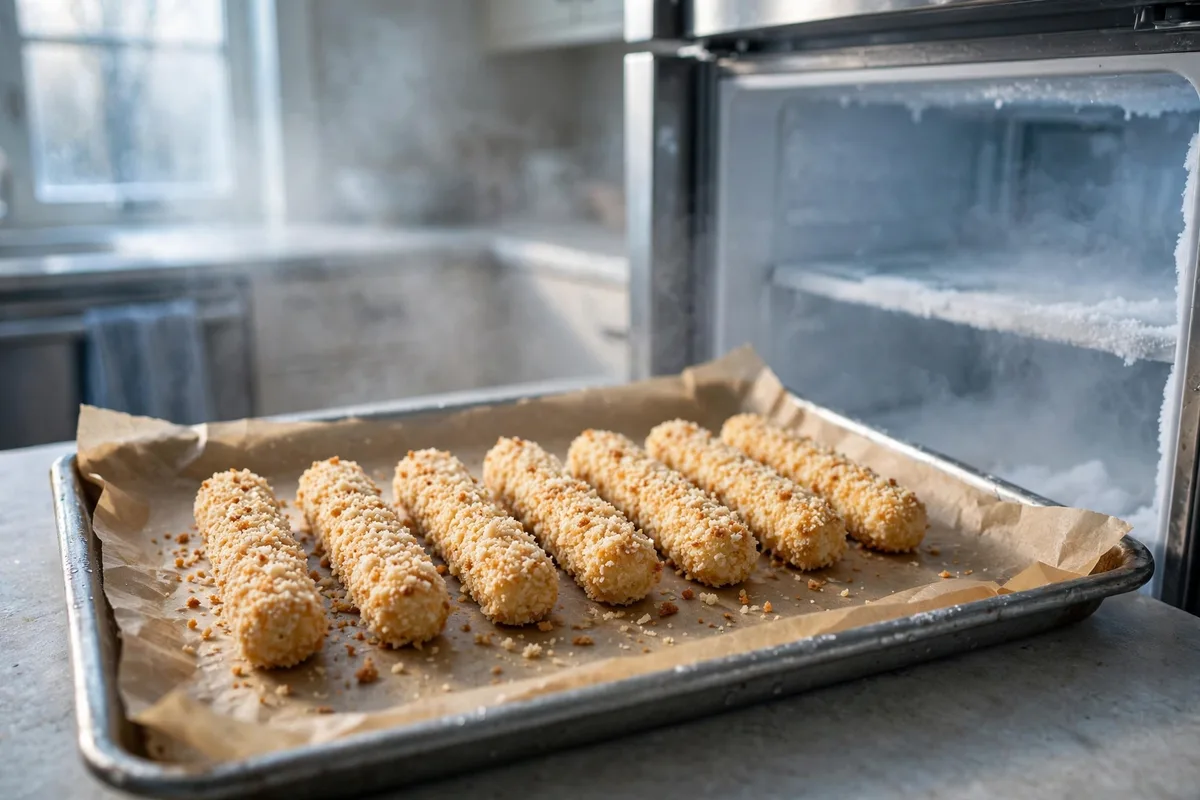
Arrange the coated sticks in a single layer on a parchment-lined tray, not touching, and freeze for at least 2 hours — 4 hours or overnight is even more forgiving. The frozen center lets the crust set before the cheese turns molten. Once solid, the sticks keep in a zip-top bag for up to 2 months.
Step 8: Air fry straight from frozen
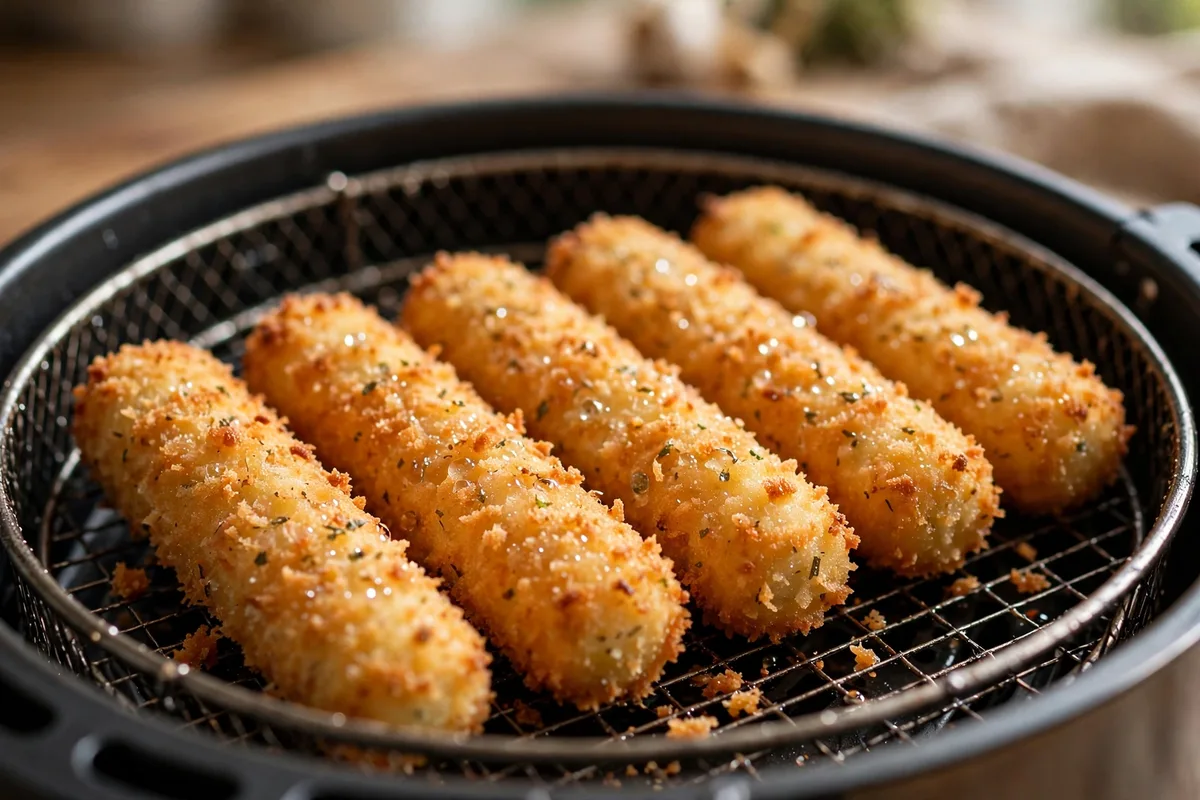
Preheat the air fryer to 390°F for 3–5 minutes. Arrange the frozen sticks in a single layer with space around each one — crowding steams them instead of crisping them. Spray the tops lightly with non-aerosol oil and cook 5–7 minutes, flipping around minute 4. If your model runs hot, drop to 375°F and check early.
Step 9: To deep fry instead
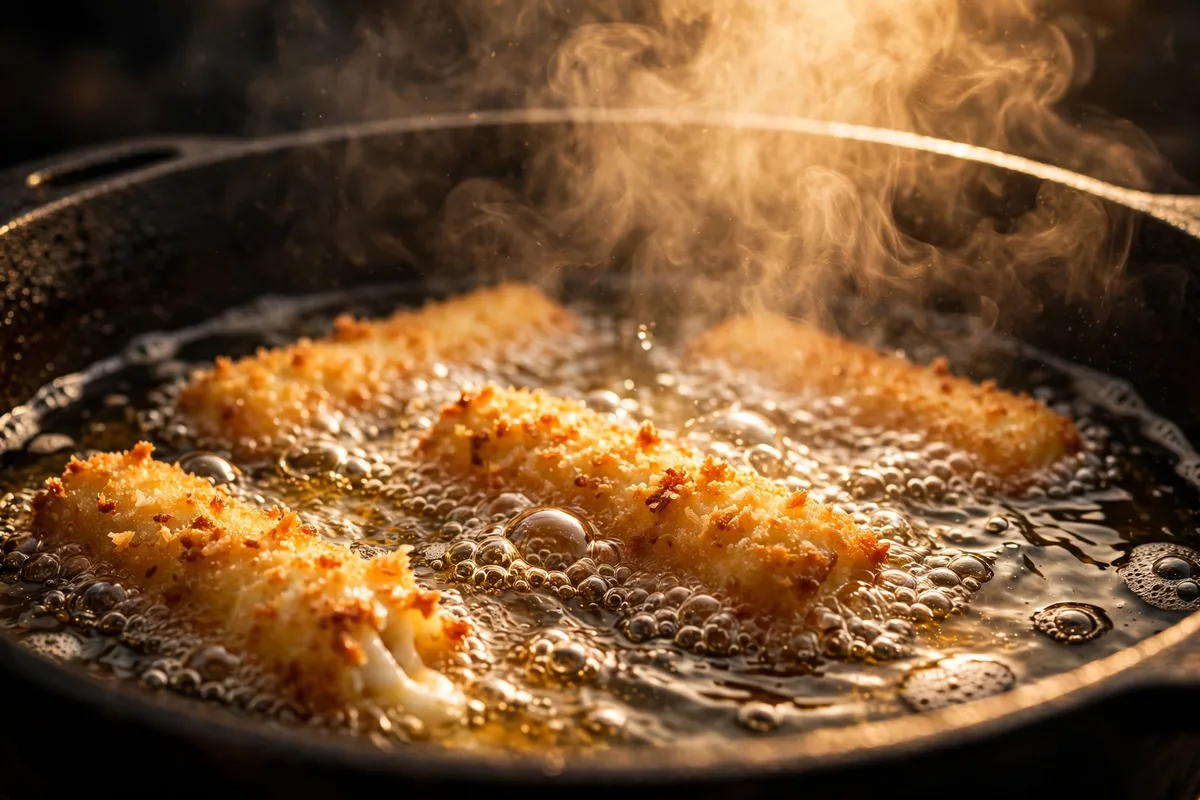
Heat 2–3 inches of canola oil in a heavy pot to 350°F — a thermometer matters more here than anywhere else. Fry the frozen sticks in small batches for 45–75 seconds, just until deep golden, then drain on a wire rack so the bottoms stay crisp.
Step 10: Rest 2 minutes, then serve
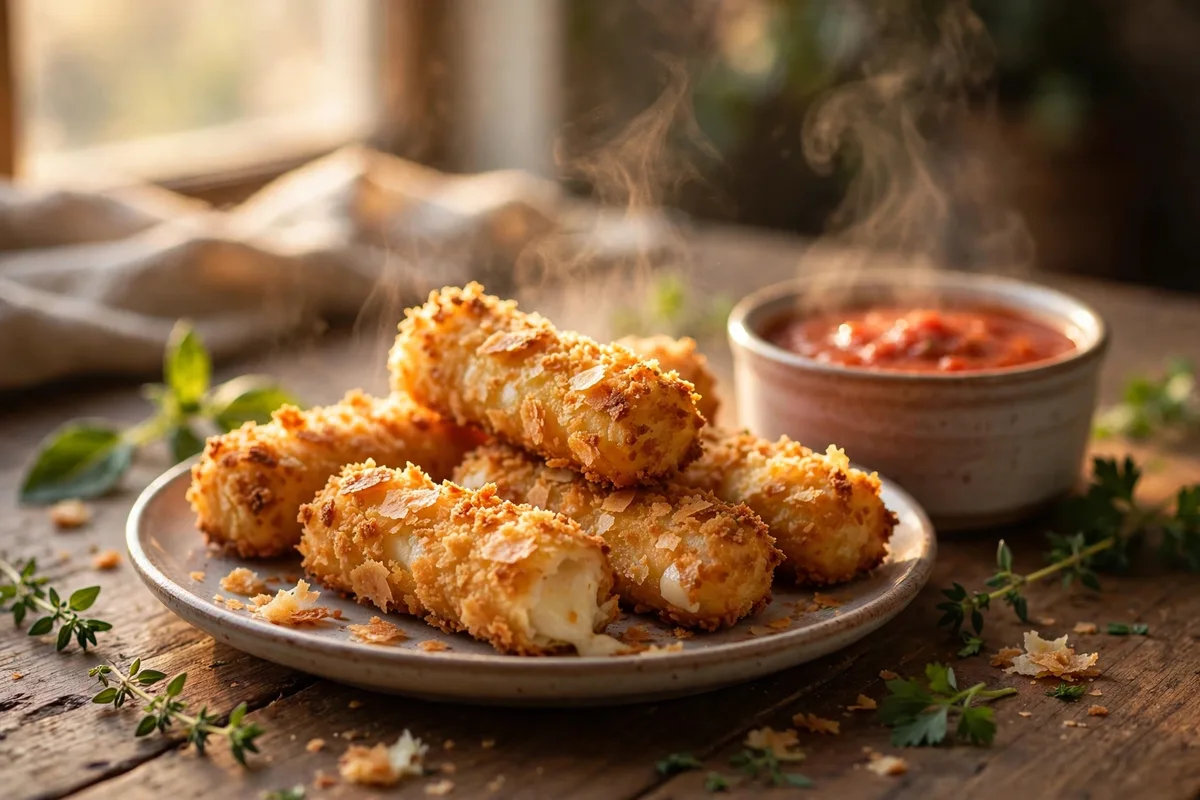
Rest the sticks for 2 minutes so the crust firms up and the cheese settles from lava-hot to perfectly stretchy. Serve immediately with warm marinara — peak comfort food behavior.
Making these this weekend? Save the recipe!
Pin this homemade cheese stick recipe to your snack board so you have the coating steps and air-fryer times handy when the craving hits.
Why Does the Cheese Leak Out of My Cheese Stick?
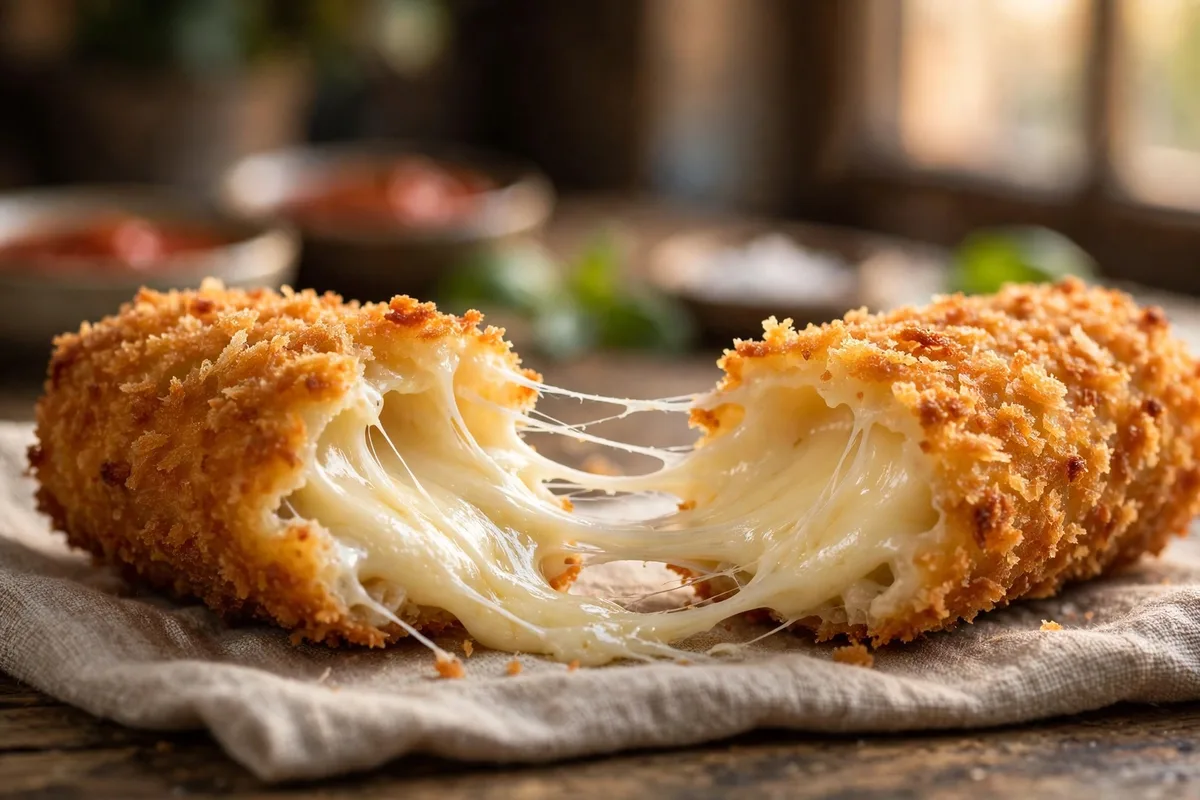
Cheese leaks when the mozzarella melts before the coating has set into a sealed shell. The fix is threefold: double-coat so there are no thin spots, press extra crumbs onto the ends to cap them, and freeze the sticks rock solid for at least 2 hours so the crust can brown before the center liquefies. Cooking straight from frozen is non-negotiable.
If you still get a leaker or two, run through this checklist:
- Coating too thin. A single coat is a gamble. The second dip in egg and crumbs builds a thicker wall — patch any spot where cheese shows through before freezing.
- Ends left bare. Most blowouts start at the ends, not the sides. Cap both ends with crumbs like lids.
- Under-frozen. Thirty minutes is not enough; you want the sticks frozen hard all the way through. Overnight is the most forgiving option.
- Oil temperature off. Past 360°F the crust burns while the inside is still cold; below 340°F the sticks soak up fat, the cheese melts out, and the coating turns greasy. Hold 350°F with a thermometer.
- Crowded basket or pot. Too many sticks at once drops the temperature and traps steam. Cook in batches with space between them.
Why Does the Coating Fall Off a Cheese Stick?
Coating falls off a cheese stick when it never bonded to the cheese. The usual culprits are a wet surface, skipped flour, or egg wash too thick to act as glue. Pat the sticks dry, dust them with flour as a primer, thin the egg with a spoonful of water, and press the crumbs on firmly instead of just rolling.
A short freezer rest between coats helps too: 10–15 minutes after the first crumb coat firms everything up before the second dip, so the layers stack instead of sliding. Handle the frozen sticks gently — a hard knock against the basket can crack the shell.
Air Fryer vs Deep Fryer: Which Makes a Better Cheese Stick?
Both methods work from the same breaded, frozen stick — the difference is texture and effort. Here is how they compare:
| Air Fryer | Deep Fryer | |
|---|---|---|
| Temperature | 390°F (375°F if your model runs hot) | 350°F oil |
| Time from frozen | 5–7 minutes, flip once | 45–75 seconds |
| Oil needed | Light spray only | 2–3 inches of neutral oil |
| Crust | Crisp and golden, slightly lighter | Deeply browned, shatteringly crisp |
| Leak risk | Lower — gentler, even heat | Higher if the oil temp drifts |
| Cleanup | Rinse the basket | Deal with used oil |
| Best for | Weeknight batches, lighter results | Party platters where crunch is everything |
The air fryer wins for convenience and consistency; the deep fryer wins on pure crunch — worth it for a game-night spread alongside more fried favorites from these fall recipes.
Storing and Reheating Cheese Sticks
Uncooked, breaded mozzarella sticks freeze beautifully — bag them for up to 2 months and cook straight from frozen, no thawing. Cooked sticks keep in the fridge for 2–3 days in an airtight container. To bring the crunch back, reheat in the air fryer at 375°F for 3–4 minutes. Skip the microwave; it turns the coating chewy.
They are also a solid make-ahead party snack — stash a batch in the freezer for your winter recipes rotation.
FAQs
Why does the cheese leak out of my cheese stick?
A cheese stick leaks when the mozzarella melts before the coating sets. Double-coat the sticks, press extra crumbs onto both ends to seal them, and freeze for at least 2 hours so the crust browns before the center turns fully molten. Always cook them straight from frozen.
Why do I have to freeze cheese sticks before cooking?
Freezing gives the crust a head start. The frozen center takes longer to reach melting point, so the breading has time to set and brown before the cheese liquefies. Without that thermal buffer, the cheese bursts out and you get empty shells.
Can I use block mozzarella instead of string cheese?
Yes. Cut a low-moisture mozzarella block into sticks about ½ inch thick and 3–4 inches long, then bread them exactly the same way. Thicker-cut sticks may need a slightly longer freeze so the center is solid before cooking.
Can I make cheese sticks ahead of time?
Absolutely — this is a great make-ahead snack. Bread the sticks, freeze them on a tray until solid, then move them to a zip-top bag for up to 2 months. Cook straight from frozen with no thawing and no change to the timing.
What oil is best for frying cheese sticks?
Use a neutral oil with a high smoke point, such as canola or vegetable oil, and hold it at 350°F. Avoid olive oil — it smokes at frying temperatures and adds a flavor that fights the mozzarella. For the air fryer, a light non-aerosol oil spray is all you need.
The whole cheese stick recipe is a short list of habits: dry the cheese, double-coat and seal the ends, freeze hard, cook from frozen. Once that is muscle memory, play with the crumbs — cayenne for heat, extra Parmesan for a darker crust. For a baked cheese-stuffed cousin, try King Arthur’s cheese-stuffed breadsticks; and look up mozzarella’s nutrition profile in the USDA FoodData Central database.
Did you try this recipe? Tell me how it went!
Drop a comment below — I read every one. Did your cheese sticks stay sealed? Which method did you use, air fryer or deep fryer? And if you loved them, you might also like: