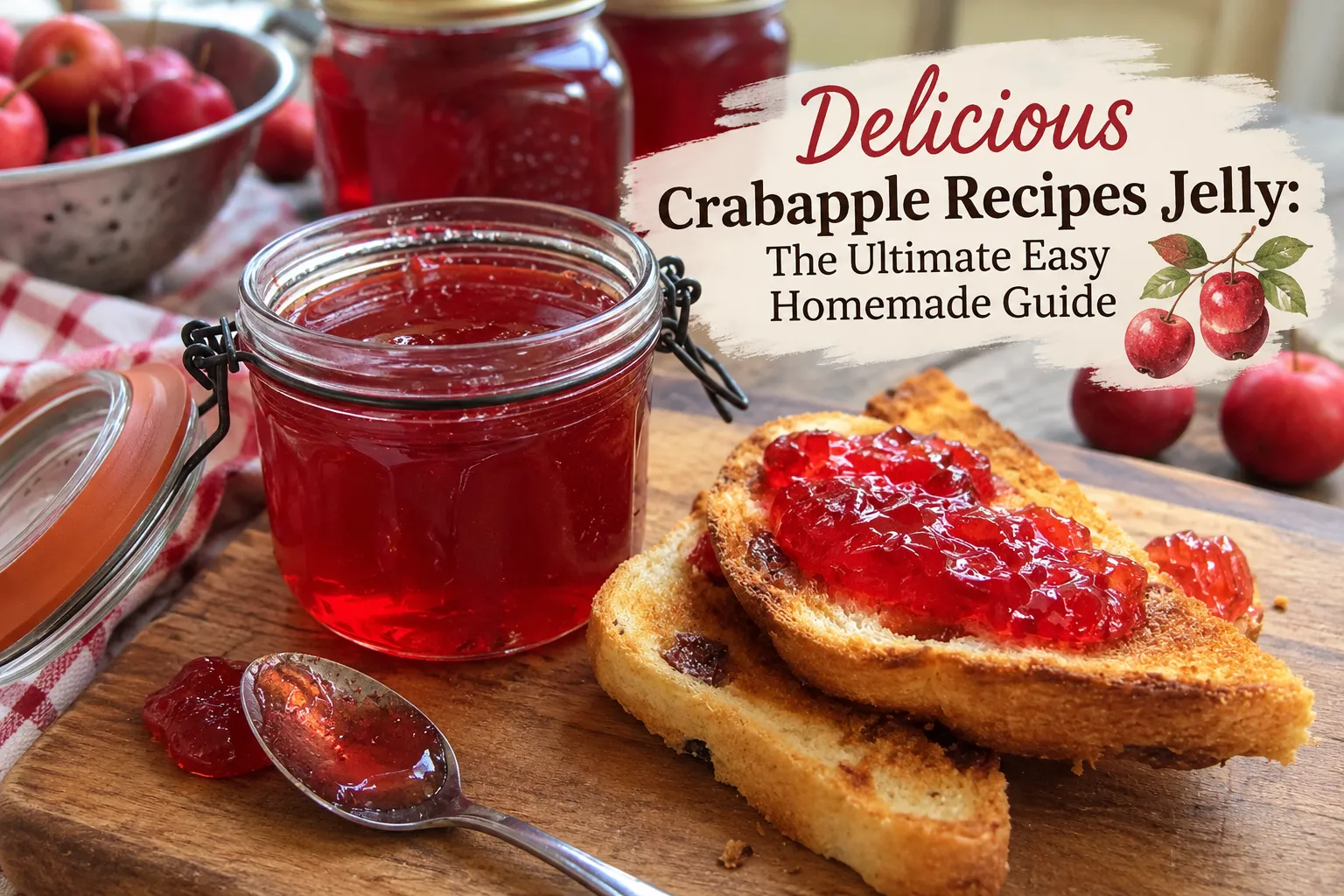
There’s something wonderfully old-fashioned about turning a basket of tart crabapples into a jar of ruby-red jelly. What starts as small, often overlooked fruit can become a bright, fragrant spread that makes ordinary toast, biscuits, pancakes, and even roasted meats feel special.
If you’re searching for crabapple recipes jelly, this guide gives you everything you need to make homemade crabapple jelly successfully—from preparing the fruit and extracting its natural juices to cooking, testing, and storing the finished jelly. The best part? You don’t need complicated equipment or a long list of ingredients.
Why You’ll Love These Crabapple Recipes Jelly
Crabapples may be small, but they are packed with natural tartness and pectin, making them surprisingly well suited to jelly. Here are a few reasons to try this recipe:
- Bright, naturally tart flavor: Crabapples give the jelly a delicious balance of sweet and tangy.
- Beautiful color: Depending on the variety, your finished jelly can range from pale gold to deep ruby red.
- Simple ingredients: Fruit, water, sugar, and optionally lemon juice are all you need.
- Naturally flavorful: You can often make crabapple jelly without commercial pectin.
- Versatile: Spread it on toast or use it as a glaze for savory dishes.
- Great for preserving: It is an excellent way to use a seasonal crabapple harvest.
What Makes Crabapple Jelly So Special?
Unlike many modern fruit spreads, traditional crabapple jelly relies heavily on the fruit’s own natural pectin. When crabapples are cooked with water, their juice carries flavor, acidity, and pectin. After straining, sugar is added and the liquid is boiled until it reaches the proper setting point. The result is a clear, jewel-like jelly with a wonderfully fresh apple aroma.
Crabapple Recipes Jelly: What Kind of Crabapples Should You Use?
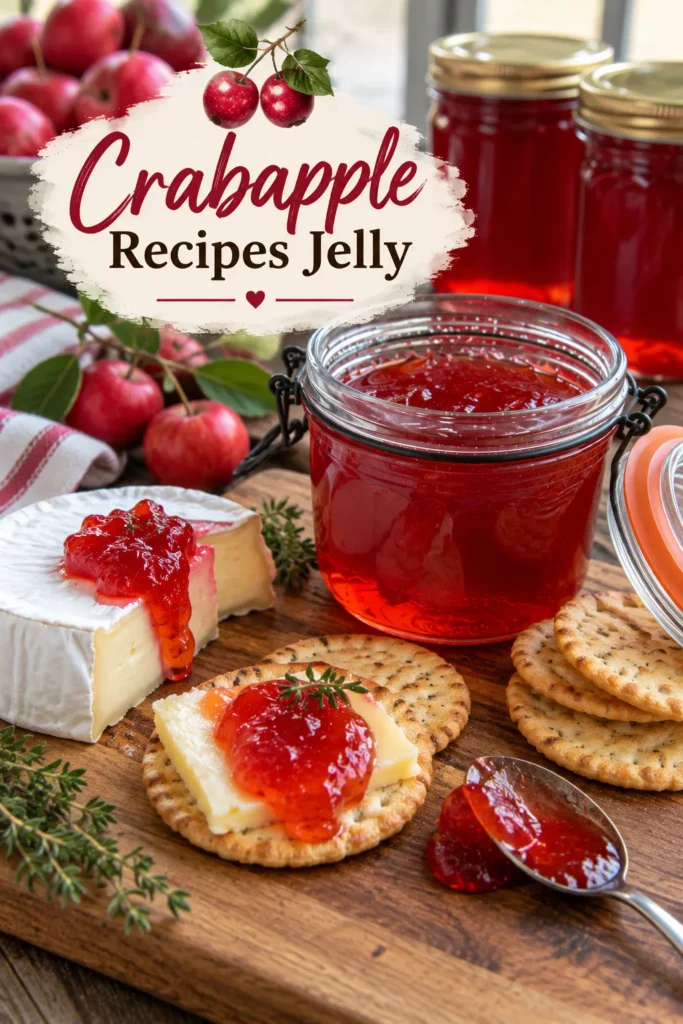
Almost any edible crabapple variety can work, but flavor and color can vary considerably. For the best results, choose fruit that is:
- Firm and fresh
- Free from mold or significant bruising
- Slightly underripe to ripe
- Naturally tart
- Fragrant
A mixture of ripe and slightly underripe crabapples can be particularly useful because underripe fruit generally contributes more natural pectin.
Important: Only use crabapple varieties that are known to be edible. Remove leaves, stems, and damaged fruit before cooking.
Ingredients for Homemade Crabapple Jelly
This simple recipe keeps the ingredient list short.
Ingredients
- 4 pounds crabapples
- 4 cups water, or enough to just cover the fruit
- Granulated sugar, measured according to the amount of strained crabapple juice
- 1–2 tablespoons lemon juice, if needed
- Sterilized jelly jars with lids
Crabapple Recipes Jelly Ingredient Tip
Don’t add sugar based solely on the weight of your fruit. Instead, measure the strained juice first. This gives you much better control over the sweetness and final consistency of the jelly.
How to Make Crabapple Recipes Jelly
Making homemade jelly is easier than it looks. The key is to avoid rushing the juice-extraction and setting stages.
Step 1: Prepare the Crabapples
Wash the crabapples thoroughly under cool running water. Remove the stems, leaves, and any damaged portions. You don’t necessarily need to peel or core the fruit because you’ll be straining the cooked mixture later. Cut very large crabapples into halves or quarters.
Step 2: Cook the Fruit
- Place the prepared crabapples in a large heavy-bottomed pot.
- Add enough water to almost cover the fruit.
- Bring the mixture to a boil, then reduce the heat and simmer until the crabapples become very soft and begin to break apart.
- This usually takes around 20–30 minutes, depending on the fruit.
- Don’t aggressively mash the fruit. Gentle cooking helps preserve the clarity of the finished jelly.
Step 3: Strain the Juice
Place a jelly bag, cheesecloth, or several layers of clean food-safe cloth over a large bowl. Carefully pour the cooked crabapple mixture into the cloth. Allow the juice to drip through naturally.
Don’t Squeeze the Jelly Bag
This is one of the most important tips in crabapple recipes jelly. It can be tempting to squeeze the bag to extract every last drop, but doing so can push fruit pulp into the juice and make the finished jelly cloudy. For a beautifully clear jelly, let gravity do the work.
Step 4: Measure the Juice
Once the juice has finished dripping, measure how much you have. A common traditional approach is to use approximately ¾ cup of sugar for every 1 cup of crabapple juice, although the exact amount can be adjusted according to your recipe and desired sweetness. For the most reliable preservation and setting, use a tested canning recipe and follow its recommended sugar ratio.
Step 5: Combine Juice and Sugar
Return the measured crabapple juice to a clean pot. Add the appropriate amount of sugar and stir until dissolved. If the fruit is extremely tart, you can add a little lemon juice for additional acidity and brightness.
Step 6: Bring the Jelly to a Full Boil
Increase the heat and bring the mixture to a vigorous boil. Stir frequently enough to prevent scorching, but avoid excessive stirring. Continue boiling until the jelly reaches the appropriate setting point.
How Do You Know When Crabapple Jelly Is Ready?
The classic test is the wrinkle test. Place a small plate in the freezer before you begin cooking. When you think the jelly is ready, place a small spoonful onto the chilled plate. Allow it to cool for several seconds, then gently push the edge with your fingertip. If the surface wrinkles slightly and the jelly feels set, it is likely ready. A kitchen thermometer can also help. Jelly generally sets around 220°F (104°C) at sea level, although altitude and other factors can affect the exact temperature.
Step 7: Fill the Jars
Carefully ladle the hot jelly into clean, sterilized jars. Leave the appropriate headspace recommended by your tested canning method. Wipe the jar rims clean, apply the lids, and process according to safe water-bath canning instructions.
Crabapple Recipes Jelly: Expert Tips for Better Results
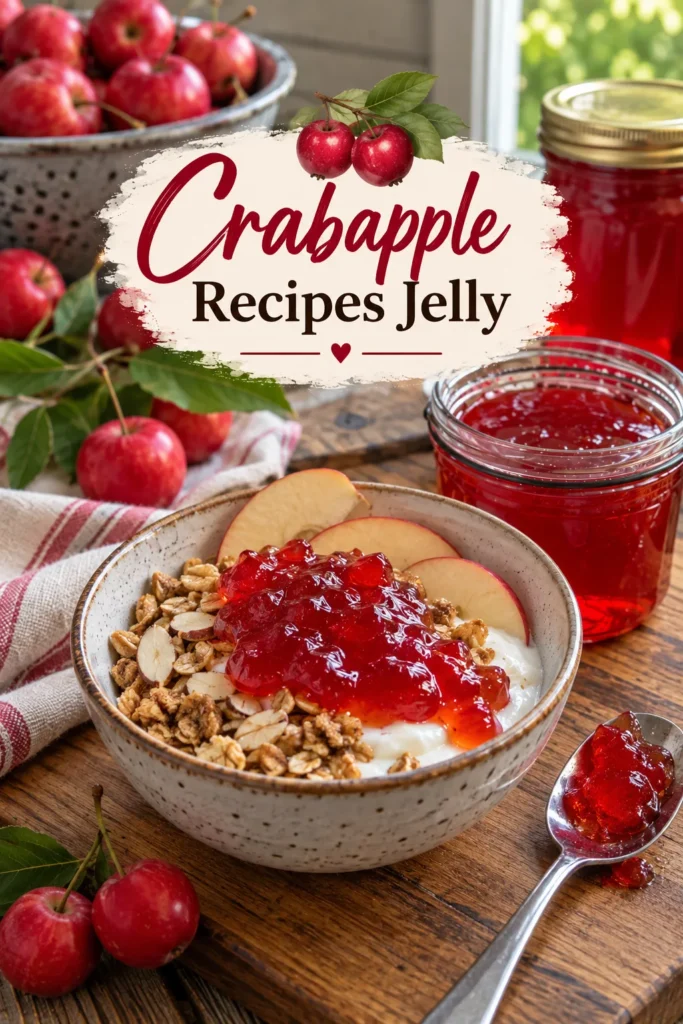
Even a simple jelly can go wrong if a few details are overlooked.
1. Don’t Overcook the Fruit
Cooking crabapples until they’re soft is necessary, but prolonged boiling can negatively affect flavor and color.
2. Let the Juice Drain Naturally
Patience is your friend. Allowing the cooked fruit to drip slowly produces clearer juice and, consequently, clearer jelly.
3. Don’t Guess the Sugar
Always measure your juice before adding sugar. The amount of juice can vary significantly depending on the crabapple variety and how much water was used.
4. Use a Wide Pot
A wide pot gives the liquid more surface area, allowing excess water to evaporate more efficiently.
5. Watch for Foam
Foam can develop during boiling. Skim it from the surface with a spoon if you want a cleaner-looking finished jelly.
Delicious Ways to Use Crabapple Jelly
Once you’ve made a batch, don’t limit yourself to breakfast.
Breakfast Ideas
Try your homemade jelly with:
- Toast
- English muffins
- Scones
- Biscuits
- Pancakes
- Waffles
- Croissants
Savory Ideas
Crabapple jelly can also work beautifully with savory foods. Use it as a glaze for:
- Roast chicken
- Pork
- Ham
- Baked vegetables
- Brie or other soft cheeses
Dessert Ideas
Add a thin layer of crabapple jelly to:
- Thumbprint cookies
- Layer cakes
- Cheesecakes
- Tartlets
- Shortbread sandwiches
How to Store Homemade Crabapple Jelly
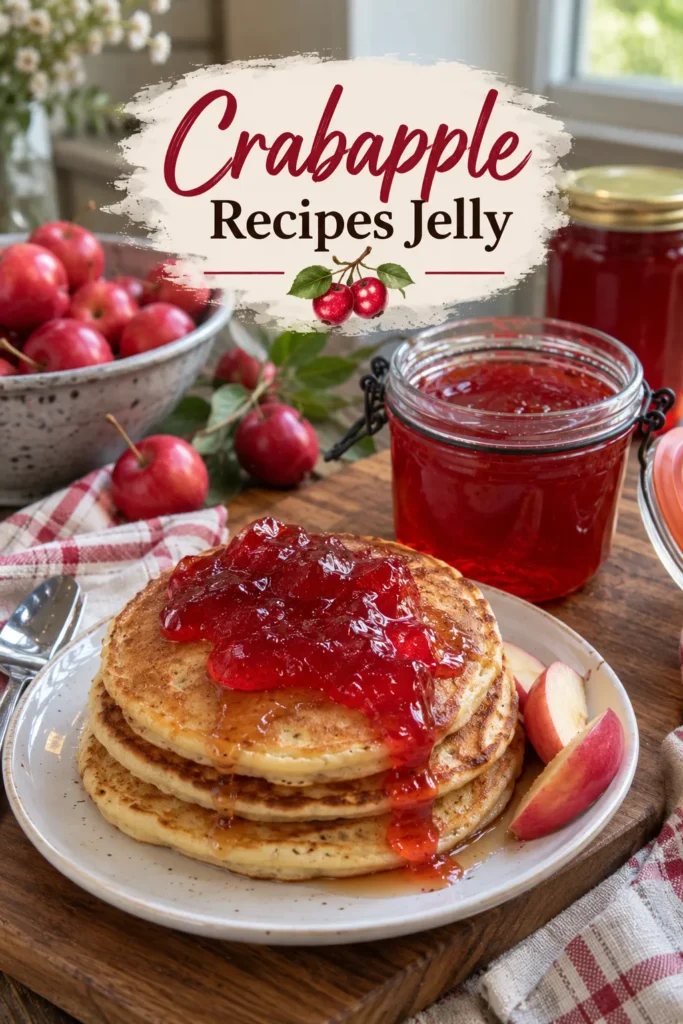
Proper storage depends on how you process the jelly. For shelf-stable storage, use tested home-canning procedures, including properly prepared jars, appropriate headspace, and the recommended boiling-water processing time for your specific recipe and altitude. Once opened, refrigerate the jar. Always inspect stored preserves before eating. If you notice mold, fermentation, an unusual odor, or other signs of spoilage, discard the product.
Common Problems With Crabapple Jelly
Why Didn’t My Jelly Set?
Several factors can cause soft jelly:
- Too much water
- Not enough natural pectin
- Incorrect sugar ratio
- Insufficient cooking
- Overripe fruit
- Excessive juice extraction
If your jelly is still soft after cooling, don’t panic. It can sometimes be reprocessed using a tested jelly-reprocessing method.
Why Is My Jelly Cloudy?
Cloudiness can result from:
- Squeezing the jelly bag
- Excess fruit pulp
- Overly vigorous boiling
- Undissolved sugar
- Foam that wasn’t removed
For crystal-clear crabapple recipes jelly, strain the juice gently and avoid squeezing the fruit.
Why Is My Jelly Too Sweet?
Crabapple varieties differ considerably in acidity. If you’re developing your own recipe, balance is important. A very sweet jelly can lose the characteristic tart flavor that makes crabapple preserves so appealing.
Easy Crabapple Jelly Recipe Card
Recipe: Homemade Crabapple Jelly
Prep Time: 20 minutes
Cook Time: 45–60 minutes
Straining Time: Several hours or overnight
Yield: Approximately 4–6 half-pint jars, depending on juice yield
Ingredients
- 4 pounds crabapples
- 4 cups water, or enough to cover the fruit
- Approximately ¾ cup sugar per cup of strained juice
- 1–2 tablespoons lemon juice, if needed
Instructions
- Wash crabapples and remove stems, leaves, and damaged portions.
- Cut larger fruit into smaller pieces.
- Place crabapples in a large pot and add enough water to nearly cover them.
- Simmer for 20–30 minutes, until the fruit is very soft.
- Pour the cooked fruit into a jelly bag or cheesecloth-lined strainer.
- Allow the juice to drain naturally without squeezing.
- Measure the strained juice.
- Add the appropriate amount of sugar according to your tested recipe.
- Bring the mixture to a vigorous boil.
- Continue cooking until the jelly reaches the proper setting point.
- Test the jelly using a chilled-plate wrinkle test or suitable thermometer.
- Remove foam if necessary.
- Ladle hot jelly into prepared jars.
- Process using a tested boiling-water canning method.
Pro Tip: Slightly underripe crabapples can provide more natural pectin, while ripe fruit contributes excellent flavor.
Frequently Asked Questions
Can I Make Crabapple Jelly Without Pectin?
Yes. Crabapples can naturally contain substantial amounts of pectin, particularly when some slightly underripe fruit is included. However, pectin levels vary, so the finished jelly may not always set identically.
Do I Have to Peel Crabapples for Jelly?
No. For traditional crabapple recipes jelly, peeling isn’t necessary because the cooked fruit is strained before the juice is boiled with sugar.
Can I Use Very Ripe Crabapples?
You can, but very ripe fruit may contain less pectin than slightly underripe fruit. Combining ripe and slightly underripe crabapples can help provide both flavor and natural pectin.
How Long Does Homemade Crabapple Jelly Last?
Properly processed, unopened jelly can be stored according to tested home-canning guidelines. Once opened, refrigerate it and use clean utensils when serving.
Can I Add Cinnamon to Crabapple Jelly?
Yes, if you want a warmer flavor profile. However, start with a small amount because strong spices can easily overpower the delicate crabapple flavor.
Why Is Crabapple Jelly Not Setting?
The most common reasons are insufficient pectin, incorrect sugar proportions, excess water, or inadequate cooking. Allow the jelly to cool completely before deciding that it has failed.
What Is the Best Way to Eat Crabapple Jelly?
Toast and biscuits are classic choices, but don’t overlook cheese boards and savory glazes. The tart-sweet flavor pairs especially well with rich foods.
Final Thoughts
A good batch of crabapple recipes jelly is proof that small, humble fruit can become something genuinely special. With just crabapples, sugar, water, and a little patience, you can create a beautiful homemade jelly with a bright flavor and gorgeous color. The secret is in the details: choose good fruit, extract the juice gently, measure carefully, and give the jelly enough time to reach its setting point. Once you taste that first spoonful on warm toast, you may never look at a basket of crabapples the same way again.
Follow our Instagram and Facebook pages to get latest upates.