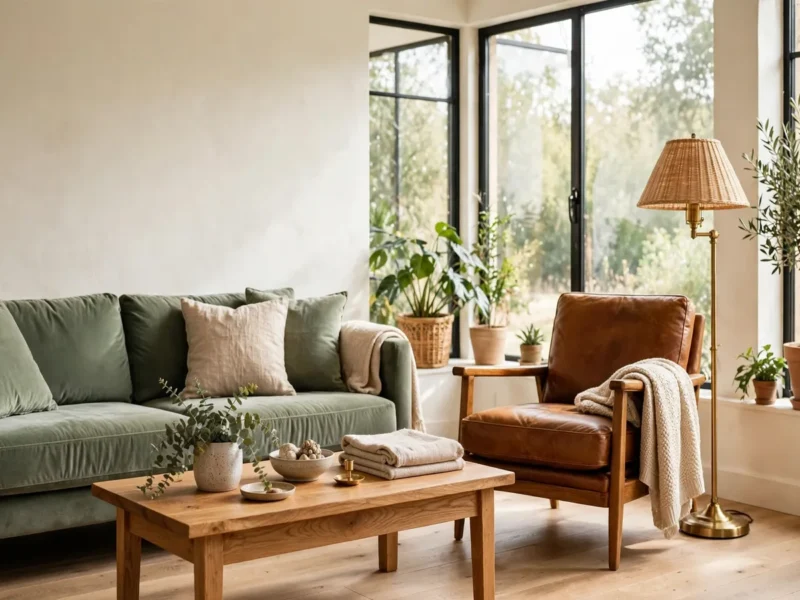
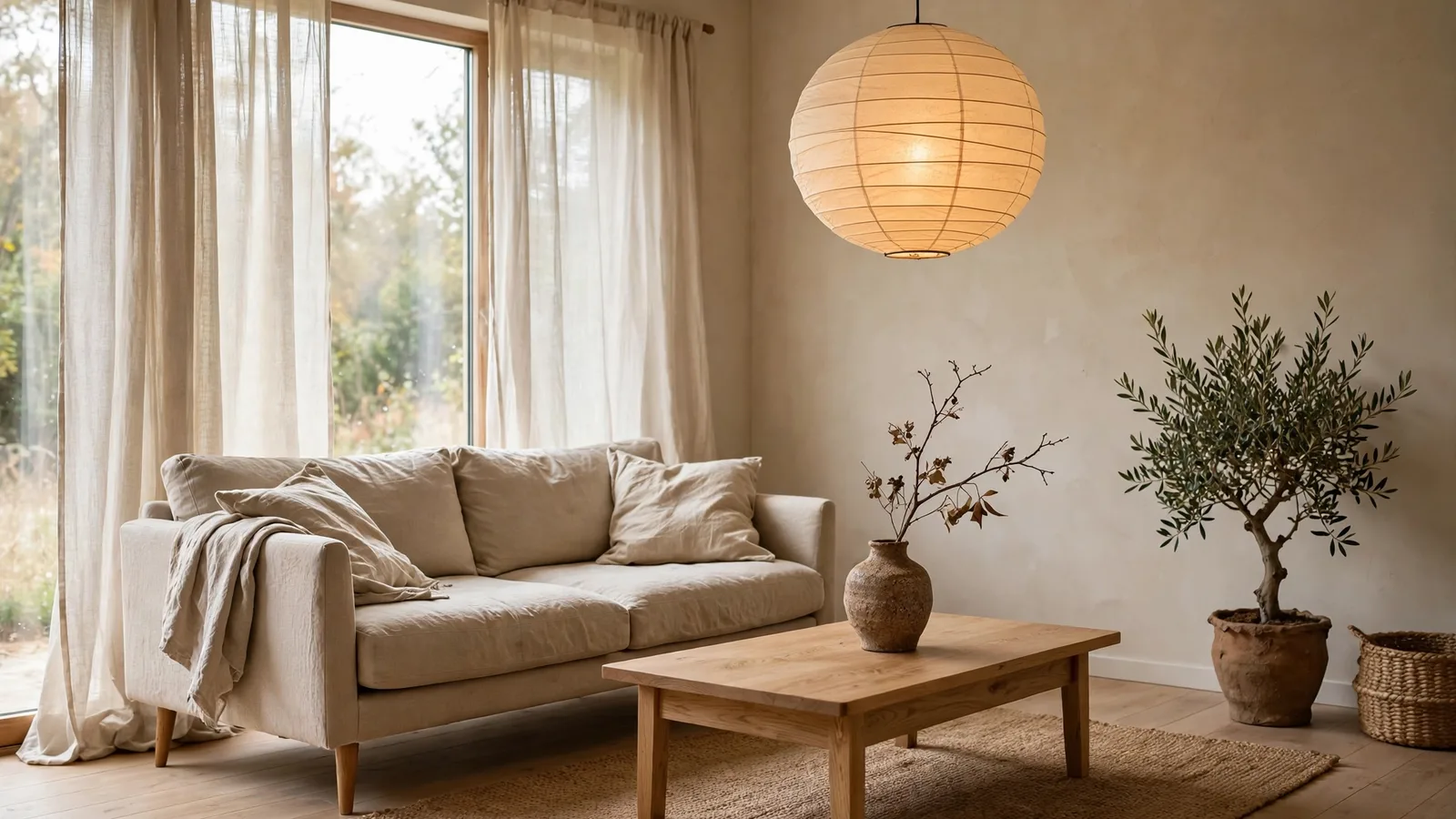
A japandi home interior blends Japanese minimalism with Scandinavian warmth into one calm, livable style: low natural-wood furniture, a warm neutral palette, honest materials like linen and stone, and rooms with enough empty space to breathe. This guide decodes the philosophy, palette, materials, and room-by-room moves — plus budget shortcuts and the mistakes that ruin the look.
Where did japandi come from?
Japandi grew out of the quiet overlap between two design cultures that were already thinking alike. Japanese interiors prize restraint, craftsmanship, and the beauty of imperfection; Scandinavian rooms chase light, comfort, and function. Both love natural materials and calm rooms, which is why a japandi home interior feels inevitable rather than invented.
From Japan comes wabi-sabi — finding beauty in imperfection and age — and from Scandinavia comes hygge, the feeling of cozy contentment. One keeps the room honest; the other keeps it warm.
What are the five principles of a japandi home interior?
The same five habits run every room in the style — learn them and the shopping decisions get easy.
1. Function before decoration
In a japandi home interior, every piece earns its place by doing something: a stool doubles as a side table, a bench hides shoes, a tray corrals keys and mail. If an object only fills space, it goes — which is why these rooms feel calm.
2. Furniture sits low and grounded
Sofas, beds, and tables sit close to the floor — platform beds, coffee tables around 14–16 inches high, slim chairs with exposed wood frames. Low furniture makes ceilings feel taller and borrows the grounded calm of traditional Japanese living.
3. Materials stay honest
Wood should look like wood, with visible grain and a matte or oiled finish — oak, ash, walnut, and bamboo lead, with linen, wool, rattan, paper, and unglazed ceramic around them. As designer Anh Ly puts it in her japandi guide, the trick is “balancing minimalism with softness.”
4. Empty space is a design element
In Japanese design, ma — negative space — is part of the composition of a japandi home interior, not a gap to fill. One considered vase on an open shelf says more than a shelf packed edge to edge, so leave one wall bare and resist “finishing” corners that already work.
5. Imperfection is the point
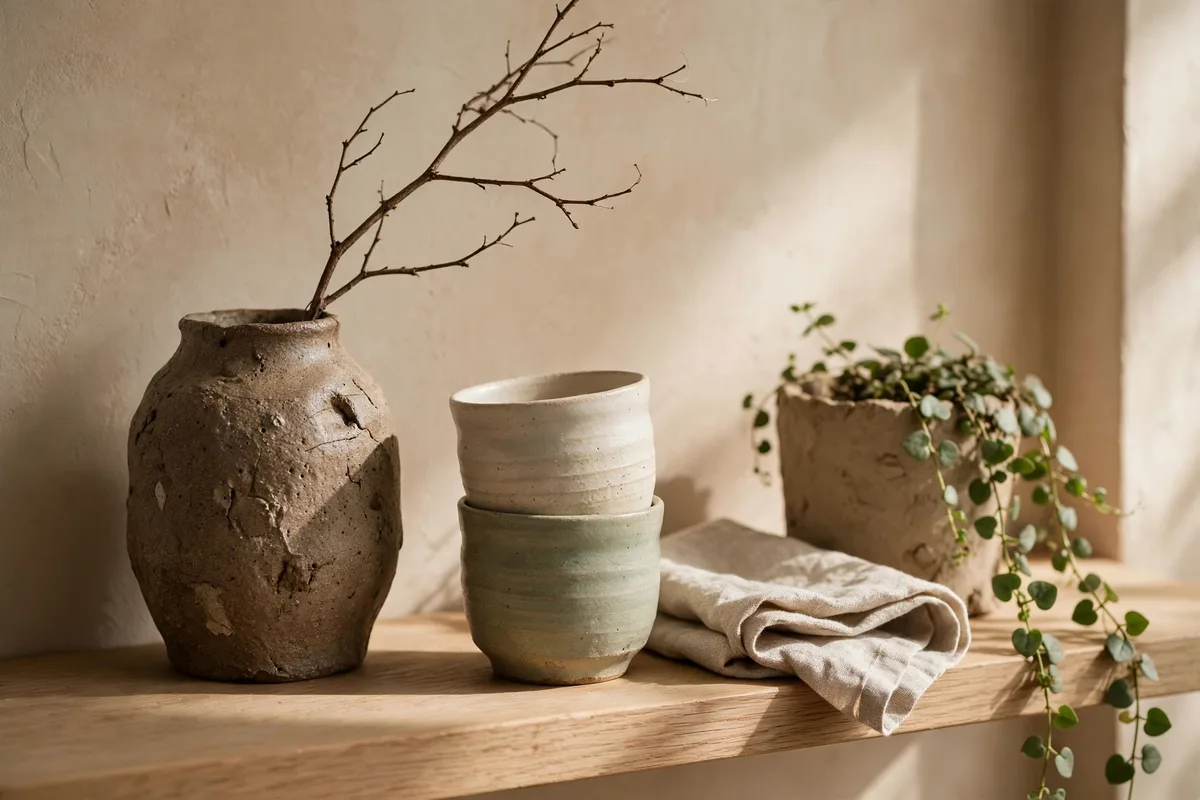
Wabi-sabi means a handmade bowl with a slightly uneven rim beats a flawless factory one. Limewash walls with soft variation, visible timber grain, and pottery with throwing rings carry the small irregularities that make the style feel human instead of staged.
What colors define a japandi home interior?
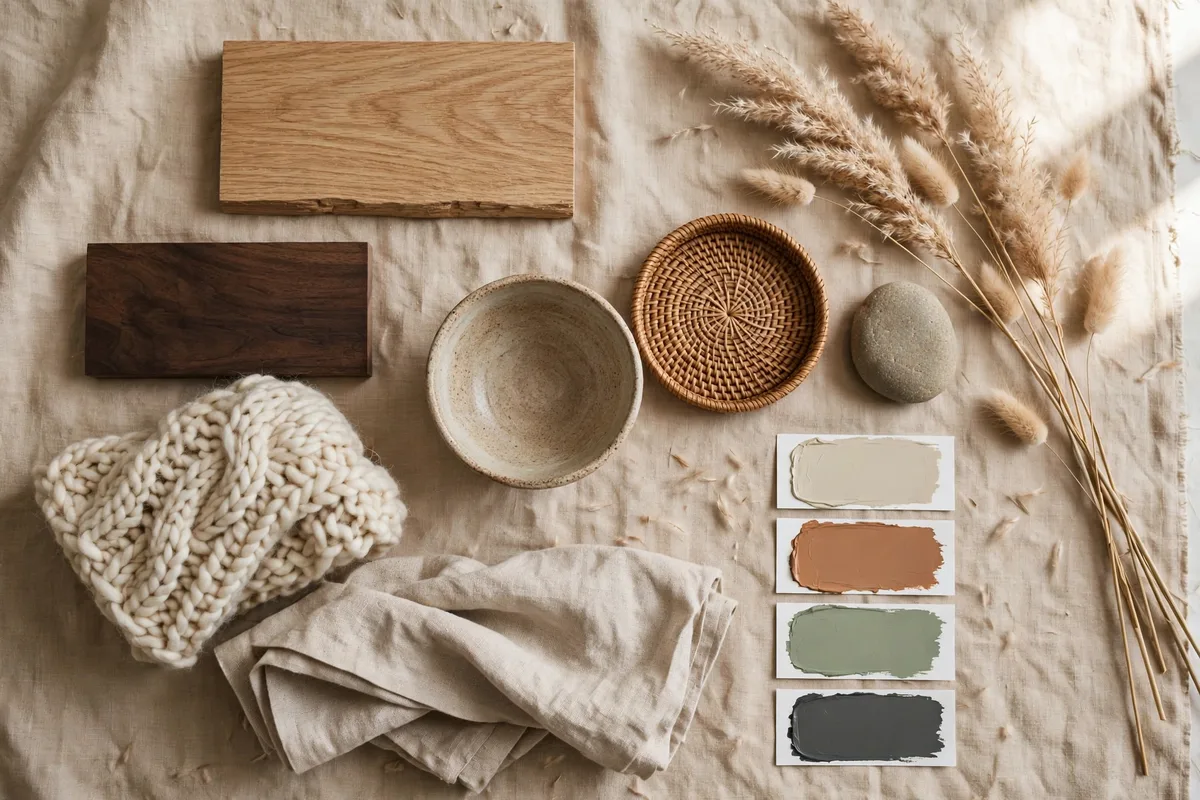
The palette is warm, muted, and earthy: warm white, oatmeal, greige, sand, clay, and soft sage, grounded by natural wood and anchored with one dark note — charcoal, espresso, or matte black. Bright saturated color stays out entirely.
Two rules keep it working: match undertones (hold paint, fabric, and wood samples side by side in your own light), and never skip the dark accent — one charcoal cushion or black-framed mirror keeps an all-pale room from feeling flat.
Skip stark cool whites. Warm whites and greiges keep the room soft instead of clinical, and you can refresh seasonally by swapping two or three small items — a rust-toned vase in fall, pale linen in spring — without repainting.
Which materials belong in a japandi home interior?
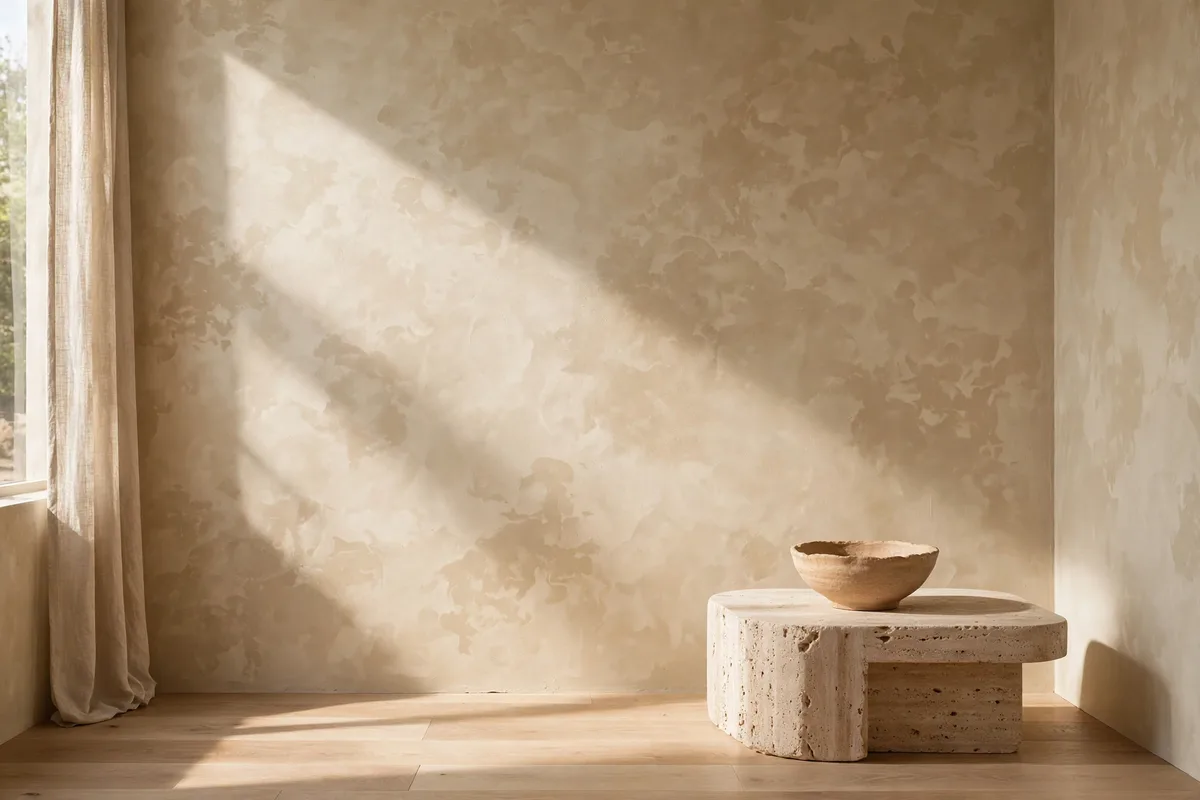
Wood is the hero and usually appears in one or two tones per room — pale oak or ash for the main pieces, dark walnut or smoked oak as the deeper note. More than two or three wood tones in one space reads as chaos, so edit hard. Around the wood, layer natural textures: washed linen, chunky wool or jute, rattan, honed stone, and handmade ceramics. Finishes stay matte — the moment a surface turns glossy, it stops reading as japandi.
If real wood is not in the budget, choose another honest material like painted metal or stone over wood-look vinyl — faux finishes fail the tactile test the whole style is built on.
Warm or deep: pick your lane
A japandi home interior is not one fixed look — it runs on a spectrum, and picking your lane early keeps every purchase consistent. The warm lane is the classic: pale oak, oatmeal linen, warm white walls, lots of daylight. It suits small or north-facing rooms and anyone who wants maximum airiness.
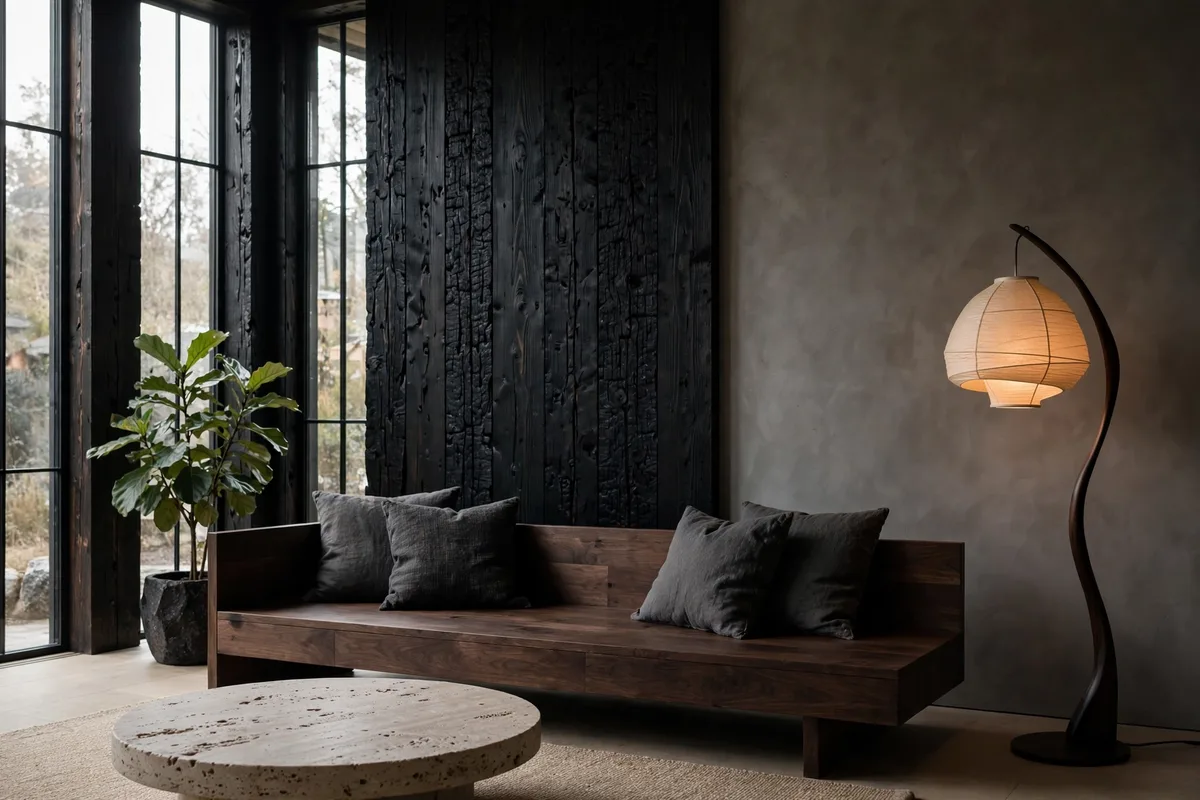
The deep lane is the 2026 evolution: dark walnut, charred-wood accent walls, charcoal textiles, warm greige plaster. Same principles, moodier read — keep the dark-to-light ratio consistent across rooms so the home feels like one story.
How do you light a japandi home interior?
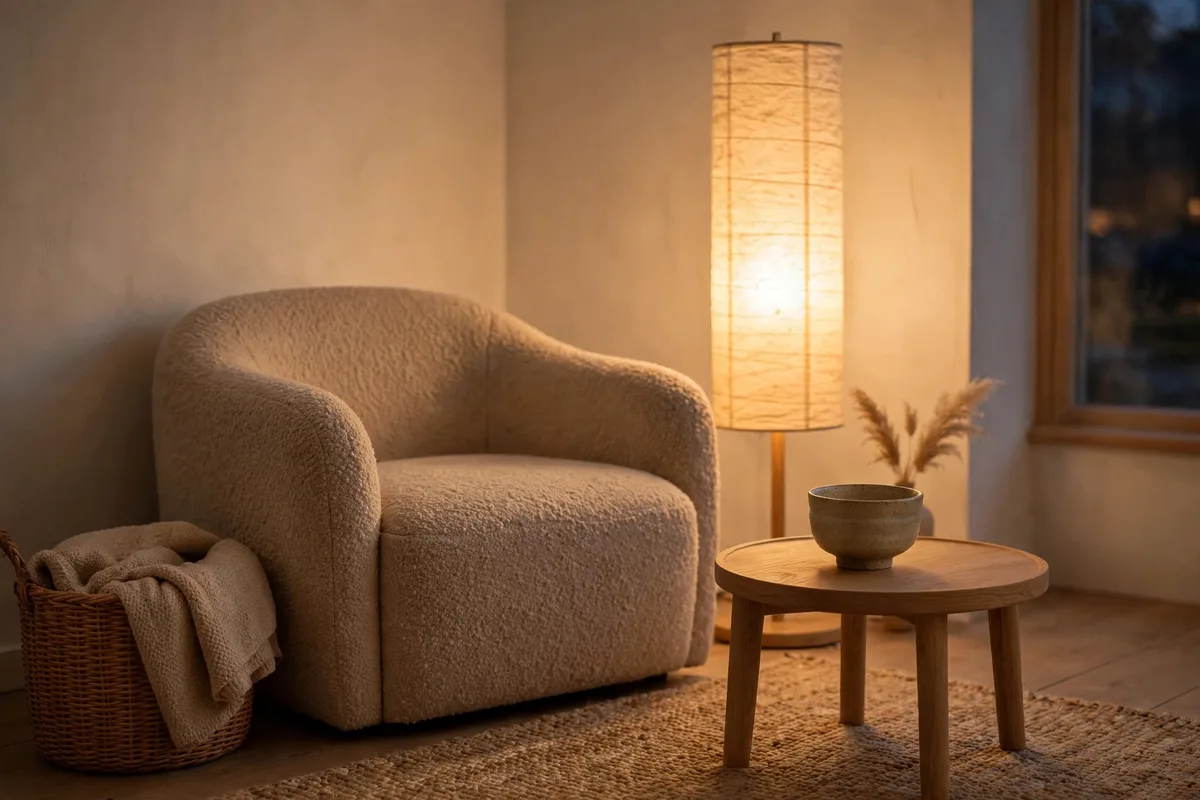
Harsh overhead lighting kills a japandi home interior faster than any furniture choice. Layer three soft sources at different heights instead: a paper or rattan pendant, a low floor or table lamp, and a candle or small lantern for evenings. Keep bulbs at 2700K–3000K — cool white turns wood grey and linen clinical. Paper shades diffuse the glow, and sheer linen curtains filter daylight while keeping privacy; heavy dark drapes are the first thing to go.
What does japandi look like in each room?
The principles of a japandi home interior stay the same — here is how they translate per room.
Living room
Anchor with a low linen sofa, a solid-wood coffee table, and a jute or wool rug. Add a paper pendant or floor lamp, one sculptural plant in a clay pot, and a single handmade ceramic — then stop. Starting from scratch? These living room sofa designs favor the low, clean lines you want.
Bedroom
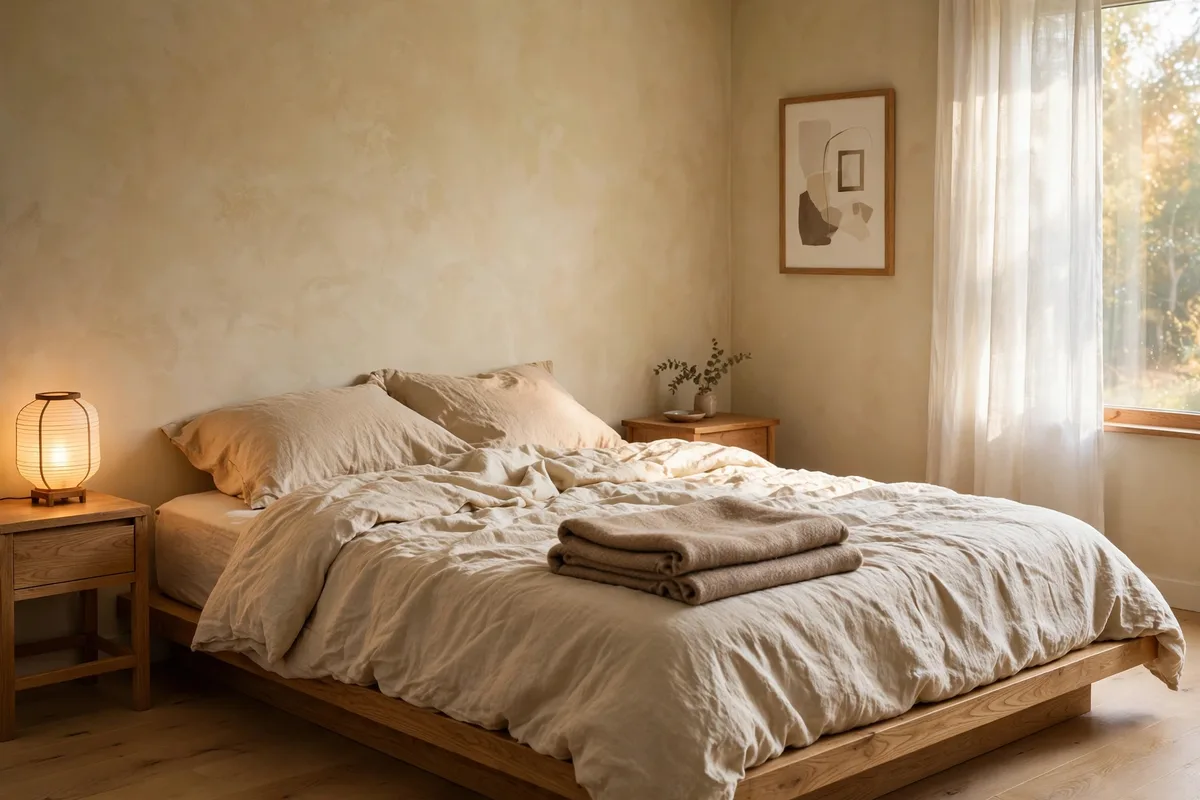
The bed goes low — a platform frame, linen bedding in cream or soft grey, one folded wool throw. Nightstands stay minimal, closet doors hide everything else (these bedroom closet ideas help), and decor stops at one plant plus one artwork. More inspiration: bedroom interior design ideas.
Kitchen and dining
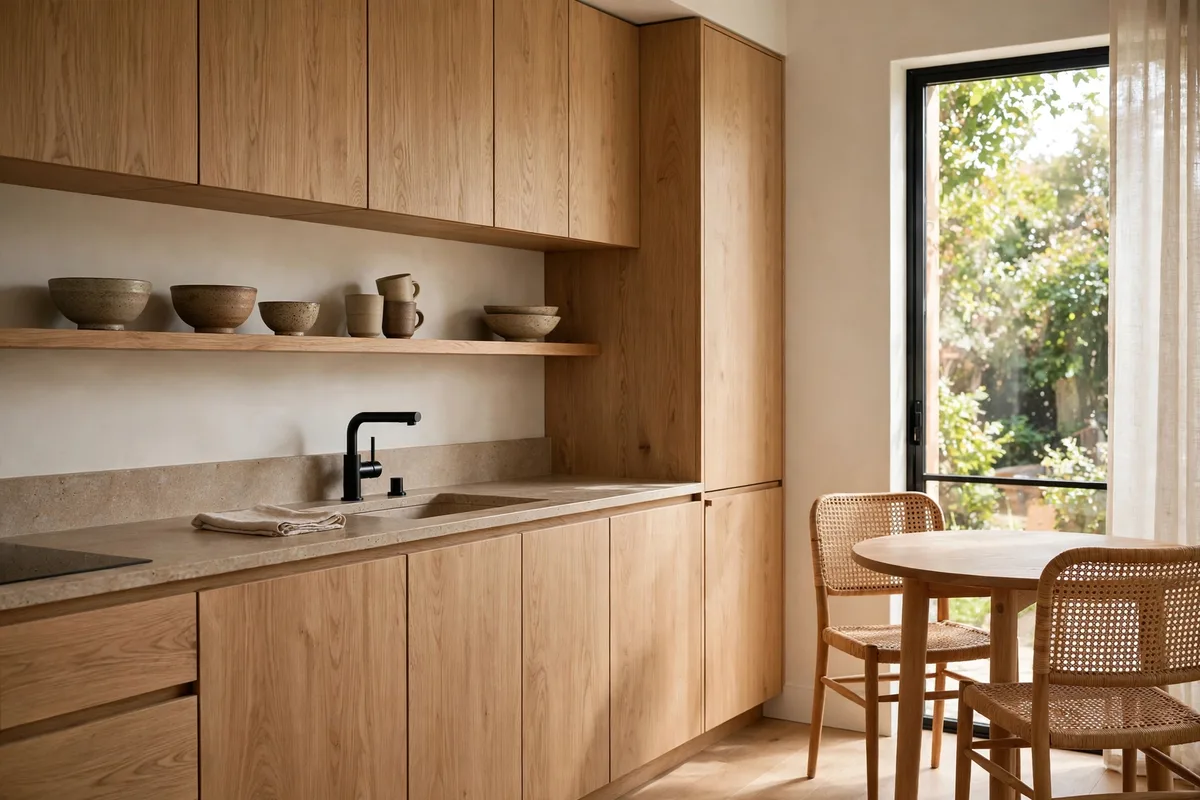
Function rules: handleless oak or matte cabinets, clear counters, closed storage for everything but the beautiful everyday items. One short open shelf with handmade stoneware earns its place; a crowded countertop does not. Finish hardware in matte black or brushed brass so it blends in.
Bathroom
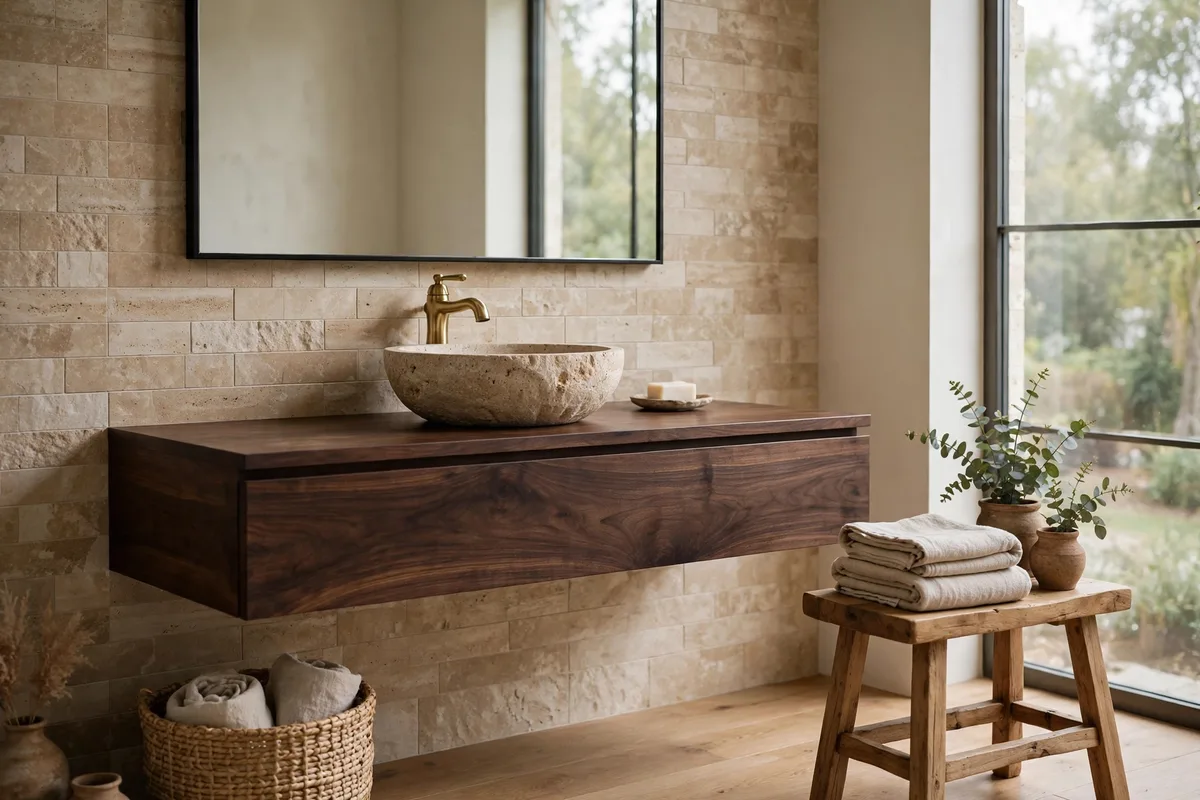
A japandi home interior bathroom should feel like a small spa: a floating dark-wood vanity, a stone vessel sink, large-format stone-look tiles, folded oatmeal towels on a wooden stool. Keep surfaces nearly bare — one soap dish, one eucalyptus sprig in a clay pot.
Entryway
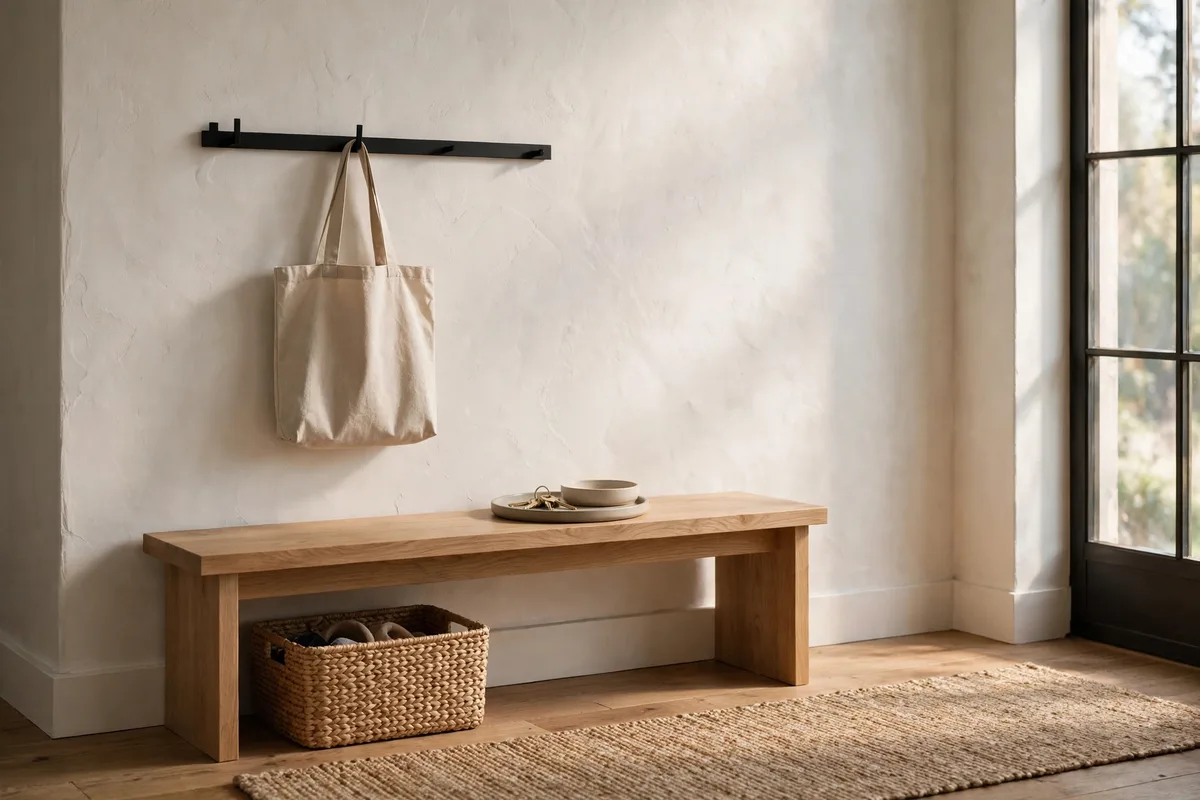
A low wood bench, a woven basket for shoes, and a single matte-black hook rail keep this small space functional and calm. Add a tray for keys and mail — visible order at the door sets the tone for the whole home.
📌 Saving this guide?
Pin it to your home board — the palette names, five principles, and room checklist make a handy shopping reference.
How do you get the japandi look on a budget?
Building a japandi home interior on a budget starts by spending nothing: pull everything out of one room and put back only what you truly need and use. That single edit changes how the space feels, and clutter discipline is free.
Next, rearrange what you own — move furniture off the walls, group pieces with similar wood tones, leave more floor visible. Then add warmth cheaply: a throw under $30, one plant in a clay pot, and warm-toned bulbs in lamps you already have shift the mood more than any furniture buy.
When you do spend, thrift first: second-hand solid-wood pieces already carry the honest materials and gentle wear the style loves. Put real money into one solid piece — usually the coffee table — and let restraint do the rest.
What mistakes ruin a japandi home interior?
Small missteps push the style toward cold, flat, or theme-y. The most common ones:
- Too stark. White walls with no wood or texture read sterile. Balance every pale surface with something warm and natural.
- Overdecorating. One big shopping trip looks staged. Collect pieces over time and leave shelves half empty.
- Too many wood tones. Five competing finishes create chaos. Stick to one or two — light oak floors with a darker walnut side table.
- Ignoring texture. With little color, texture carries the room. Mix matte, rough, woven, and soft; all-smooth surfaces feel flat.
- Forgetting comfort. A room with nothing soft to sit on is just empty. One cozy textile layer is non-negotiable.
- Asian-themed decor. Buddha statues and paper fans turn a philosophy into a costume. Let materials and craft carry the Japanese side — Castlery’s japandi guide frames it well: function first, natural materials, intentional simplicity.
FAQs
What is the difference between Scandinavian and japandi design?
Both love minimalism, but Scandinavian rooms lean bright and cozy — white walls, pale wood, soft textiles, the hygge feeling. Japandi adds Japanese wabi-sabi: warmer earth tones, darker wood, lower furniture, more imperfection and empty space. Prefer the brighter cousin? Our Scandinavian living room ideas show that side of the family.
Is japandi still in style in 2026?
Yes — it has outlasted the trend cycle because it is a set of principles, not a look. In 2026 it is warming up: richer textures, deeper woods, more contrast than the pale greige rooms of a few years ago.
What colors are used in japandi interiors?
The palette of a japandi home interior runs warm and muted: warm whites, oatmeal, greige, sand, clay, and sage, grounded by natural wood and anchored with one dark note — charcoal, espresso, or matte black. Bright saturated color stays out.
Can you have a TV in a japandi living room?
Yes, as long as it does not dominate. Mount it low over a long wood console, run every cable out of sight, and keep the wall around it bare. A black rectangle floating alone on an empty white wall is the one version that breaks the calm.
Do japandi rooms have to be all beige?
No — and all-beige is one of the fastest ways to get it wrong. A japandi home interior needs contrast to feel finished: pair pale oak with dark walnut, warm walls with a charcoal cushion, smooth stone with nubby wool. Restraint with color, not absence of it.
A japandi home interior rewards patience more than spending. Pick a lane, edit one room at a time, and let every object earn its place — the calm builds itself from there.
💬 Which room will you try first?
Tell us in the comments — the living room reset or the bedroom calm-down? And keep exploring: Scandinavian living room ideas, bedroom interior design, and interior design ideas.