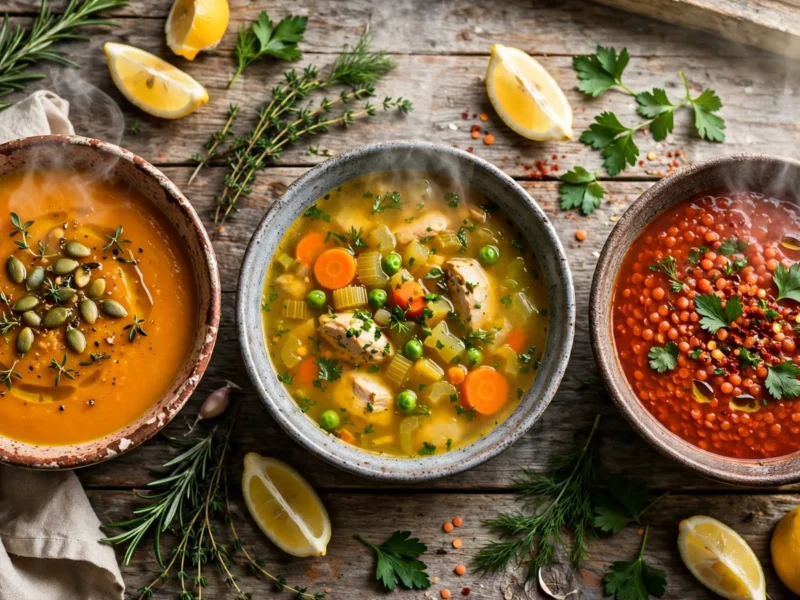
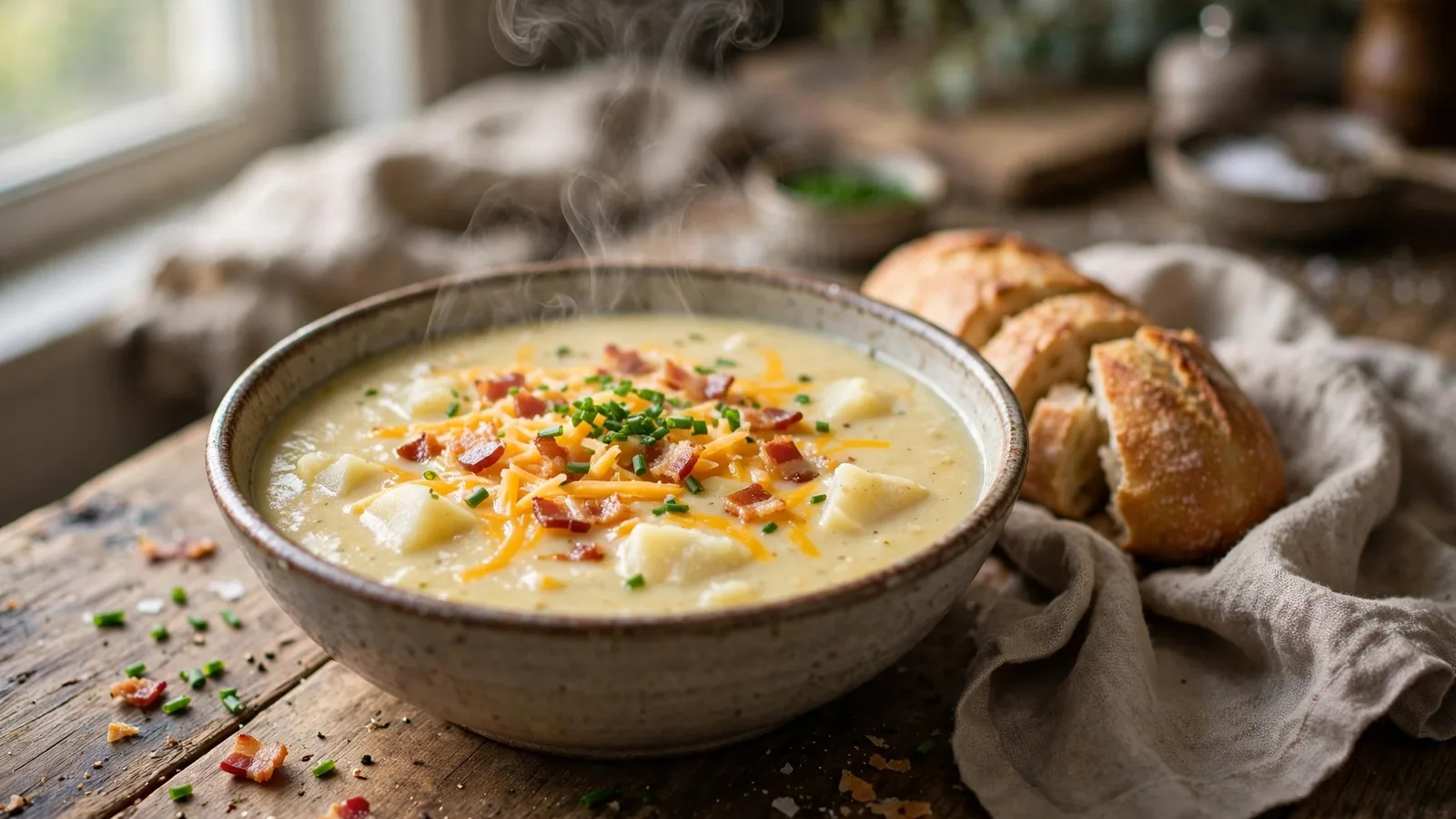
Potato soup recipes fall into five base styles: creamy blended, brothy, loaded baked-potato style, chowder, and roasted. The style decides the potato — starchy russets melt down and thicken a creamy soup; Yukon Golds keep their shape in a clear broth. Below are 14 recipes by style, plus the technique rules that make every version work.
Which Potatoes Make the Best Potato Soup?
Russet potatoes make the best creamy potato soup because their high starch and low moisture let them break down into the broth and thicken it naturally. Yukon Golds are the all-purpose pick — buttery and smooth, they hold their shape longer. Red potatoes stay firm, so save them for brothy soups.
Per a potato expert via Simply Recipes, the real difference is moisture content: russets carry less moisture, so their cells swell and pull apart — great for thickening, bad for keeping cubes intact.
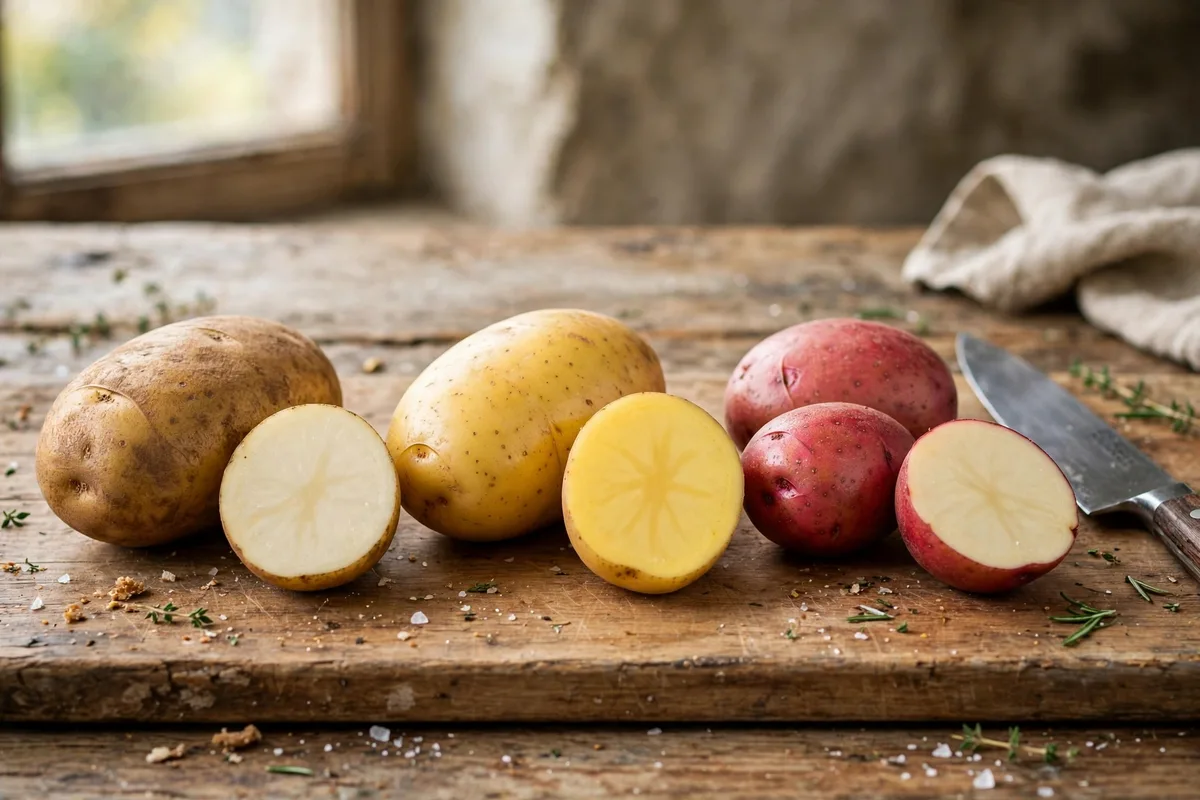
| Soup style | Best potato | Why it works | Avoid |
|---|---|---|---|
| Creamy blended | Russet | Breaks down and self-thickens the broth | Waxy reds (won’t thicken) |
| Brothy / clear | Yukon Gold or red | Keeps distinct, tender cubes | Russet (disintegrates) |
| Loaded baked-potato style | Russet or Yukon Gold | Thick base with a few intact chunks | — |
| Chowder | Yukon Gold | Buttery flavor, tender but not mushy | Russet (gets gluey with dairy) |
| Roasted | Yukon Gold or russet | Caramelizes beautifully at 425°F | — |
How Do You Make Potato Soup Thick and Creamy?
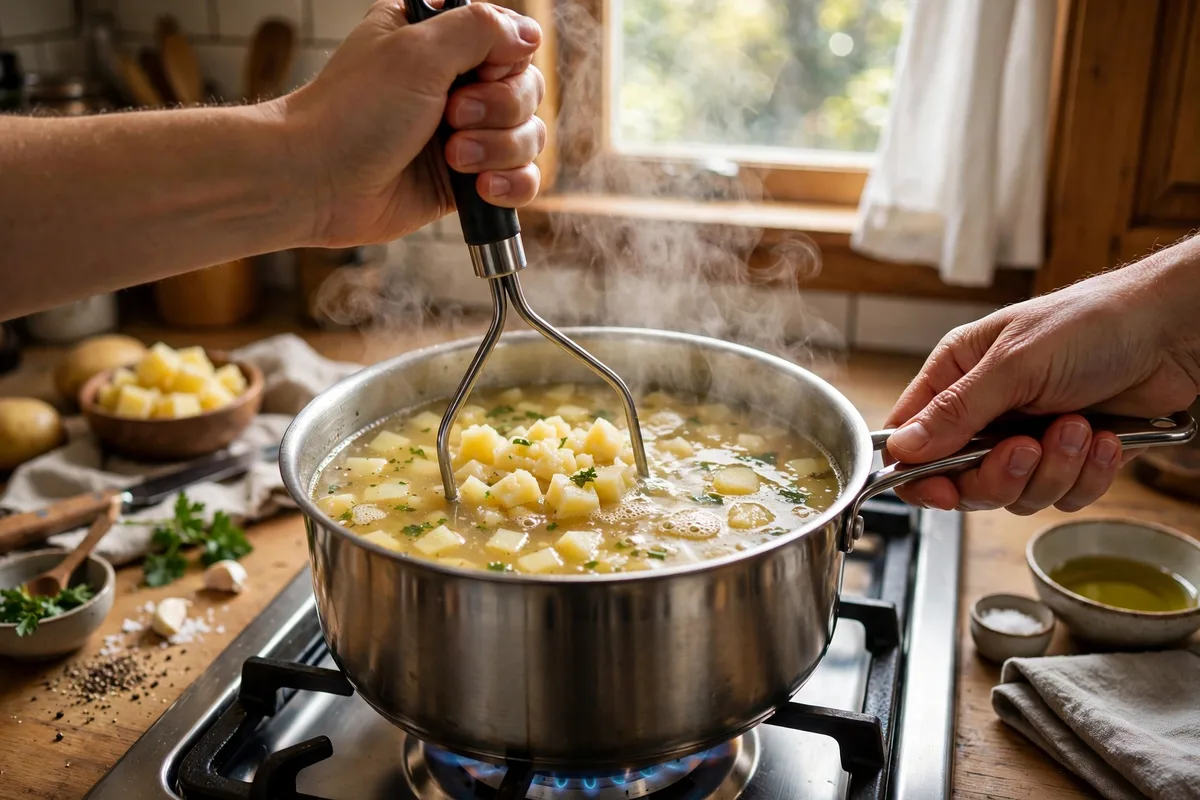
The most reliable way to thicken potato soup is to mash or blend part of the potatoes — their starch thickens the broth with no added flour. A classic roux or cornstarch slurry also works. Jacques Pépin’s shortcut: whisk in instant mashed potato flakes, about 1 cup per 4–5 cups of liquid (The Kitchn).
One rule matters most: don’t overwork the potatoes. Food processors and over-blending release too much starch and turn the soup gummy. Mash gently in the pot, or blend at most a third in short pulses. Whichever method you pick works across all the potato soup recipes below.
The 5 Base Styles of Potato Soup Recipes
Five formulas, not five fixed recipes — each pairs a texture goal with the potato and technique that delivers it. Mix and match to invent your own potato soup recipes.
Style 1: Creamy blended
The velvety kind of potato soup recipes — russets dissolve into the broth and do the thickening for you.
Silky Classic Creamy Potato Soup
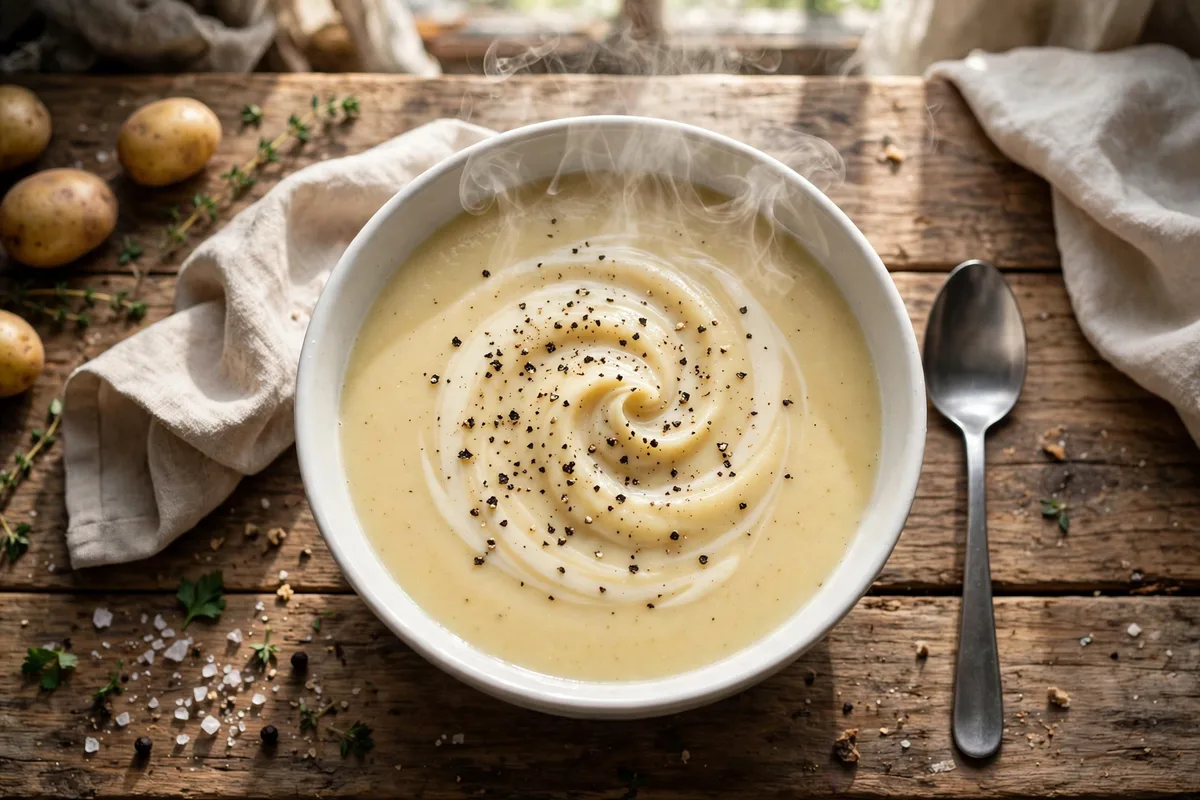
This is the minimalist benchmark: russets simmered in broth with onion and garlic, blended smooth, finished with a swirl of cream and cracked black pepper. Because the potatoes do the thickening, you need no flour at all. It takes about 35 minutes and reheats beautifully for next-day lunches.
Chunky Bacon-Cheddar Potato Soup

The half-blended middle ground — mash about half the pot with a masher and leave the rest chunky. Crispy bacon, shredded sharp cheddar, and chives go on top right before serving so they stay distinct. Use a full-flavored broth here; the cheese and bacon need salt balance from underneath.
Style 2: Brothy
Clear golden broth with distinct cubes — use Yukon Golds or reds so they stay intact.
Potato Leek Soup
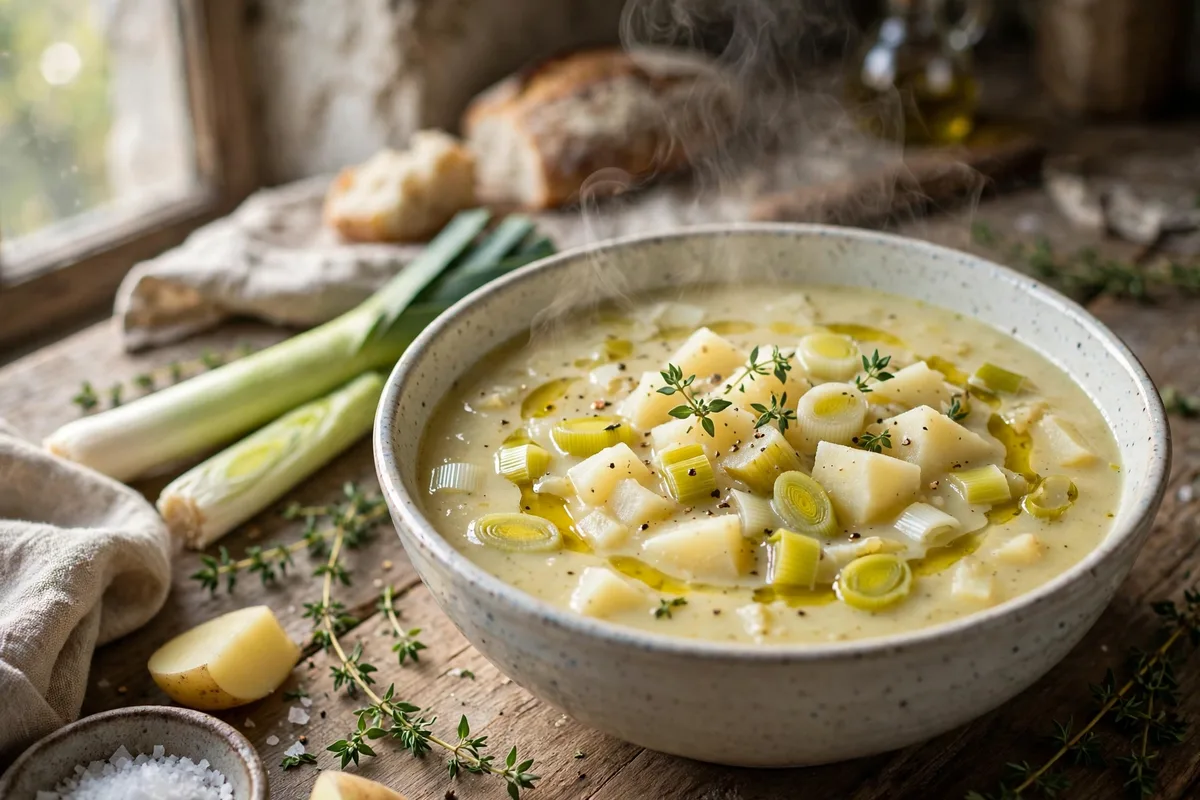
Softened leeks and Yukon Gold chunks simmered in broth, finished with thyme and olive oil. Serve hot as written, or chill it for a vichyssoise-style bowl. Wash leeks well — grit hides between the layers. A swirl of cream at the end makes it dinner-party worthy.
Chicken Potato Soup
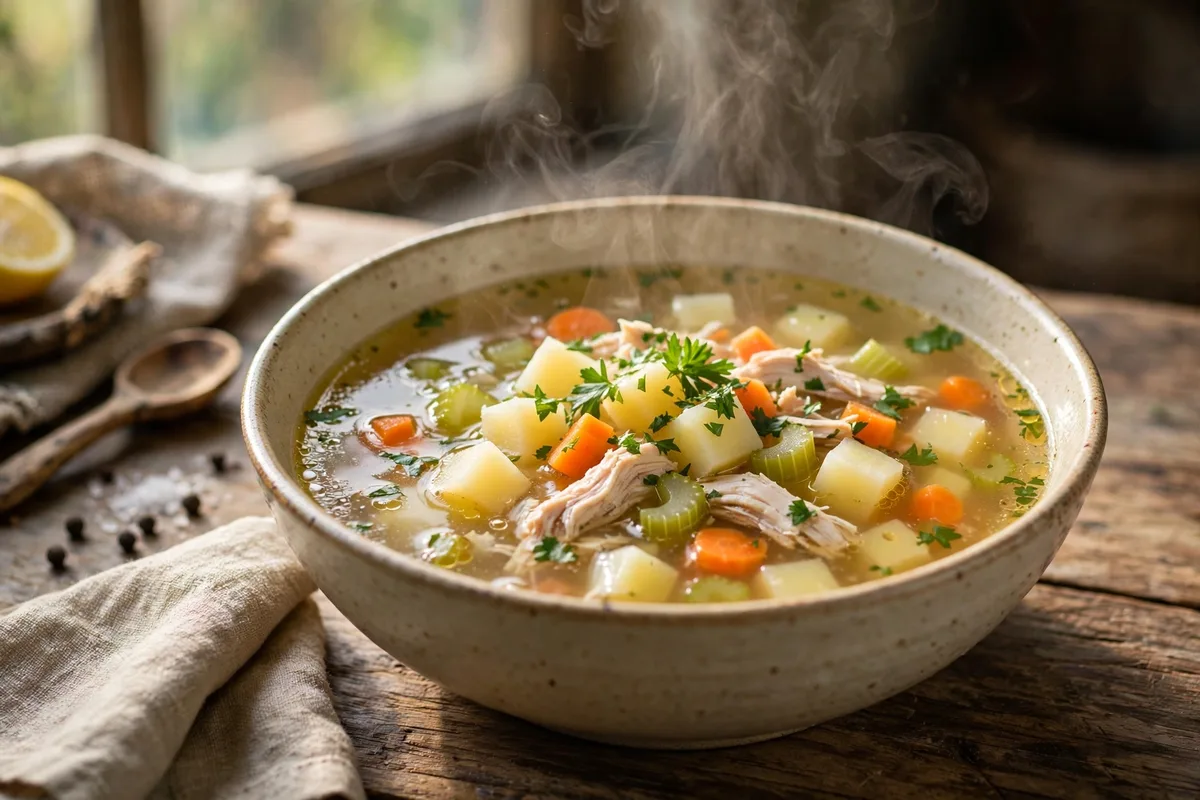
Shredded chicken, potato cubes, carrots, and celery in a seasoned golden broth with parsley — the heartier answer to chicken noodle, and naturally gluten-free. Add leftover roast chicken in the last 5 minutes. (Got extra? Our leftover chicken recipes and shredded chicken recipes put it to work all week.)
Style 3: Loaded baked-potato style
Everything you’d pile on a baked potato, stirred into a thick base. Bake the potatoes first for the deepest flavor, or simmer diced russets for speed. Loaded potato soup recipes are the crowd-pleasers of this list.
Classic Loaded Baked Potato Soup

The restaurant favorite at home: a flour-thickened base with baked potato chunks, sharp cheddar, crumbled bacon, and sour cream per bowl. Stir the cheese in off the heat — boiling dairy turns grainy fast. Top each serving individually so leftovers reheat cleanly.
Broccoli Cheddar Potato Soup
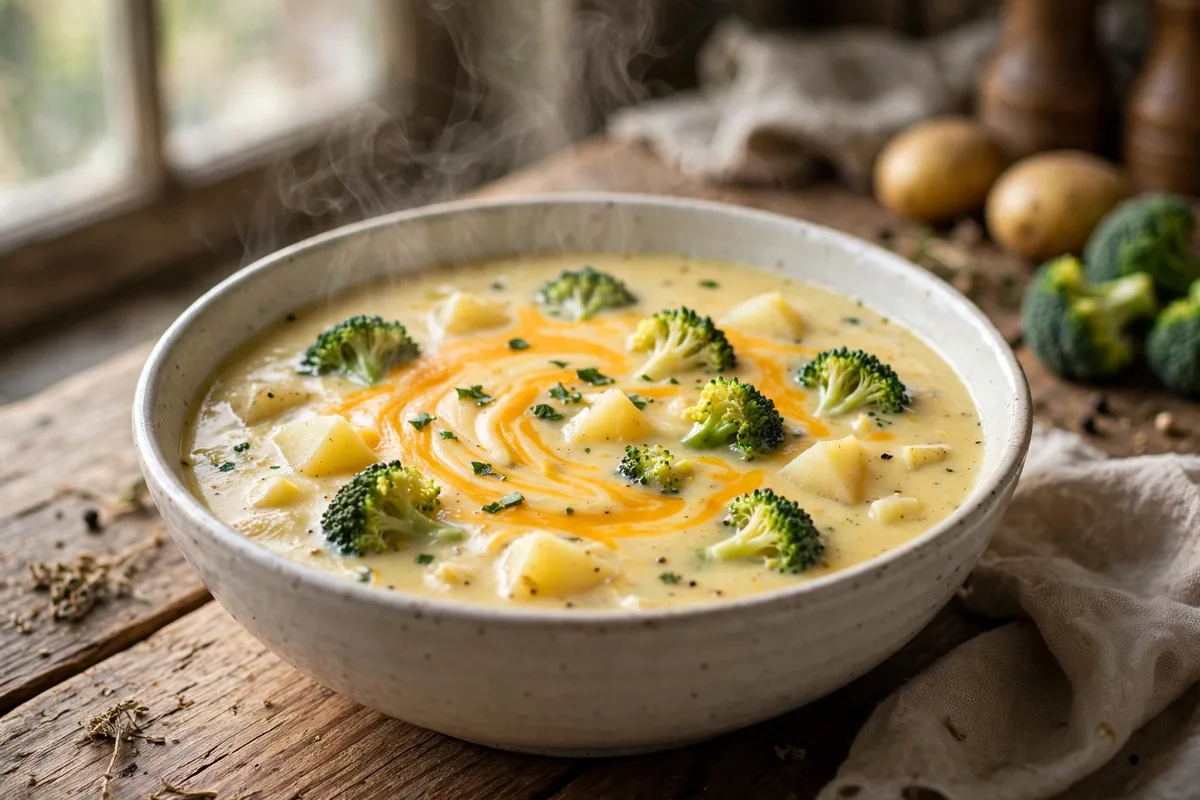
The loaded formula with a vegetable twist — broccoli florets in a cheddar-thickened potato base, finished with a cheddar swirl. Add the broccoli in the last 8–10 minutes so it stays bright green. Kids who ignore broccoli on a plate tend to inhale this.
Style 4: Chowder
Thick, chunky, and milky — in chowder-style potato soup recipes, Yukon Golds give the buttery texture.
Corn and Potato Chowder

Sweet corn, potato chunks, and celery in a creamy broth with smoked paprika on top. Frozen corn works — add it straight from the freezer in the last 10 minutes. A cornstarch slurry at the end keeps it glossy. Leftovers thicken overnight — loosen with a splash of broth when reheating.
Ham and Potato Chowder
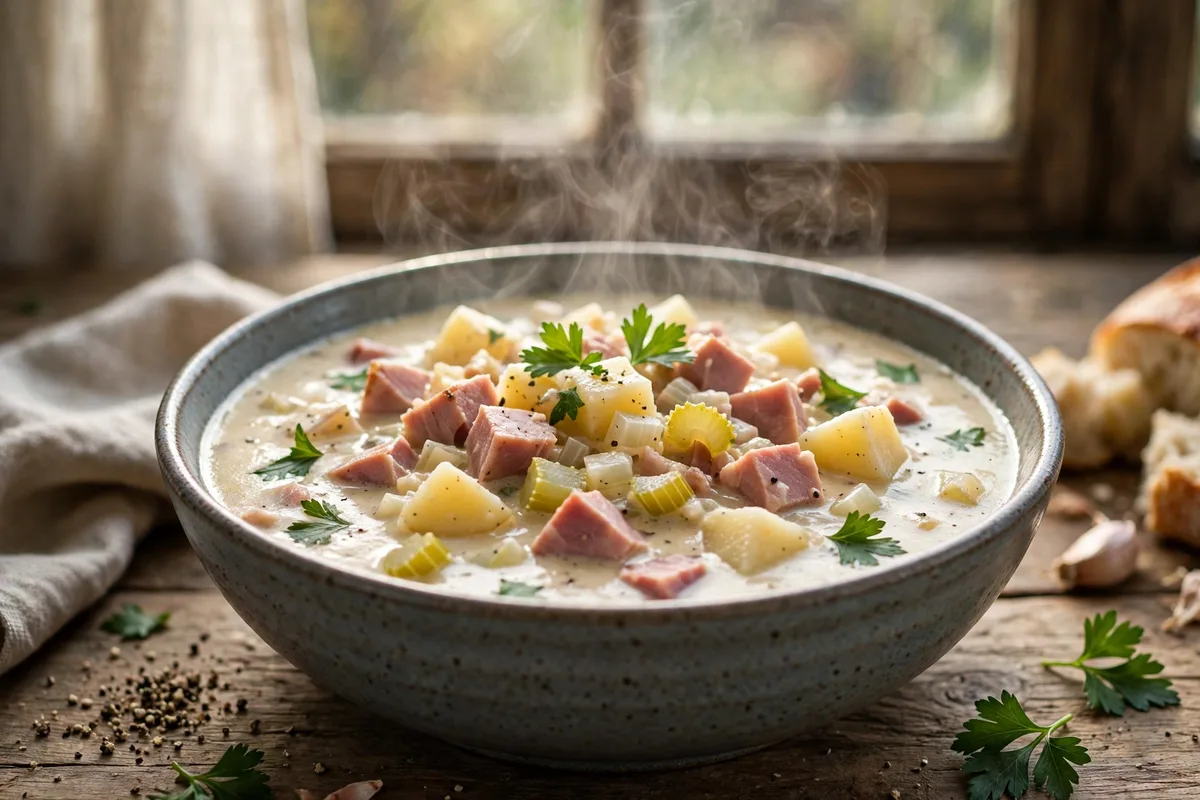
Diced ham, potato cubes, and celery in a lightly creamy broth with parsley — the classic post-holiday soup. Dice the ham small so every spoonful gets some, and go easy on added salt. A bay leaf in the pot adds depth; just fish it out before serving.
Style 5: Roasted
Roast first, soup second — caramelizing at 425°F builds a toasty depth no stovetop simmer can match.
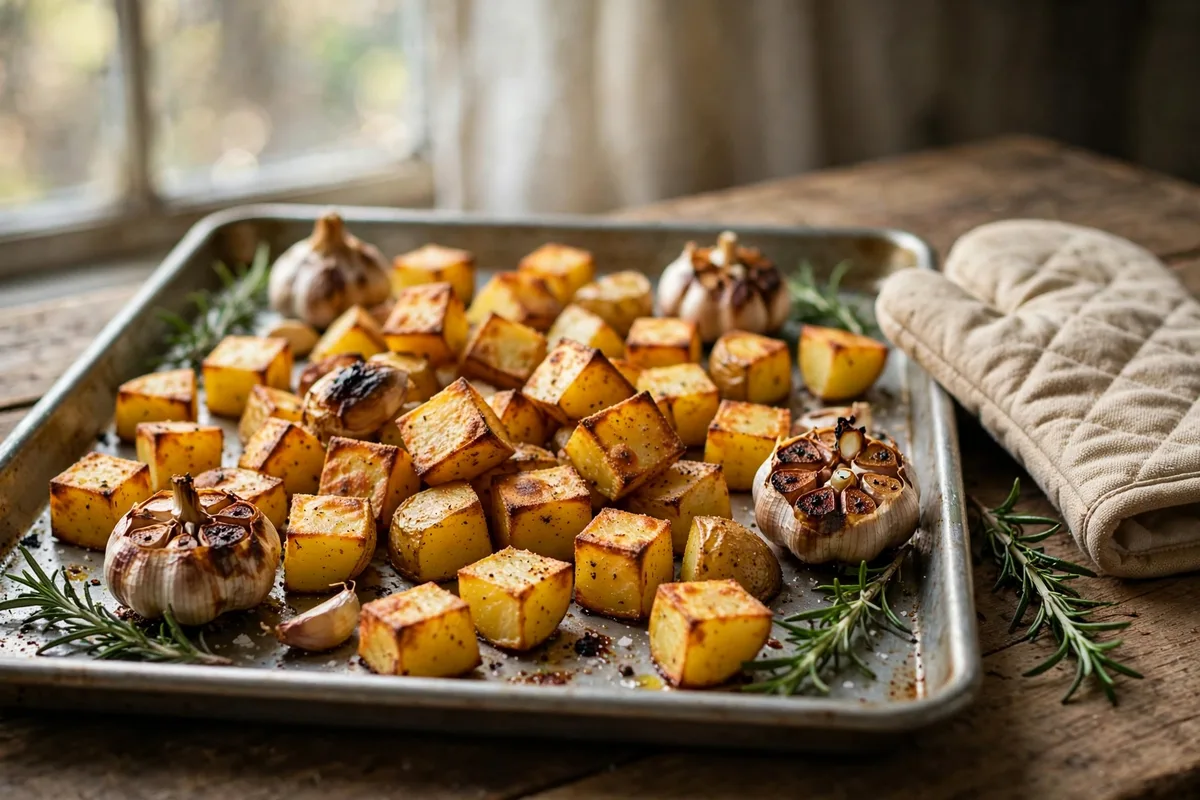
Roasted Garlic Potato Soup
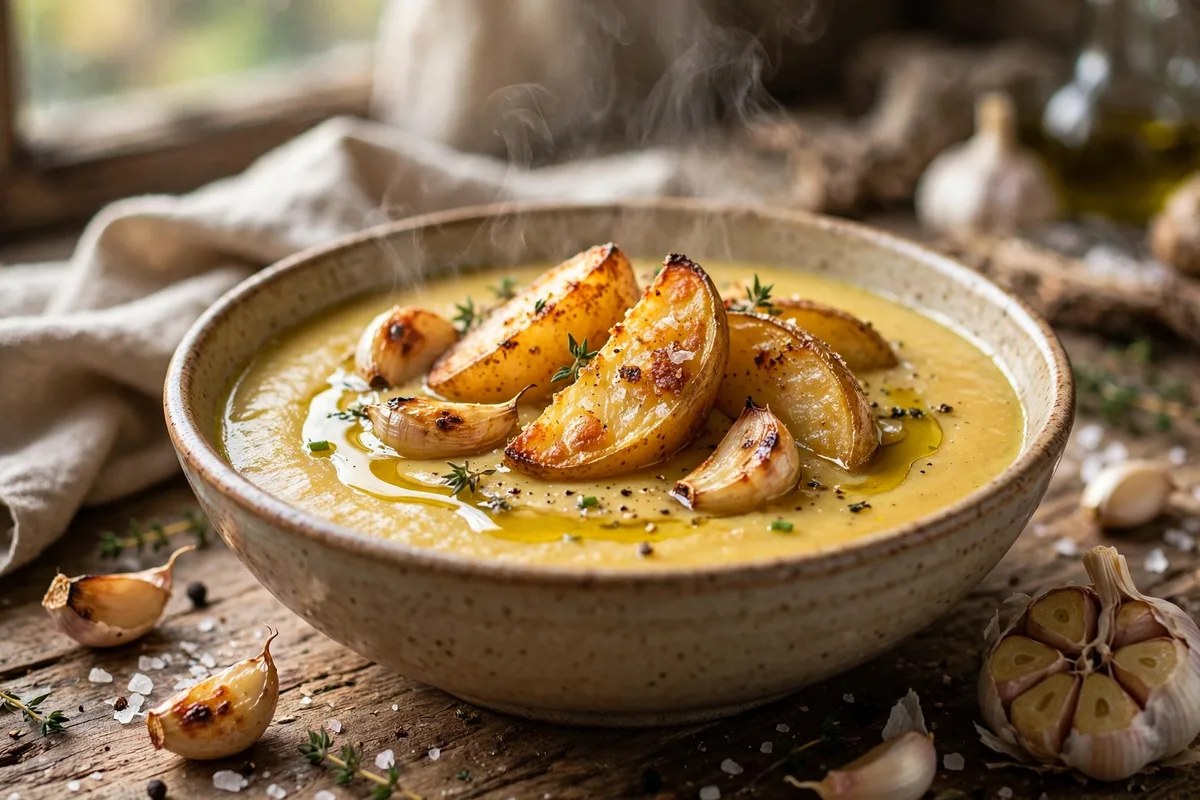
Whole heads of garlic roasted until jammy, blended with roasted potato wedges and broth, finished with olive oil and thyme. Roasting tames garlic’s bite into something sweet and mellow — don’t be shy with it. Save a few roasted wedges for the top — silky soup against crispy edges.
Roasted Red Pepper Potato Soup
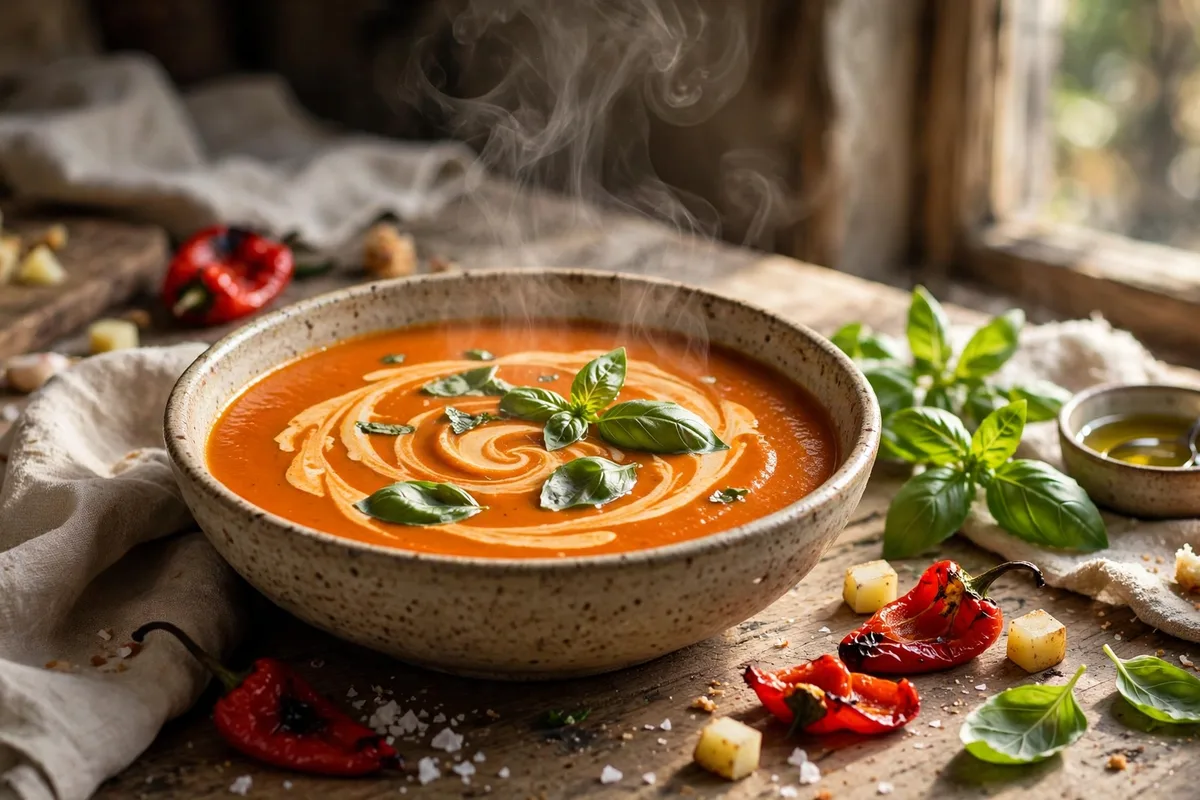
Charred red peppers blended into the potato base give this one a smoky-sweet backbone and a gorgeous color, finished with basil and a cream swirl. Jarred roasted peppers are a legitimate shortcut — drain and rinse them first so the brine doesn’t sneak into the soup. A squeeze of lemon at the end brightens everything.
📌 Found a style you love?
Pin this post to your recipe board so the whole collection is waiting when soup night rolls around.
3 More Potato Soup Variations Worth Trying
Three more potato soup recipes outside the five styles: slow cooker, dairy-free, and the cheese-forward diner classic.
Slow Cooker Potato Soup
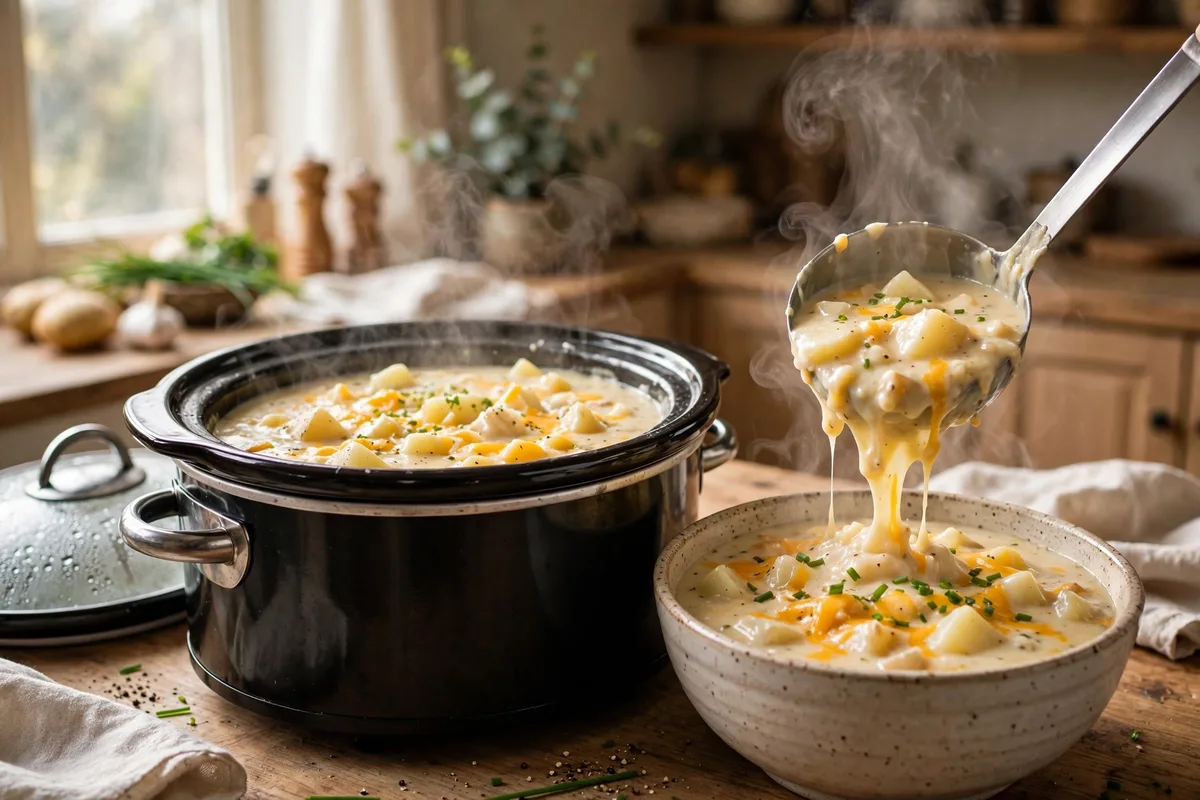
Potatoes, onion, garlic, and broth cook on low for 6–8 hours (high for 3–4); dairy goes in for the final 20–30 minutes so it doesn’t separate. Mash half the potatoes for body. The most hands-off of these potato soup recipes — see also our fall soup recipes roundup.
Dairy-Free Coconut Potato Soup
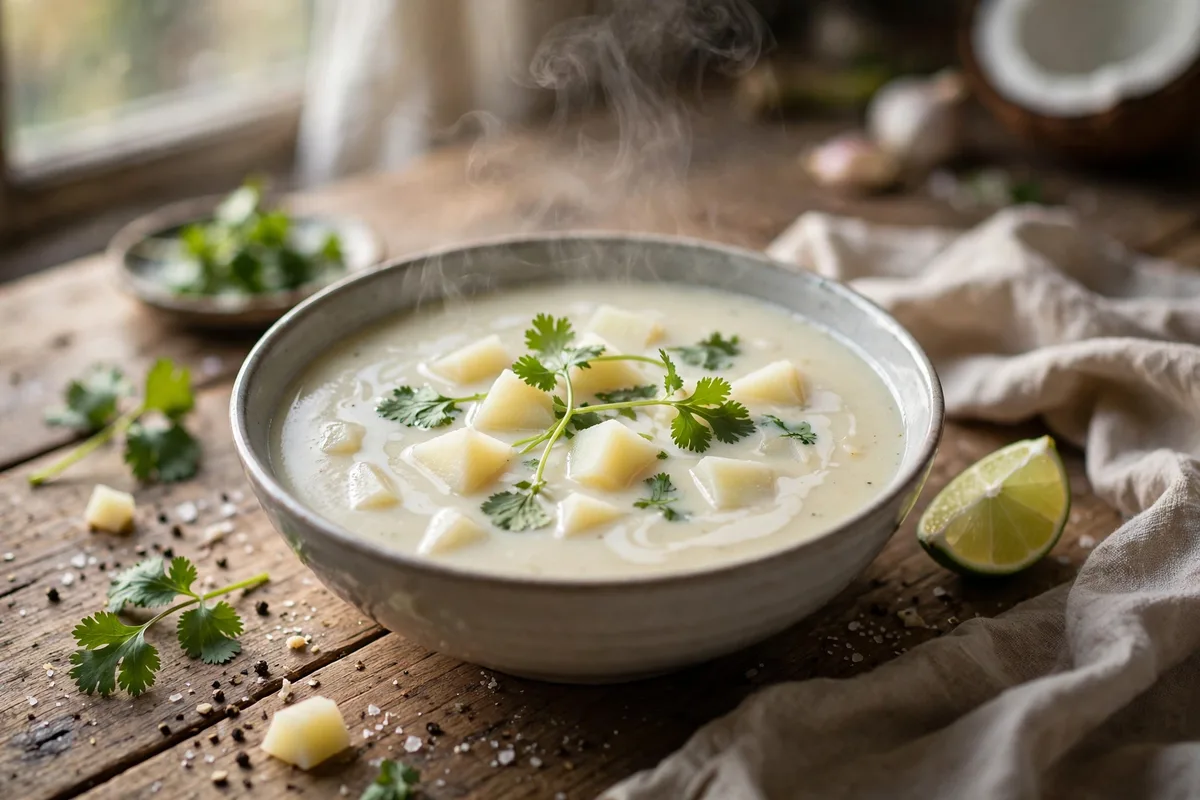
Coconut milk replaces the cream for a silky, dairy-free bowl with cilantro and lime. Use vegetable broth and it’s fully vegan — the coconut’s fat does the same rich work cream would. Curry powder or ginger turns it Thai-leaning. Finish with a squeeze of lime to keep the coconut from feeling heavy.
Smoked Gouda Potato Cheese Soup
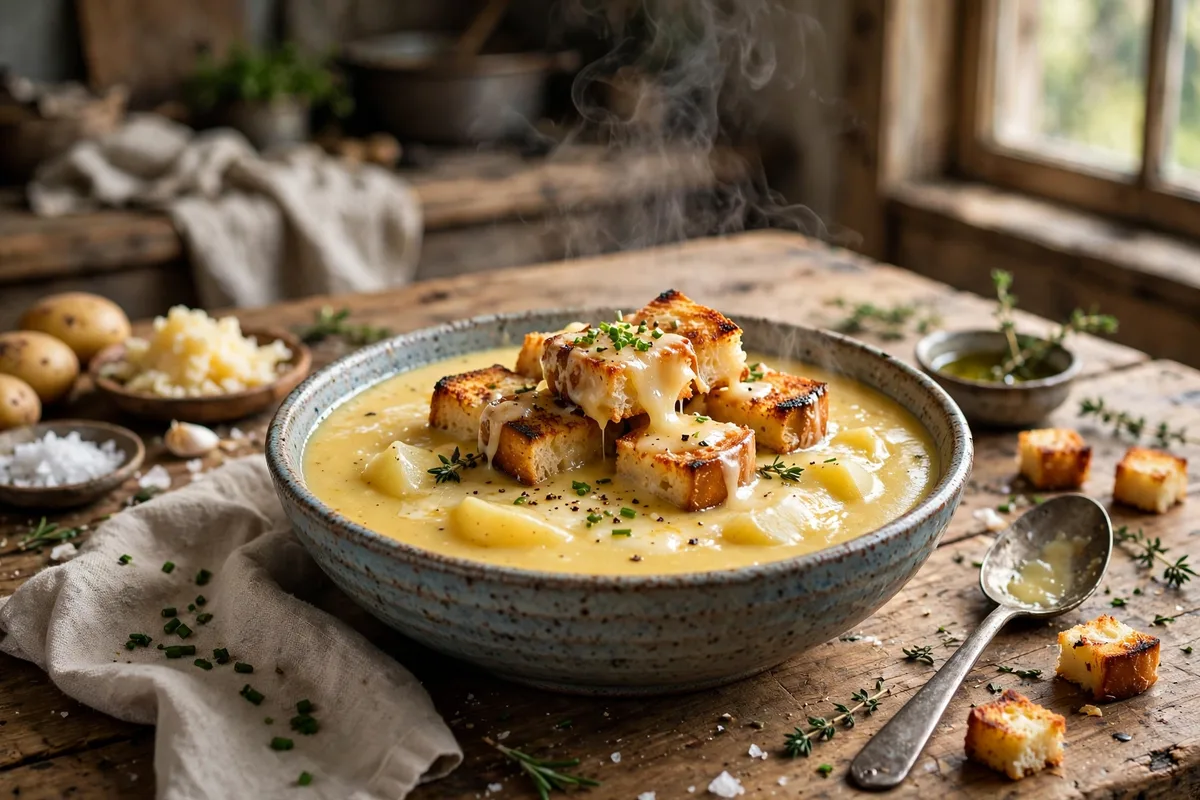
The steakhouse take: a creamy potato base melted through with smoked gouda, crowned with grilled-cheese croutons. Add the cheese off the heat — boiling soup turns it grainy. Sharp cheddar plus smoked paprika works if gouda is hard to find.
What to Serve with Potato Soup
Warm crusty bread for dunking is the classic pairing for potato soup recipes — a buttered slice alongside beats any fancy garnish.
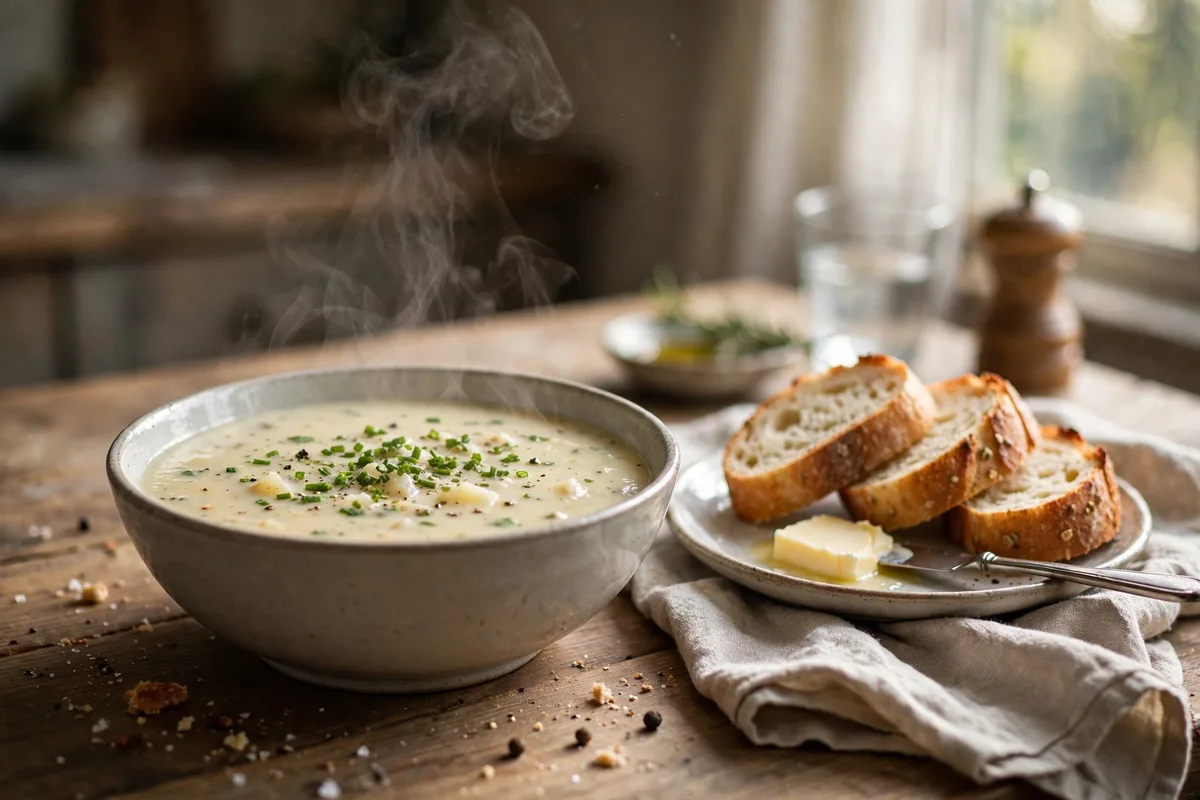
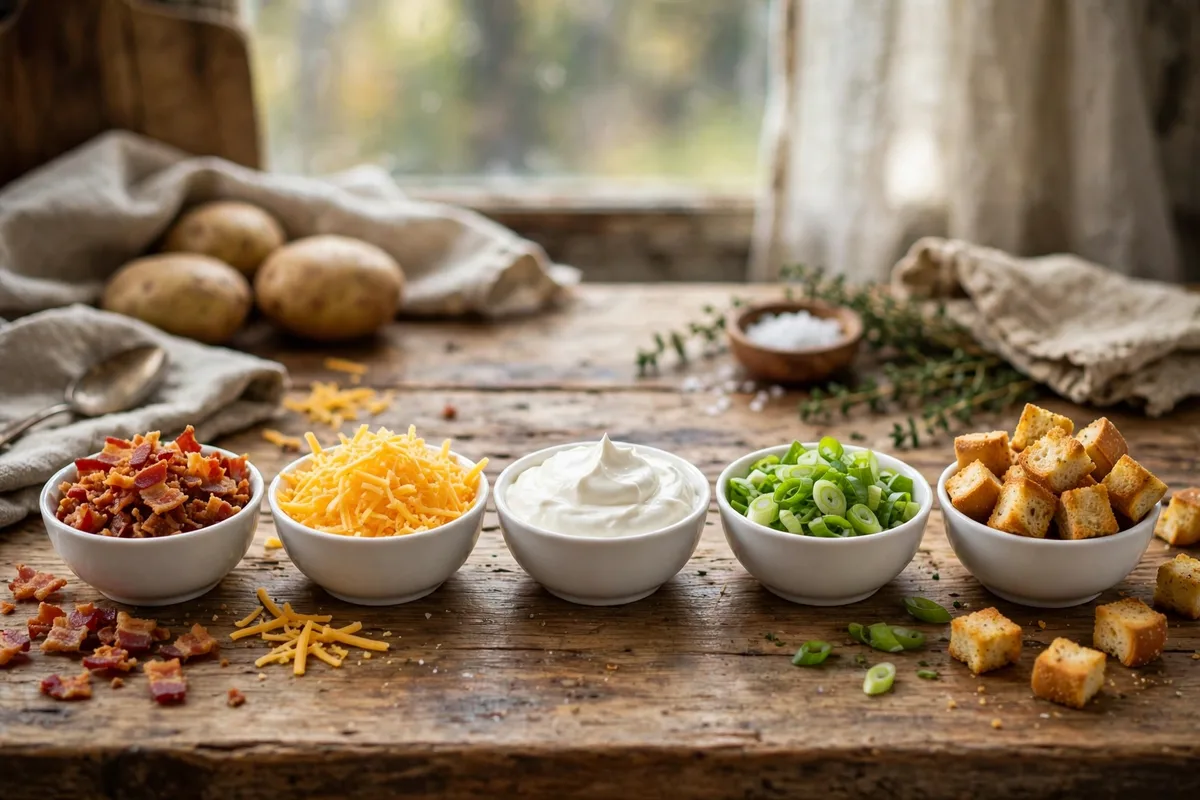
Set out a toppings bar — it suits almost any of these potato soup recipes: bacon bits, shredded cheddar, sour cream, green onions, and croutons so everyone builds their own. A crisp green salad with sharp vinaigrette cuts the richness — and our easy chili con carne uses the same toppings.
Can You Freeze Potato Soup?
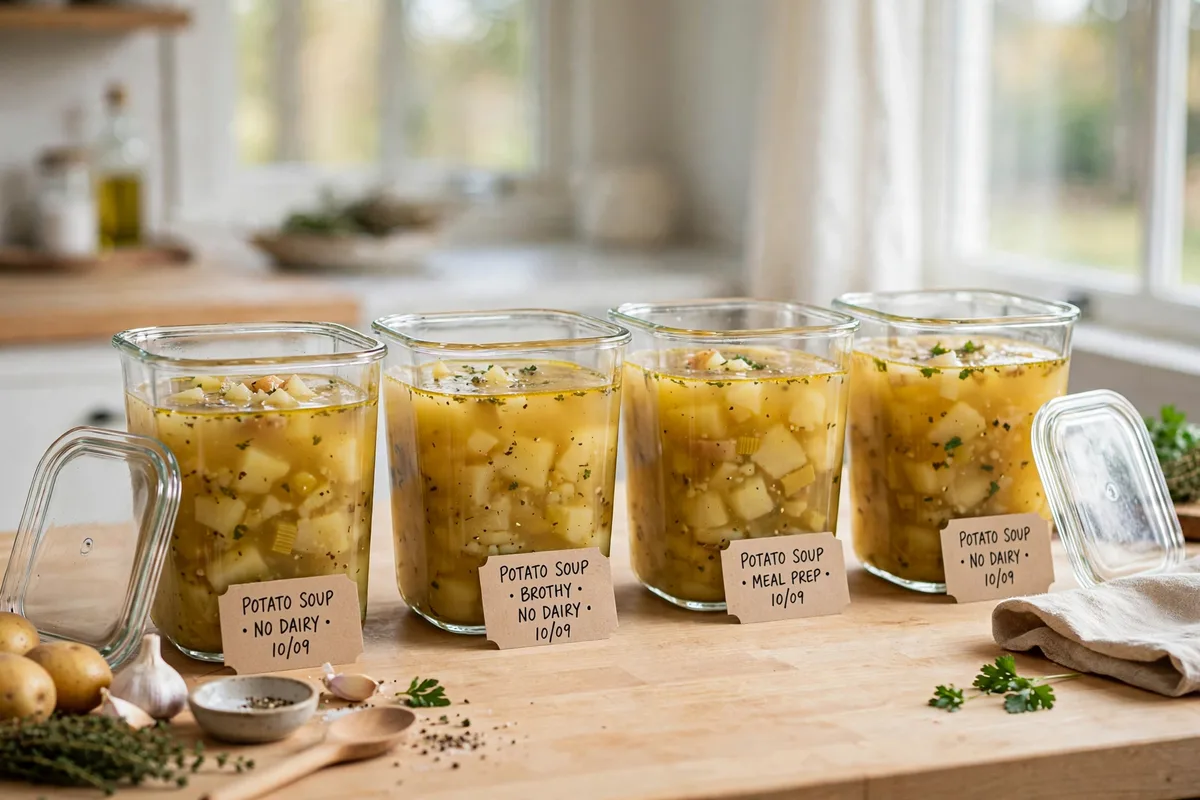
Yes — these potato soup recipes freeze well for 2–3 months at 0°F, but hold back the dairy. Milk, cream, and cheese separate when frozen; cook the base with broth and potatoes only, then stir in the dairy after reheating.
Cool completely, then portion into airtight containers with an inch of headspace. Thaw overnight in the fridge and reheat gently, stirring — a 30-second buzz with an immersion blender rescues any graininess. In the fridge, potato soup keeps 3–4 days.
Potato Soup FAQs
Real questions about potato soup recipes — quick answers first, details above.
What are the best potatoes for potato soup?
Russets are best for creamy potato soup recipes because their high starch content lets them break down and thicken the broth naturally. Yukon Golds are the all-purpose choice — buttery, smooth, and able to hold their shape. Red potatoes stay firm, so they only suit chunky brothy soups where you want distinct cubes.
How do you make potato soup thick and creamy?
Mash or blend part of the potatoes so their starch thickens the broth — that’s the most reliable method. A roux of butter and flour, a cornstarch slurry stirred in at the end, or Jacques Pépin’s trick of whisking in instant mashed potato flakes (about 1 cup per 4–5 cups of liquid) all work too.
Why did my potato soup turn out gummy?
Overworking the potatoes is the usual culprit — food processors, hand mixers, and over-enthusiastic blending rupture the cells and release too much starch, which turns gluey. Mash gently with a potato masher in the pot, and if you use a blender, process no more than a third of the soup in short pulses.
Can you freeze potato soup with dairy in it?
You can, but the texture usually suffers — freezing damages dairy’s fat structure, so milk, cream, and cheese often separate into a grainy mess when thawed. The fix is simple: freeze the soup base before adding dairy, then stir in fresh cream or cheese when you reheat it. Frozen potato soup keeps best quality for 2–3 months.
How long does potato soup last in the fridge?
Stored in an airtight container, potato soup lasts 3–4 days in the refrigerator. Cool it to room temperature before refrigerating, and reheat gently on the stove with a stir rather than microwaving at full power, which can make dairy-based versions split.
Your Turn to Pick a Style
Two decisions carry the whole bowl of potato soup recipes: the style and the potato. Get those right and everything else falls into place.
Which style are you making first? Tell us in the comments — and if you loved these, keep exploring: