

Swiss water decaffeinated coffee has become a popular choice for coffee drinkers who want the flavor, aroma, and daily ritual of coffee while significantly reducing their caffeine intake. Unlike some conventional decaffeination methods that use chemical solvents, Swiss Water decaffeinated coffee is processed using water, temperature, time, Green Coffee Extract, and activated carbon filtration. The process is designed to remove caffeine while preserving as much of the coffee’s original flavor character as possible.
For many people, choosing Swiss water decaffeinated coffee is about more than simply avoiding caffeine. Coffee lovers may choose it because they want a solvent-free decaffeination method, while others enjoy drinking coffee later in the day without consuming the same amount of caffeine found in regular coffee. Understanding how Swiss water decaffeinated coffee is made, how much caffeine remains, and how it compares with other decaf options can help you make a more informed choice.
Table of Contents
ToggleWhat Is Swiss Water Decaffeinated Coffee?
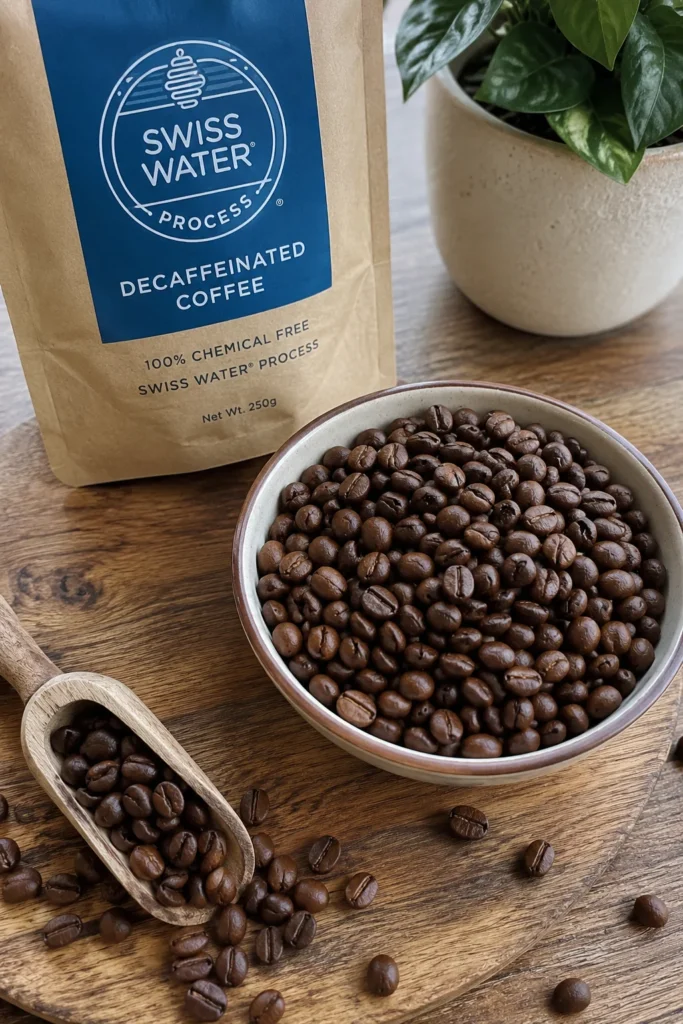
SWDC (Swiss water decaffeinated coffee) is coffee that has had most of its caffeine removed through the Swiss Water® Process, a water-based decaffeination method performed on green, unroasted coffee beans. The process uses water and a specially prepared Green Coffee Extract rather than chemical solvents such as methylene chloride or ethyl acetate. Swiss Water states that its process uses water, temperature, time, coffee compounds, and carbon filtration to selectively remove caffeine.
The term SWDC refers to the processing method rather than a particular coffee origin, roast level, or flavor profile. A coffee can still be Colombian, Ethiopian, Brazilian, single-origin, organic, light roasted, medium roasted, or dark roasted after undergoing the Swiss Water process. The quality and taste of this coffee therefore depend not only on decaffeination but also on the original beans, roasting approach, and brewing method.
How the Swiss Water Decaffeinated Coffee Process Works
SWDC begins with green coffee beans because decaffeination takes place before roasting. The beans are first cleaned and hydrated, which prepares them for caffeine extraction. A key part of the process is Green Coffee Extract, or GCE, which contains water and many of the soluble compounds naturally found in coffee but has been filtered to remove caffeine.
When the prepared beans come into contact with this caffeine-free Green Coffee Extract, caffeine naturally migrates out of the beans through diffusion. Because the extract already contains many of the coffee’s other soluble compounds, the process is designed to create a concentration balance that encourages caffeine to move while helping preserve other components associated with the coffee’s flavor and aroma.
The Role of Carbon Filtration in Swiss Water Decaffeinated Coffee
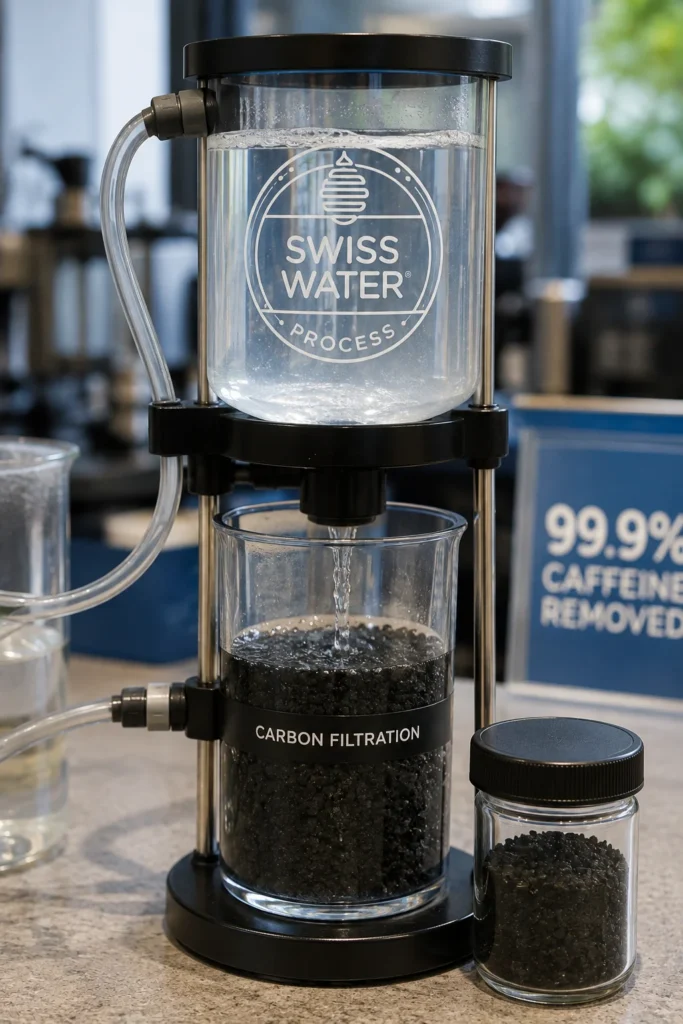
As caffeine enters the Green Coffee Extract, the extract becomes caffeine-rich and must be refreshed before it can continue the decaffeination cycle. Swiss Water uses activated carbon filtration designed to selectively capture caffeine molecules while allowing other coffee compounds in the extract to remain. The refreshed extract can then continue circulating through the decaffeination process.
This filtration stage is one of the main reasons SWDC differs from direct solvent methods. Instead of applying a chemical solvent to the coffee beans to dissolve caffeine, the Swiss Water process relies on water-based extraction and carbon filtration. The overall process is therefore marketed as chemical-solvent-free, although it still involves carefully controlled processing conditions and specialized filtration technology.
How Much Caffeine Is in Swiss Water Decaffeinated Coffee?
SWDC is not completely caffeine-free. Swiss Water states that its decaffeinated green coffee leaves its facility 99.9% caffeine-free, meaning approximately 0.1% of the original caffeine remains at that stage. However, the amount of caffeine that ultimately reaches your cup can vary depending on roasting, the amount of coffee used, serving size, and brewing method.
The U.S. Food and Drug Administration also emphasizes that decaffeinated does not mean caffeine-free. The FDA notes that an 8-fluid-ounce serving of decaf coffee can typically contain approximately 2 to 15 milligrams of caffeine. This means Swiss water decaffeinated coffee can be a significantly lower-caffeine alternative to regular coffee, but people who are extremely sensitive to caffeine should not assume that decaf contains absolutely none.
Why Caffeine Levels Can Vary From One Cup to Another
The caffeine level in Swiss water decaffeinated coffee can change depending on how the coffee is prepared. Espresso, drip coffee, French press, pour-over coffee, and cold brew can extract coffee compounds differently, while the quantity of grounds used also affects how much residual caffeine reaches the finished beverage.
Serving size matters as well because a larger cup may contain more total caffeine even when the coffee itself has a low caffeine concentration. For this reason, it is more accurate to think of SWDC as low-caffeine coffee rather than completely caffeine-free coffee. Anyone with a medical reason to strictly limit caffeine should consider the total caffeine consumed from coffee and other foods or beverages.
Swiss Water Decaffeinated Coffee vs. Regular Decaf Coffee
Not all decaffeinated coffee is processed in the same way. Some decaffeination methods use direct or indirect solvent processes involving substances such as methylene chloride or ethyl acetate, while other approaches use carbon dioxide. Swiss water decaffeinated coffee stands apart because its caffeine removal process is water-based and does not use chemical solvents as part of the bean-contact process.
This difference does not automatically mean that every cup of Swiss water decaffeinated coffee tastes better than every other decaf. Flavor depends heavily on bean quality, origin, processing before decaffeination, roasting, freshness, and brewing. However, the Swiss Water process is specifically designed to preserve the coffee’s origin characteristics by using Green Coffee Extract that contains many of the same soluble coffee compounds found in the beans.
Does Swiss Water Decaffeinated Coffee Taste Different?
High-quality Swiss water decaffeinated coffee can retain many of the flavor characteristics associated with its original beans. Depending on the coffee’s origin and roast, the cup may still have chocolate, caramel, fruit, nut, floral, citrus, or spice notes. The decaffeination process is intended to remove caffeine without unnecessarily removing the compounds responsible for the coffee’s distinctive character.
That said, decaf and regular versions of the same coffee may not always taste identical. Decaffeination is an additional processing stage, and roasting decaffeinated beans requires skill because their physical properties differ from untreated green coffee. The best Swiss water decaffeinated coffee results usually come from high-quality beans combined with careful roasting and proper brewing.
Potential Benefits of Choosing Swiss Water Decaffeinated Coffee
One of the biggest advantages of Swiss water decaffeinated coffee is the ability to enjoy coffee while substantially reducing caffeine intake. This can be useful for people who prefer to limit caffeine later in the day, want a lower-caffeine alternative, or simply enjoy drinking multiple cups of coffee without consuming the same caffeine level as regular coffee.
Another important consideration is the processing method. Swiss water decaffeinated coffee appeals to consumers who specifically prefer a coffee processed without chemical solvents such as methylene chloride or ethyl acetate. The Swiss Water process relies on water, coffee compounds, controlled temperature and time, and carbon filtration, making it a distinctive option for people interested in how their coffee is decaffeinated.
Is Swiss Water Decaffeinated Coffee Better for You?
Whether Swiss water decaffeinated coffee is “better” depends on what matters most to you. If your priority is minimizing caffeine while choosing a solvent-free processing method, Swiss water decaffeinated coffee may align well with your preferences. It allows you to drink coffee with substantially less caffeine while avoiding direct chemical-solvent decaffeination.
However, Swiss water decaffeinated coffee should not automatically be viewed as a medical treatment or as inherently healthier for every person. Individual caffeine sensitivity and dietary needs vary, and decaf still contains some caffeine. For people with specific medical concerns about caffeine consumption, personalized guidance from a qualified healthcare professional may be more appropriate than relying solely on the type of decaffeination process.
How to Choose the Best Swiss Water Decaffeinated Coffee
When buying Swiss water decaffeinated coffee, first look for clear labeling that identifies the Swiss Water® Process. The phrase is important because not every product labeled simply as “decaf” uses the same method. Packaging or product descriptions may identify the decaffeination process, allowing you to distinguish Swiss water decaffeinated coffee from other types of decaf.
After confirming the processing method, consider the same factors you would use when choosing regular coffee. Look at the origin, roast level, flavor notes, roast date, whole-bean or ground format, and brewing compatibility. A high-quality Swiss water decaffeinated coffee should be selected according to your taste preferences rather than the decaffeination method alone.
Whole Bean vs. Ground Swiss Water Decaffeinated Coffee
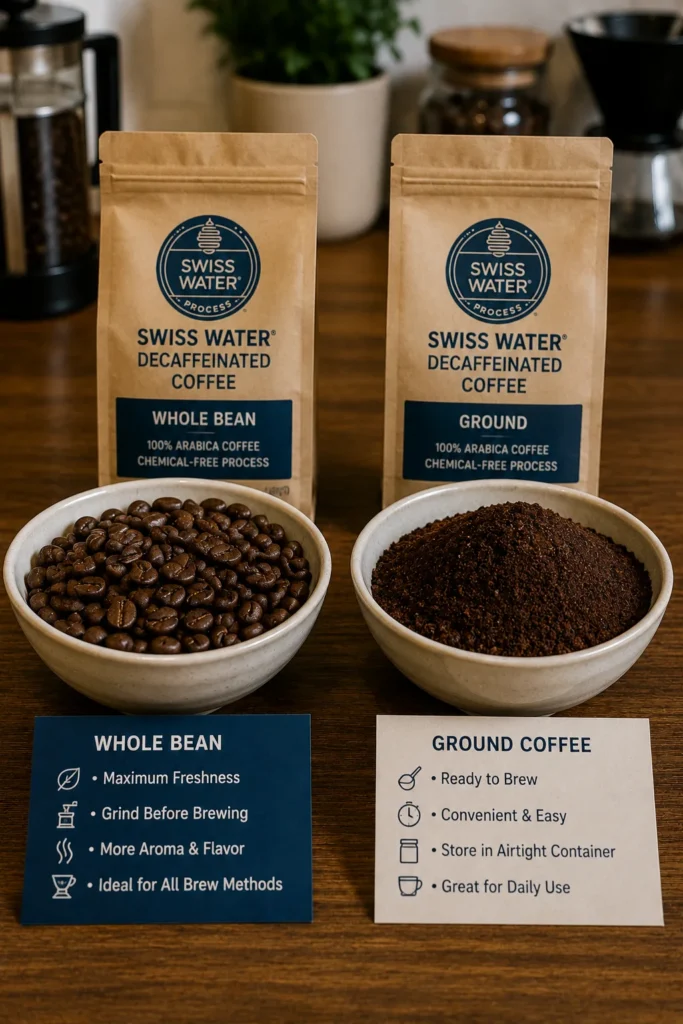
Whole-bean Swiss water decaffeinated coffee is generally a good choice for people who want greater control over freshness and grinding. Grinding immediately before brewing can help preserve aroma and allows you to adjust the grind size for espresso, drip machines, French press, pour-over, and other brewing methods.
Pre-ground Swiss water decaffeinated coffee offers greater convenience and can still produce an enjoyable cup when stored properly. The best option depends on your equipment and routine, but freshness, storage, water quality, coffee-to-water ratio, and brewing technique can all influence the final flavor just as much as the decaffeination method.
How to Brew Swiss Water Decaffeinated Coffee for Better Flavor
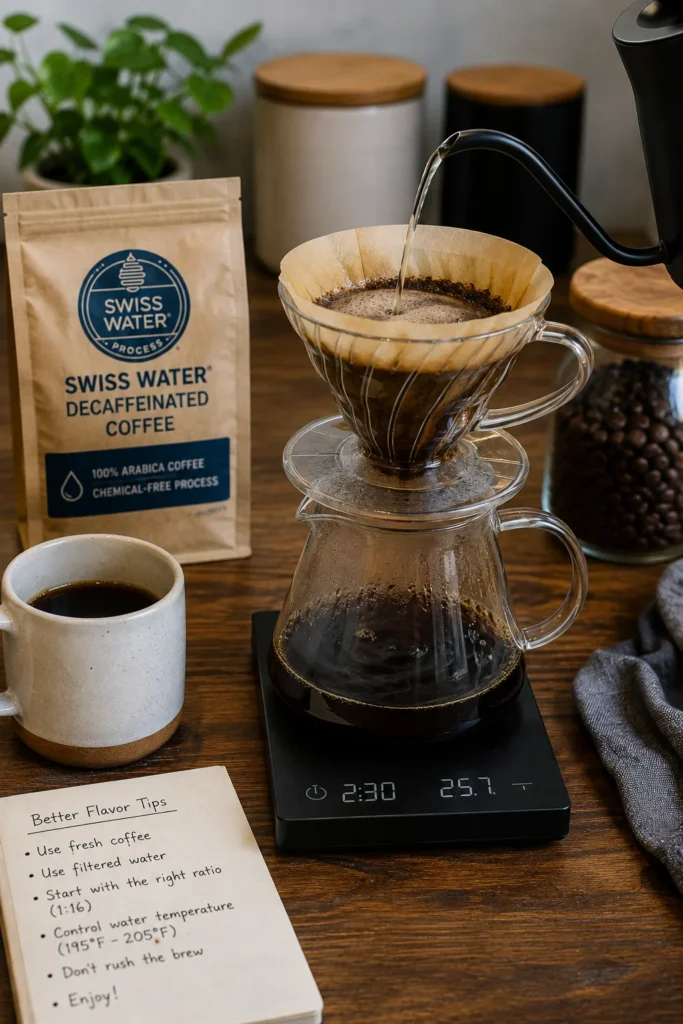
Swiss water decaffeinated coffee can be brewed using most standard coffee methods, including drip coffee makers, pour-over systems, French presses, espresso machines, and cold brewing. The ideal technique depends on the particular roast and your preferred flavor profile. A medium or dark roast may provide a fuller body, while a lighter roast can highlight more delicate origin characteristics.
For the best results, start with fresh coffee, use clean water, and adjust the grind size and coffee-to-water ratio according to your brewing method. If the coffee tastes weak, increasing the amount of grounds may help, while bitterness or harshness may indicate over-extraction, excessively hot water, or an unsuitable grind. Good brewing can make a major difference in how Swiss water decaffeinated coffee tastes.
Who Should Consider Swiss Water Decaffeinated Coffee?
Swiss water decaffeinated coffee can be a practical choice for people who enjoy the taste and experience of coffee but want substantially less caffeine. It may be particularly appealing for people who prefer an evening coffee, want to reduce their overall caffeine intake, or simply want to alternate between regular and decaffeinated coffee.
It can also appeal to consumers who pay close attention to processing methods and prefer a decaf produced without chemical solvents. Because Swiss water decaffeinated coffee is not completely caffeine-free, individuals who need to avoid caffeine as strictly as possible should remember that residual caffeine may still be present and should evaluate their intake accordingly.
Frequently Asked Questions About Swiss Water Decaffeinated Coffee
Is Swiss Water decaffeinated coffee completely caffeine-free?
No, Swiss water decaffeinated coffee is not completely caffeine-free. Swiss Water states that its decaffeinated green coffee is 99.9% caffeine-free when it leaves the facility, but trace caffeine can remain. The caffeine in a finished cup can also vary based on roasting and brewing.
The FDA similarly notes that decaf coffee still contains caffeine, with a typical 8-fluid-ounce cup containing approximately 2 to 15 milligrams. Therefore, Swiss water decaffeinated coffee is best described as very low in caffeine rather than entirely caffeine-free.
Does Swiss Water decaffeinated coffee use chemicals?
The Swiss Water® Process does not use chemical solvents such as methylene chloride or ethyl acetate to decaffeinate the coffee. The process uses water, Green Coffee Extract, controlled time and temperature, and activated carbon filtration to remove caffeine.
It is important to distinguish “chemical-free” marketing language from the basic scientific fact that coffee, water, and all foods contain chemical compounds. In the context of Swiss water decaffeinated coffee, the claim specifically refers to the absence of added chemical solvents in the decaffeination process.
Does Swiss Water decaffeinated coffee taste like regular coffee?
Swiss water decaffeinated coffee can taste very similar to regular coffee, particularly when high-quality beans and careful roasting are involved. The process is designed to preserve many of the compounds associated with the coffee’s origin characteristics and flavor profile.
However, flavor is never determined by the decaffeination method alone. Bean quality, origin, processing, roast level, freshness, and brewing technique all affect the final cup, so different Swiss water decaffeinated coffee products can taste significantly different from one another.
Is Swiss Water decaffeinated coffee worth the higher price?
Swiss water decaffeinated coffee may cost more than some conventional decaf options because decaffeination adds another specialized processing stage to the coffee supply chain. Whether it is worth the price depends on how much you value a water-based, solvent-free decaffeination method and the flavor quality of the specific coffee.
For coffee drinkers who regularly consume decaf and care about both flavor and processing transparency, Swiss water decaffeinated coffee can be a worthwhile choice. The best value usually comes from choosing a coffee with a flavor profile you genuinely enjoy rather than selecting a product solely because it carries a particular decaffeination label.
Final Thoughts on Swiss Water Decaffeinated Coffee
SWDC offers a distinctive approach to decaf by using a water-based process, Green Coffee Extract, controlled temperature and time, and activated carbon filtration instead of chemical solvents. The method is designed to remove most caffeine while helping preserve the flavor characteristics associated with the original coffee beans.
For anyone looking for a low-caffeine coffee with a solvent-free decaffeination process, this coffee is an option worth considering. It is important to remember that decaf is not completely caffeine-free and that the final taste still depends heavily on bean quality, roasting, freshness, and brewing. When chosen carefully, SWDC can provide a satisfying coffee experience without the caffeine level of a regular cup.
Follow our Instagram & Facebook Pages to get latest updates.