
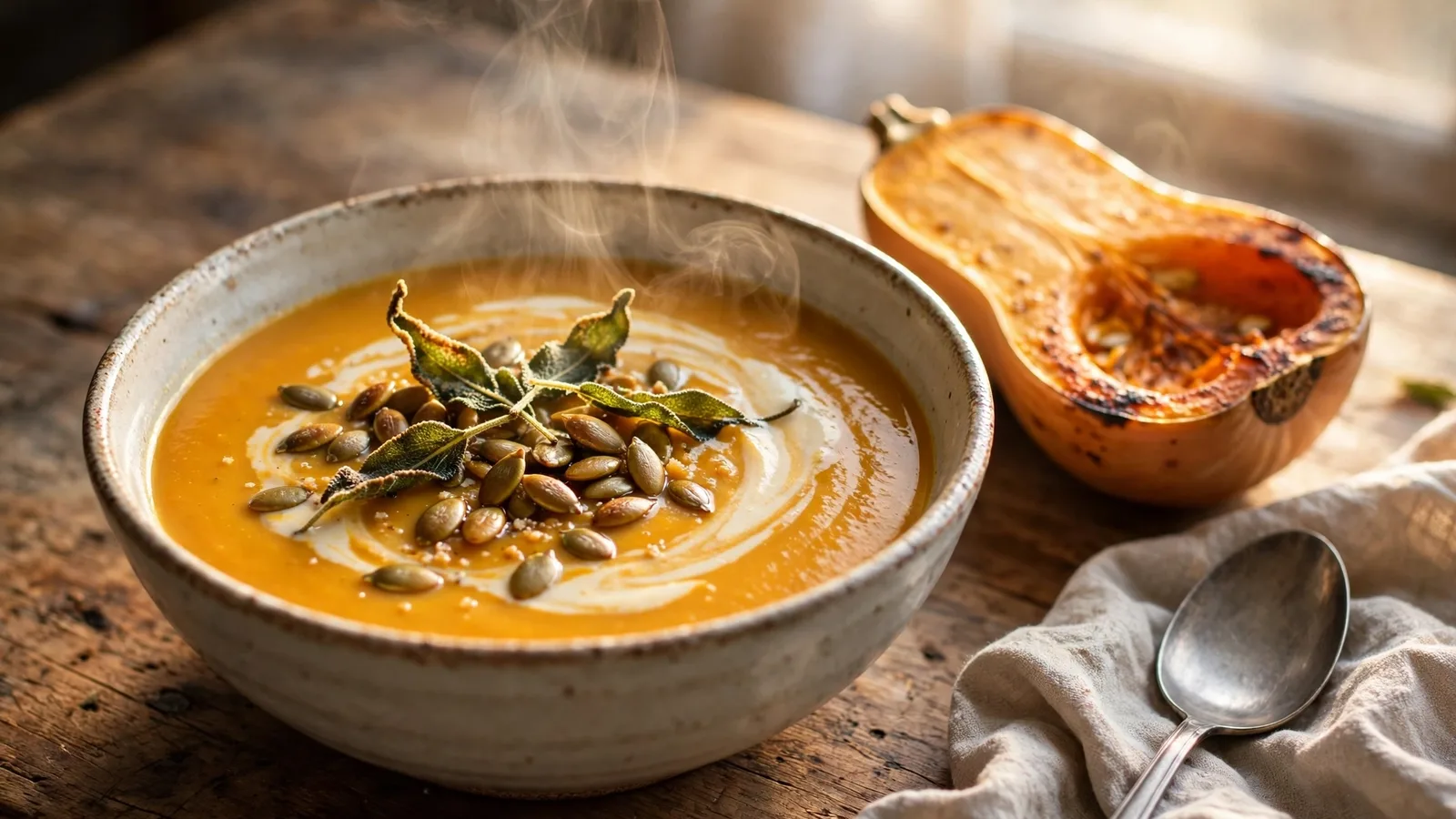
Butternut squash soup recipes turn one sweet, nutty squash into a silky, restaurant-worthy bowl with very little effort. Peel and cube about 3 pounds of squash, cook it down with onion, garlic, and warm spices, then blend with broth and a splash of cream or coconut milk. The USDA’s FoodData Central database is handy if you ever want to sanity-check an ingredient’s nutrition. Below: a side-by-side comparison of the three best cooking methods, plus six flavor-packed variations.
What’s the Best Way to Make Butternut Squash Soup?
Of all the butternut squash soup recipes out there, oven-roasted wins on flavor, the stovetop wins on simplicity, and the Instant Pot wins on speed. Every method starts the same — peeled, seeded, cubed squash, one diced onion, 3–4 garlic cloves, and 4 cups of broth. Compare the outcomes in the table, then cook the way that fits your evening.
| Method | Flavor outcome | Texture | Total time |
|---|---|---|---|
| Oven-roasted | Deep, caramelized, sweet — roasting concentrates the squash’s natural sugars | Velvety and full-bodied | 50–60 min |
| Stovetop-simmered | Clean, sweet squash flavor; lighter with no caramelization | Silky but leaner | 40–45 min |
| Instant Pot | Mellow and sweet, close to stovetop unless you sauté first | Very smooth | 30–35 min |
Oven-roasted is the flavor winner and the default in most tested butternut squash soup recipes. Toss 1-inch cubes with olive oil, salt, and pepper; roast at 400°F (200°C) for 25–30 minutes until the edges caramelize; simmer briefly in broth with sautéed onion and garlic, then blend.
Stovetop-simmered skips the oven: sweat the onion in butter or oil, add squash and broth, and simmer 30–35 minutes until completely tender — the classic timing behind Food52’s classic butternut soup. Least fussy, easiest cleanup.
Instant Pot is the weeknight shortcut: sauté the onion on Sauté mode, add squash and broth, and pressure-cook on High for 8–10 minutes (or 5 minutes with a 15-minute natural release, per Dad Cooks Dinner’s tested timing), then blend right in the pot. For roasted depth, brown a cup of the diced squash well before sealing the lid — it adds a hint of the caramelization pressure cooking skips.
Do You Have to Peel Butternut Squash for Soup?
No — and the easiest method skips peeling entirely. Halve the squash lengthwise, scoop out the seeds, brush with oil, and roast cut-side down at 350–400°F for 35–45 minutes; the tender flesh scoops cleanly away from the skin with a spoon. If you prefer cubes, peel raw with a sharp Y-peeler after trimming both ends for a stable base — the tough skin comes off far easier than it looks.
Two shortcuts: a 2-minute microwave run softens the skin before cutting, and pre-cut squash from the produce aisle saves about 15 minutes of prep — just trim any oversized chunks to roughly 1 inch so they cook evenly.
Butternut Squash Soup Recipes: 6 Cozy Variations to Try
The butternut squash soup recipes below share one base: 3 pounds of cubed squash, one onion, garlic, and 4 cups of broth, blended silky with an immersion blender. Pick a cooking method from the table above, then steer the flavor with the finishing touches in each variation.
1. Classic Roasted with Brown Butter and Sage
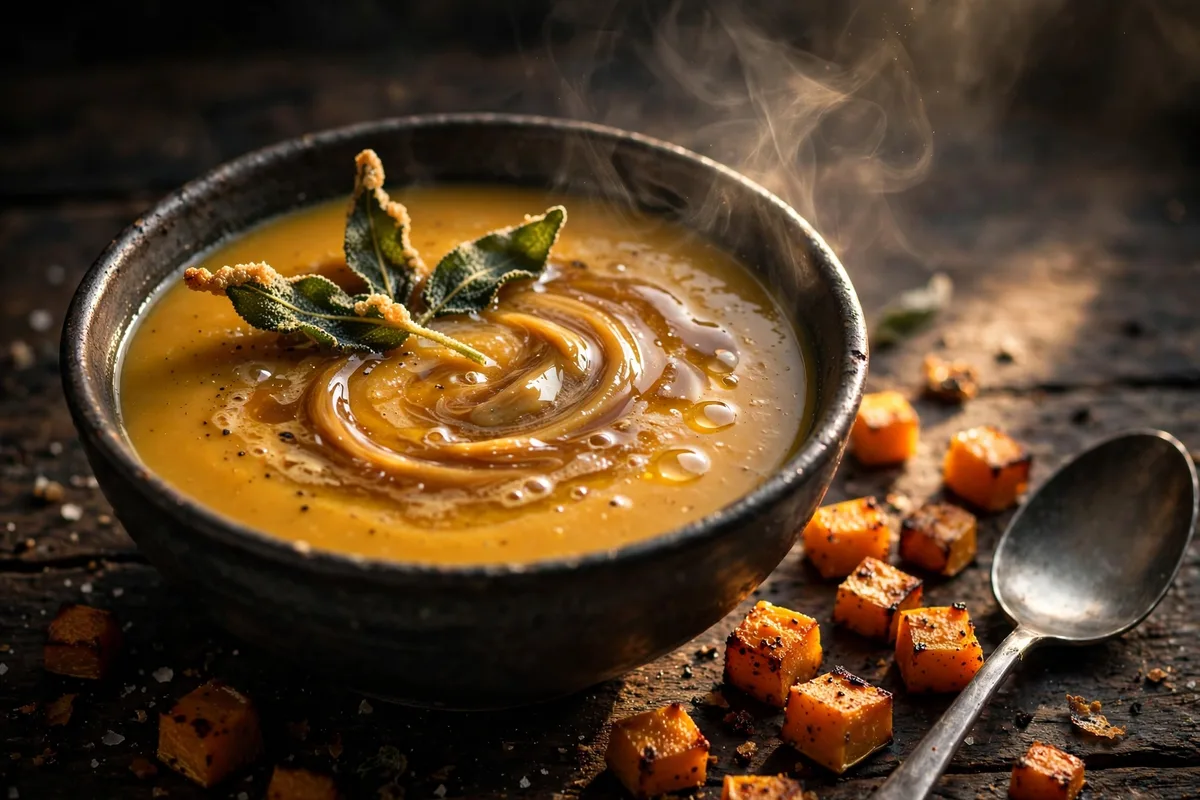
This is the crowd-pleaser version of butternut squash soup recipes: roast the squash at 425°F until the edges char slightly, then finish each bowl with nutty brown butter and crisped fresh sage. Simmer a few torn sage leaves in the pot as it cooks, then fry 8–10 whole leaves in the browning butter until they stop sputtering. Just ⅓ cup of heavy cream at the end — the roasted squash provides most of the body.
2. Thai Coconut Curry
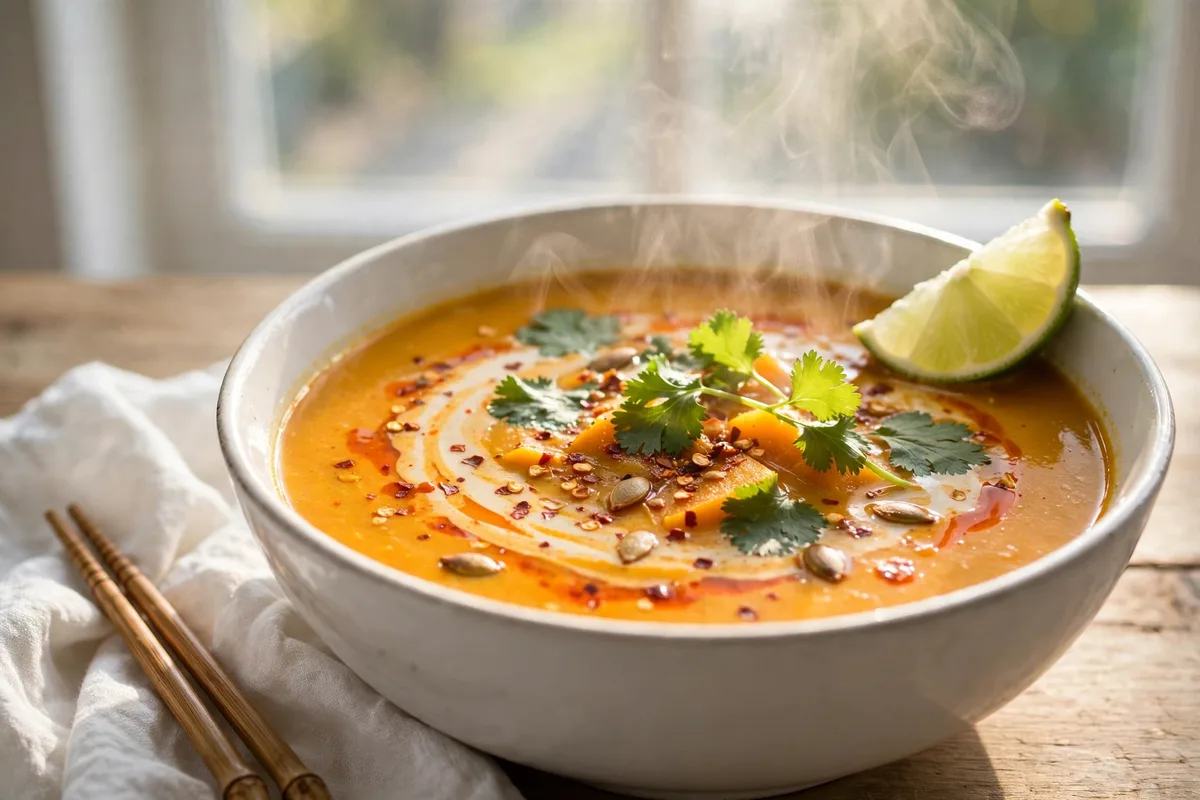
Sauté 2 tablespoons of Thai red curry paste and 1 tablespoon of grated fresh ginger with the onion until fragrant, then add squash and vegetable broth. Blend in one 13.5-ounce can of full-fat coconut milk, a tablespoon of maple syrup, and a squeeze of lime — the coconut tames the heat while the lime keeps the bowl bright. Garnish with cilantro, toasted pepitas, and a thin swirl of coconut milk.
3. Apple and Sage with Cider Vinegar
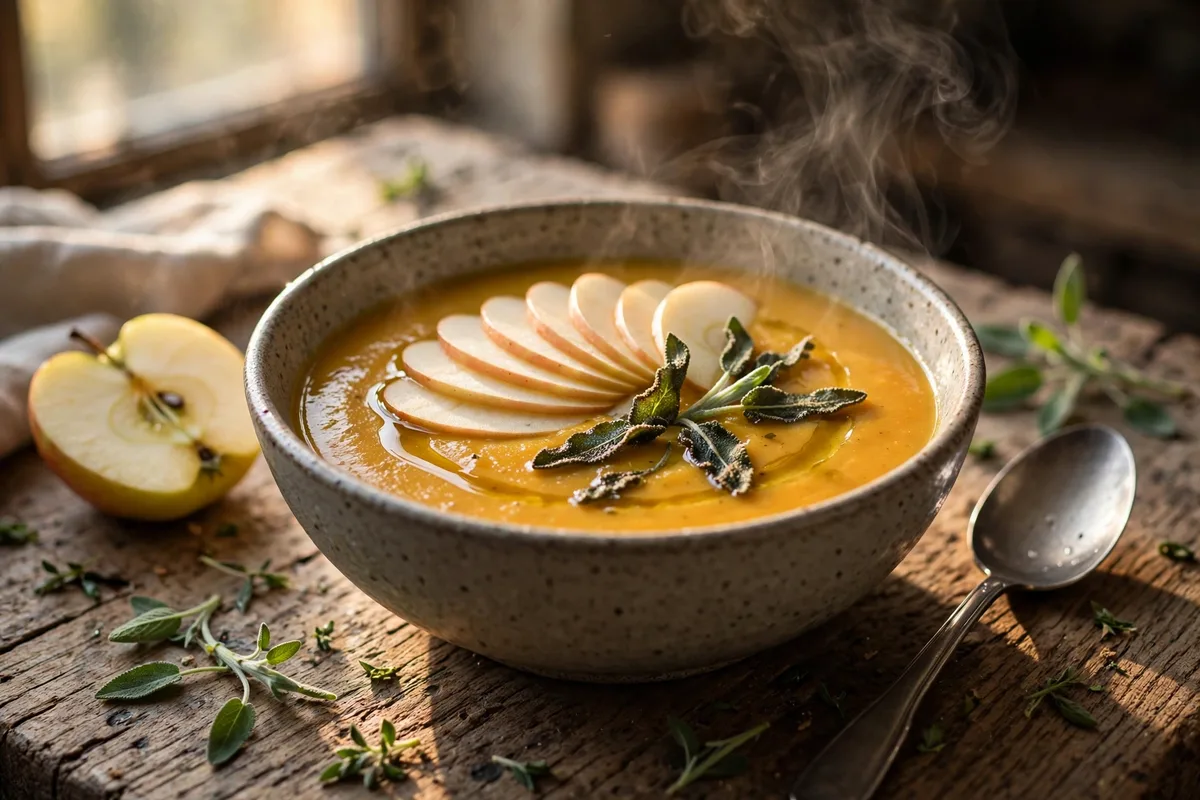
One tart Granny Smith apple, diced and cooked down with the squash, adds orchard sweetness against earthy sage. Stir in 1 tablespoon of apple cider vinegar at the end — it lifts the whole pot the way lemon lifts a sauce. Of the butternut squash soup recipes here, this one feels most like fall in a bowl: finish with olive oil and fanned apple slices for crunch against the silk.
4. Golden Ginger-Turmeric
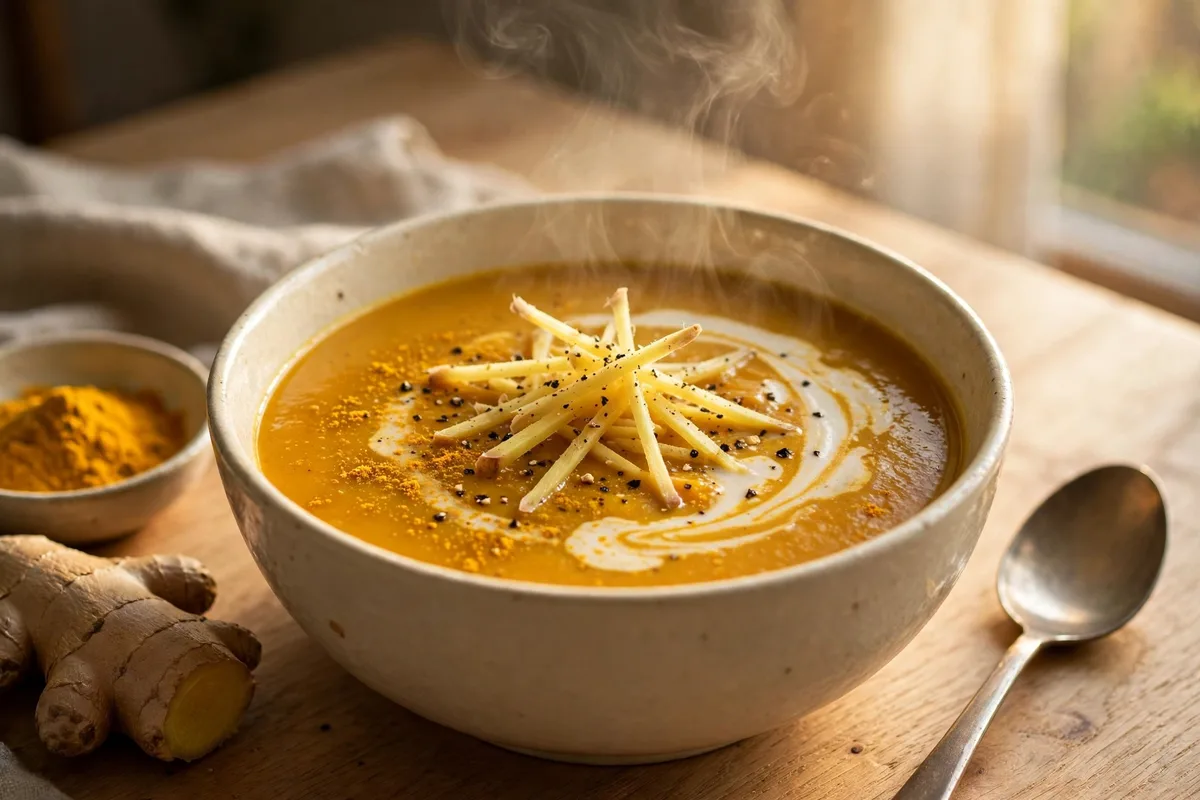
Bloom 2 teaspoons of ground turmeric and 2 tablespoons of grated fresh ginger in the pot with the onion before adding broth — the fat carries turmeric’s warm color into every spoonful. Add about ¼ teaspoon of black pepper too; it sharpens turmeric’s flavor the way salt sharpens chocolate. Blend with coconut milk instead of cream for a naturally dairy-free golden bowl that reheats beautifully.
5. Smoky Chipotle with Pepitas
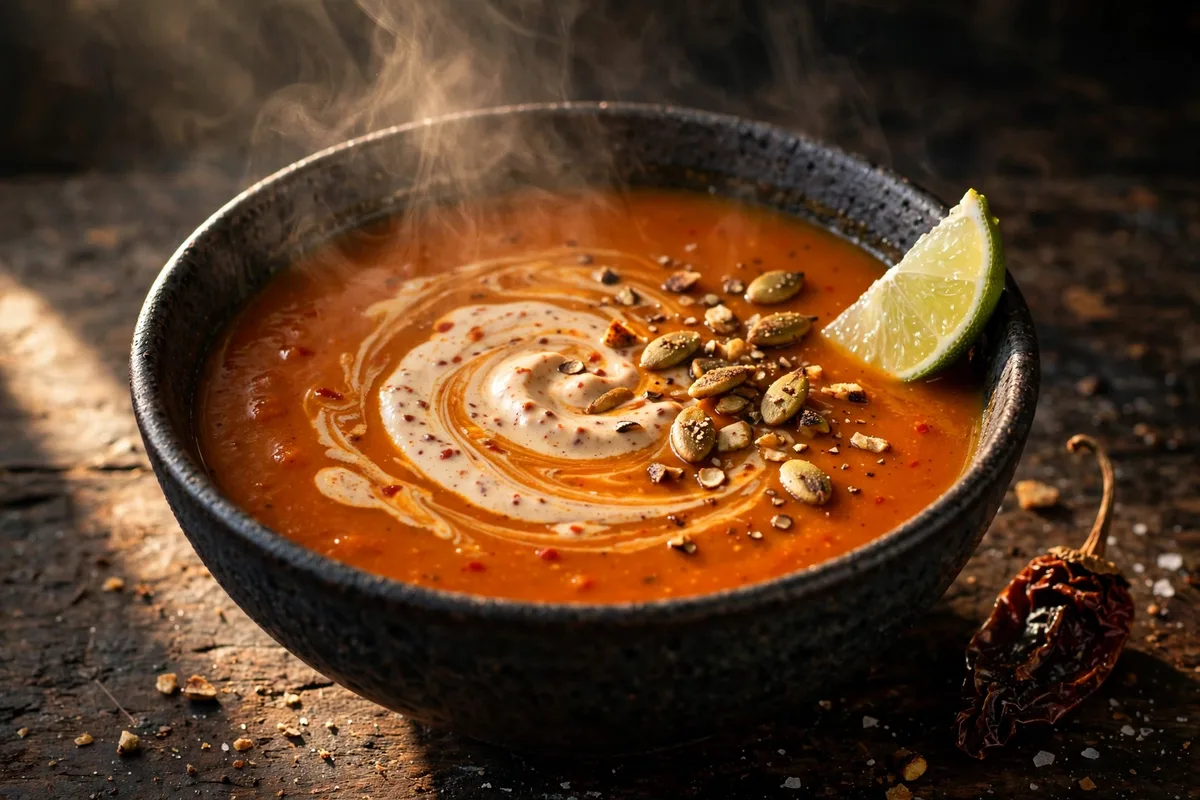
For heat lovers, this is the boldest of these butternut squash soup recipes: blend 1–2 chipotle peppers in adobo into the pot (start with one if you’re cautious) for a slow, smoky warmth that balances the squash’s sweetness. A squeeze of lime per bowl keeps the smoke from feeling heavy. Top with toasted salted pepitas — their crunch against the smooth soup is the whole point.
6. Maple Brown Butter with Pecan Crumble
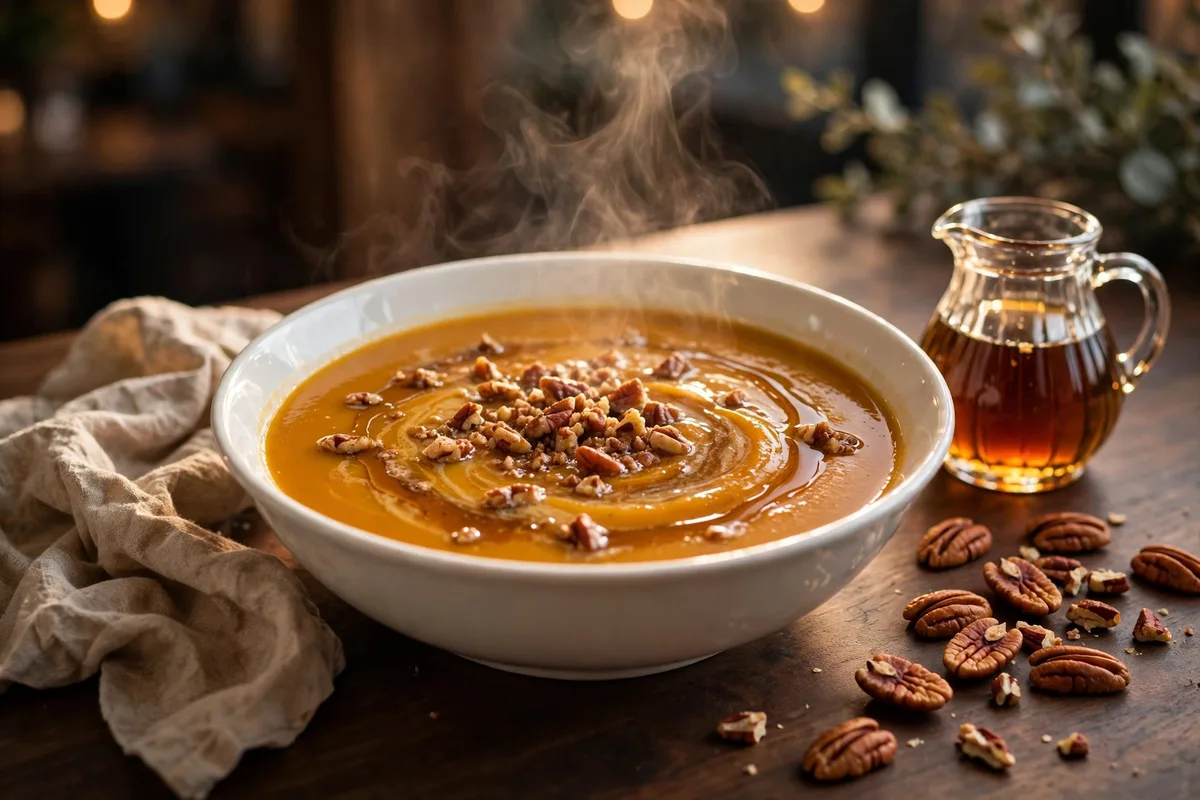
The most dinner-party-ready of the butternut squash soup recipes here: stir 2 tablespoons of pure maple syrup into the blended soup and finish with brown butter. The maple amplifies the roasted squash’s own caramel notes without tipping into dessert. Toast ½ cup of chopped pecans with a pinch of salt and 1 teaspoon of maple syrup until fragrant, and scatter over each bowl.
📌 Found your favorite bowl?
Pin this post to your fall recipe board so your soup shortlist is waiting when squash season peaks.
How Do You Make Butternut Squash Soup Thick and Creamy?
Most butternut squash soup recipes call for cream, but the squash does the real work: its dense, starchy flesh breaks down into a naturally creamy purée when fully blended, so flour or roux is rarely needed. If the soup still looks thin, blend a full 2–3 minutes with an immersion blender or simmer uncovered for 10 minutes to reduce. Add dairy only at the very end, off the heat — boiling after the cream goes in can turn the texture grainy.
If you simply added too much broth, scoop out a cup or two before blending, then stir it back in gradually until the texture is right. For extra luxury without dairy, swap 1 cup of the broth for full-fat coconut milk — it thickens the body and adds richness on its own.
What Goes Well with Butternut Squash Soup?
When butternut squash soup recipes land on restaurant menus, they arrive with contrast: something crunchy, something tangy, something toasty. Thick sourdough slices grilled in olive oil are the classic partner; a sharp aged-cheddar grilled cheese turns the bowl into dinner. For lighter fare, arugula with lemon vinaigrette and shaved parmesan cuts the richness. Building a whole cozy menu? Our fall soup recipes roundup has 20+ bowls that pair with the same sides.
Can You Freeze Butternut Squash Soup?
Yes — freezer-friendly butternut squash soup recipes share one rule: freeze before adding dairy. Cool the soup completely, portion into freezer bags or airtight containers, and it keeps 3–4 months; cream and half-and-half can separate when frozen, so stir them in after reheating. In the fridge, the soup stays good 4–5 days in an airtight container.
Reheat gently on the stovetop over medium-low heat (or in the microwave in 90-second bursts, stirring between), adding a splash of broth if it thickened overnight. For a full freezer-friendly lineup, our winter soup recipes roundup has 12 more bowls built for cold nights.
Butternut Squash Soup FAQs
Can I use frozen butternut squash for soup?
Yes — most butternut squash soup recipes assume fresh squash, but frozen works perfectly and skips all the peeling and chopping. Use about 2 to 2½ cups of thawed squash per small fresh squash (roughly 4 cups for 3 pounds). Thaw it first so it doesn’t water down the broth, then roast or simmer exactly as you would fresh.
Why does my butternut squash soup taste bland?
Bland soup almost always needs more salt — sweet, dense squash takes a generous hand with seasoning to wake up. Roast until the edges caramelize for deeper flavor, then finish the blended soup with an acid (lime juice or a teaspoon of cider vinegar) and a fat (cream, coconut milk, or brown butter). Taste and adjust right before serving; warm soup needs more salt than you think.
What spices go in butternut squash soup?
The classic warm spices are nutmeg, cinnamon, and ginger — about ¼ to ½ teaspoon each per pot — plus fresh or dried sage and thyme. For a savory direction, try cumin and smoked paprika; for heat, curry powder or chipotle. Bloom dried spices in the fat with the onion, and add fresh herbs in the last few minutes of simmering so their flavor stays bright.
Can I make butternut squash soup dairy-free?
Absolutely — swap the cream for full-fat coconut milk (½ to 1 cup per pot), which adds body and richness without dairy. Use olive or coconut oil instead of butter for the onion base, and vegetable broth instead of chicken broth to keep the whole pot vegan. The golden ginger-turmeric and Thai coconut curry variations above are dairy-free by default.
How long does butternut squash soup last in the fridge?
Like most butternut squash soup recipes, this one keeps 4–5 days refrigerated in an airtight container. Cool it to room temperature within 2 hours of cooking, and reheat only the portion you plan to eat — repeated reheating dulls the fresh flavor. It thickens as it sits, so stir in a splash of broth when reheating to restore the silk.
If you’re collecting butternut squash soup recipes for the season, start with a big Sunday roast: one tray of caramelized squash becomes silk-smooth lunches all week. Eating lighter? Our healthy soup recipes roundup has 12 high-protein bowls — including a Greek-yogurt-finished squash soup worth a look. Happy simmering!
Which variation are you trying first? Tell us in the comments — and if you’re in a soup mood, keep exploring: