
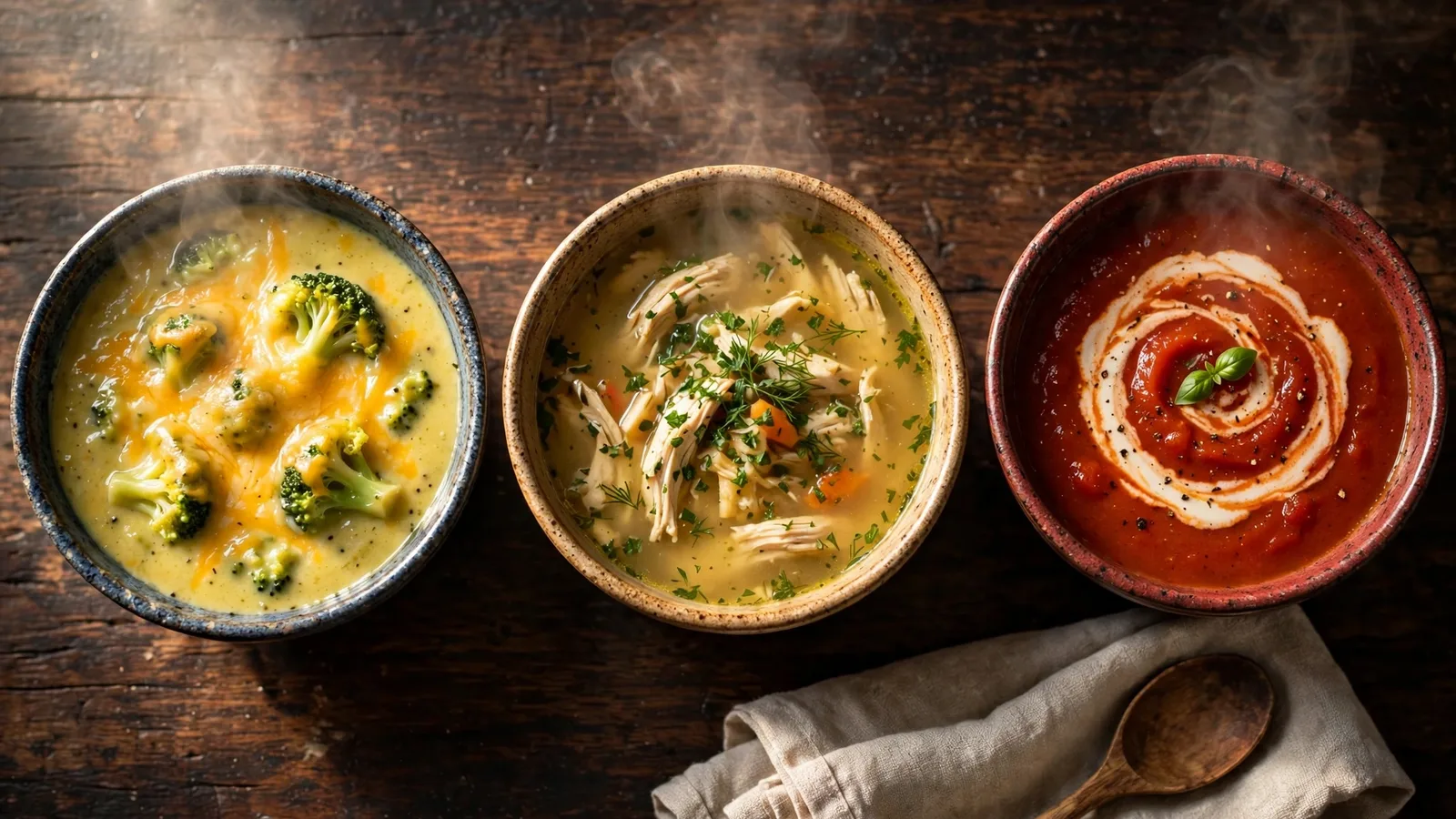
Keto soup recipes are soups built for a ketogenic diet: high in fat, moderate in protein, and very low in net carbs — typically under 5g per bowl. A soup stays keto by skipping potatoes, rice, beans, and flour, and thickening with cream cheese or xanthan gum instead. Six variations below, each with its net carbs per bowl.
Most soup roundups never tell you the carb count. That’s a problem on keto, where one careless bowl can eat a quarter of your daily budget. Keto diets typically cap carbs at 20–50g of net carbs per day, so knowing what lands in your bowl matters more than the recipe title — which is why this keto soup recipes roundup lists concrete grams instead of vague “low carb” claims.
What Makes a Soup Keto?
A soup counts as keto when one bowl holds roughly 5g of net carbs or less, while delivering plenty of fat and a reasonable amount of protein. Net carbs — the number that matters — are total carbohydrates minus fiber, since fiber doesn’t raise blood sugar. Everything else in keto soup recipes follows from that one rule.
Skip rice, pasta, potatoes, beans, lentils, and peas. Never thicken with flour or cornstarch — a tablespoon of flour adds about 6g of net carbs. Use carrots sparingly and measure onions (a medium onion carries roughly 8g of net carbs). Read broth labels too: many store-bought broths hide added sugars like dextrose and maltodextrin. Build from bone broth or stock, heavy cream or coconut milk, butter, cheddar, cream cheese, chicken, beef, and non-starchy vegetables — cauliflower, broccoli, zucchini, mushrooms, spinach, and cabbage.
Those six vegetables do the heavy lifting in almost every bowl below. The USDA’s FoodData Central database is the easiest way to sanity-check any ingredient you’re unsure about.
Keto Soup Recipes Compared: Net Carbs Per Bowl
The same bowl size (about 1.5 cups), the same honest math. Net-carb values are estimates from USDA ingredient data per serving — your numbers will shift with brands and portions, but the ranking holds.
| Soup | Key ingredients | Net carbs per bowl | Style |
|---|---|---|---|
| Creamy Broccoli Cheddar | Broccoli, cheddar, heavy cream | ~6g | Thick, cheesy, blended |
| Chicken with Cauliflower Rice | Chicken thighs, bone broth, cauliflower rice | ~4g | Brothy, one-pot |
| Spicy Taco Soup | Ground beef, tomatoes, cheddar | ~5g | Chunky, brothy |
| Roasted Garlic Cauliflower | Cauliflower, garlic, cream, butter | ~4g | Silky, blended |
| Zucchini Basil Coconut | Zucchini, coconut milk, basil | ~3g | Light, dairy-free |
| Ginger Egg Drop | Eggs, chicken broth, ginger, scallions | ~2g | Clear, 10-minute |
The pattern is obvious once you see the numbers side by side: in most keto soup recipes, the clearer the broth, the lower the carbs. Cheese and cream add richness for almost no carbs — an ounce of cheddar carries only about 0.6g of net carbs — while starchy vegetables and thickeners are the silent budget-killers.
6 Keto Soup Recipes with Net Carbs Per Bowl
Each of these keto soup recipes feeds four. If you want to browse more broadly first, our soup selector covers the full collection.
1. Creamy Broccoli Cheddar Soup (~6g net carbs)

Simmer two cups of broccoli florets in chicken broth for 20–25 minutes until tender, blend smooth with an immersion blender, then stir in half a cup of heavy cream and a cup of shredded sharp cheddar off the heat. The cheddar does the thickening — no flour needed — and the broccoli contributes about 4g of net carbs per cup before it’s divided across four servings.
2. Keto Chicken Soup with Cauliflower Rice (~4g net carbs)
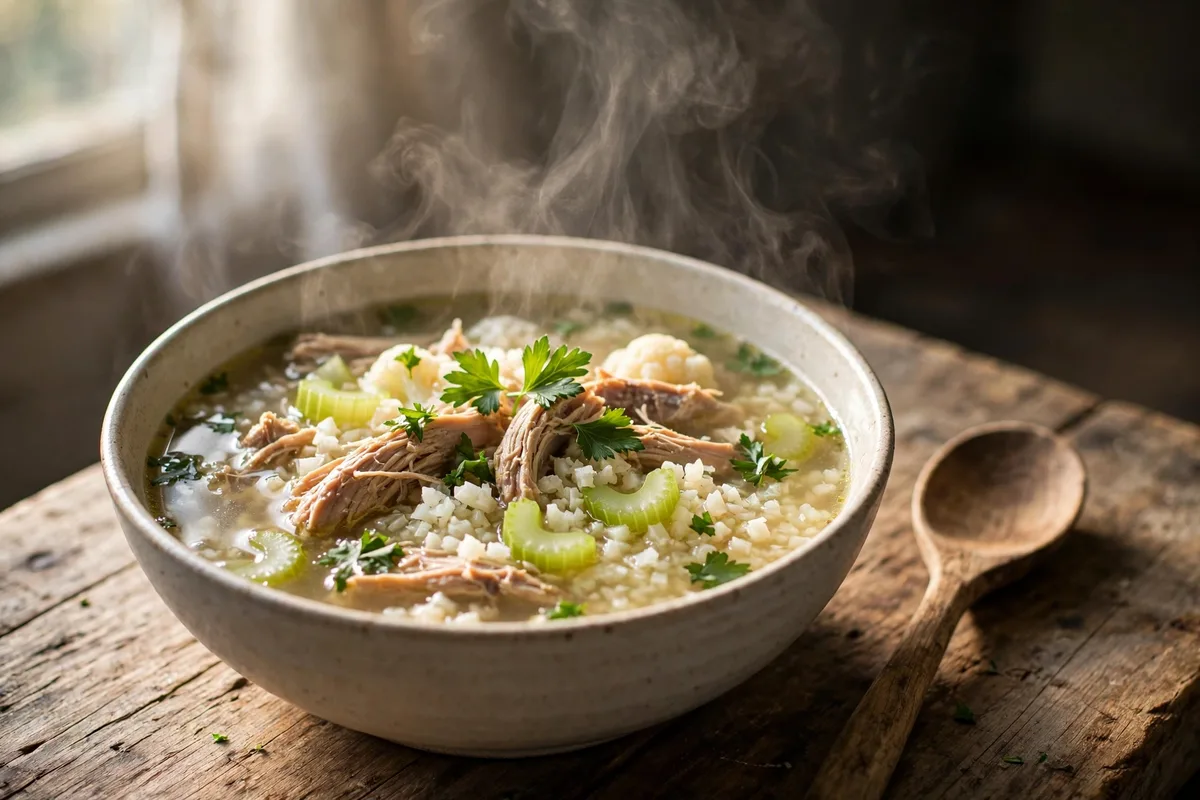
The comfort classic, minus the noodles — one of the most reliable keto soup recipes for beginners. Sear two bone-in chicken thighs, then simmer in four cups of bone broth with celery and garlic for 30 minutes; shred the meat, return it, and stir in a cup of cauliflower rice for five minutes. More chicken-based bowls live in our chicken recipes archive.
3. Spicy Taco Soup (~5g net carbs)
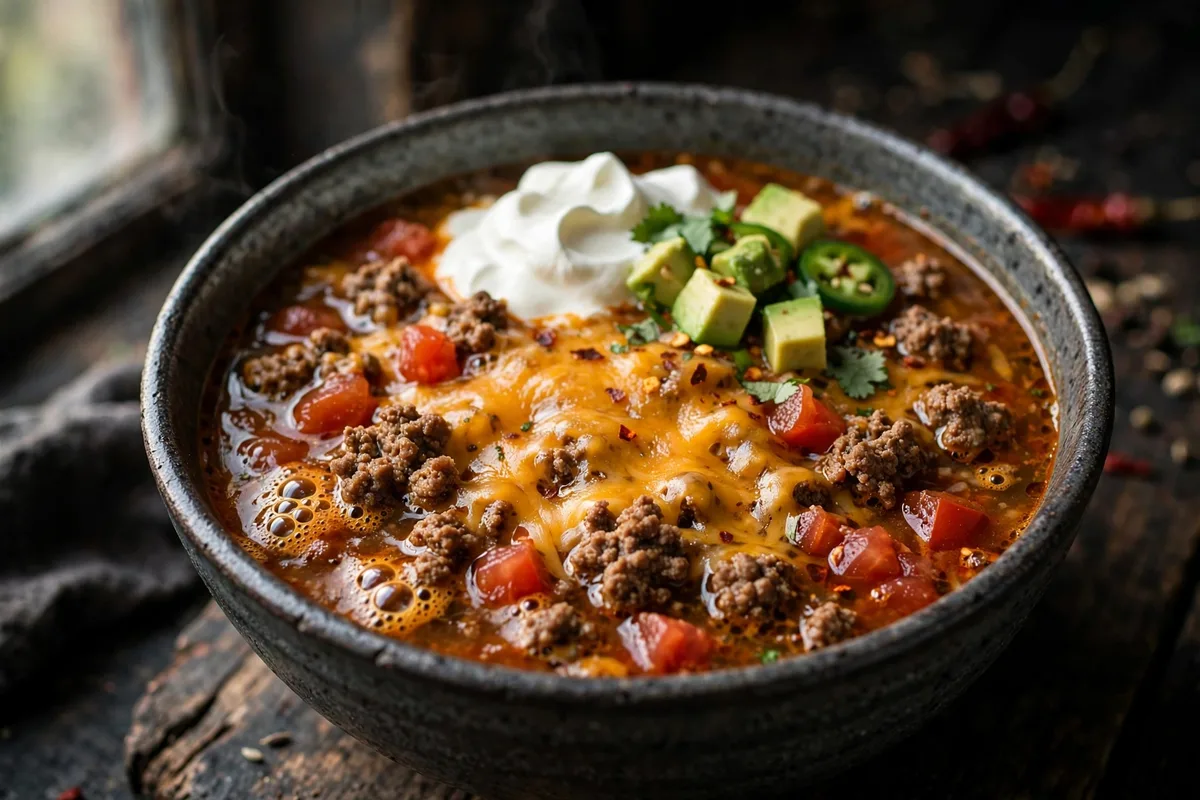
Brown a pound of ground beef, drain the fat, then add two cups of beef broth, a can of no-sugar-added diced tomatoes, and a tablespoon of taco seasoning; simmer 15 minutes and finish with half a cup of shredded cheese stirred in off the heat. The tomatoes are the main carb source here — canned tomatoes run 2–3g of net carbs per 3.5 ounces — so check the label for added sugar.
4. Silky Roasted Garlic Cauliflower Soup (~4g net carbs)
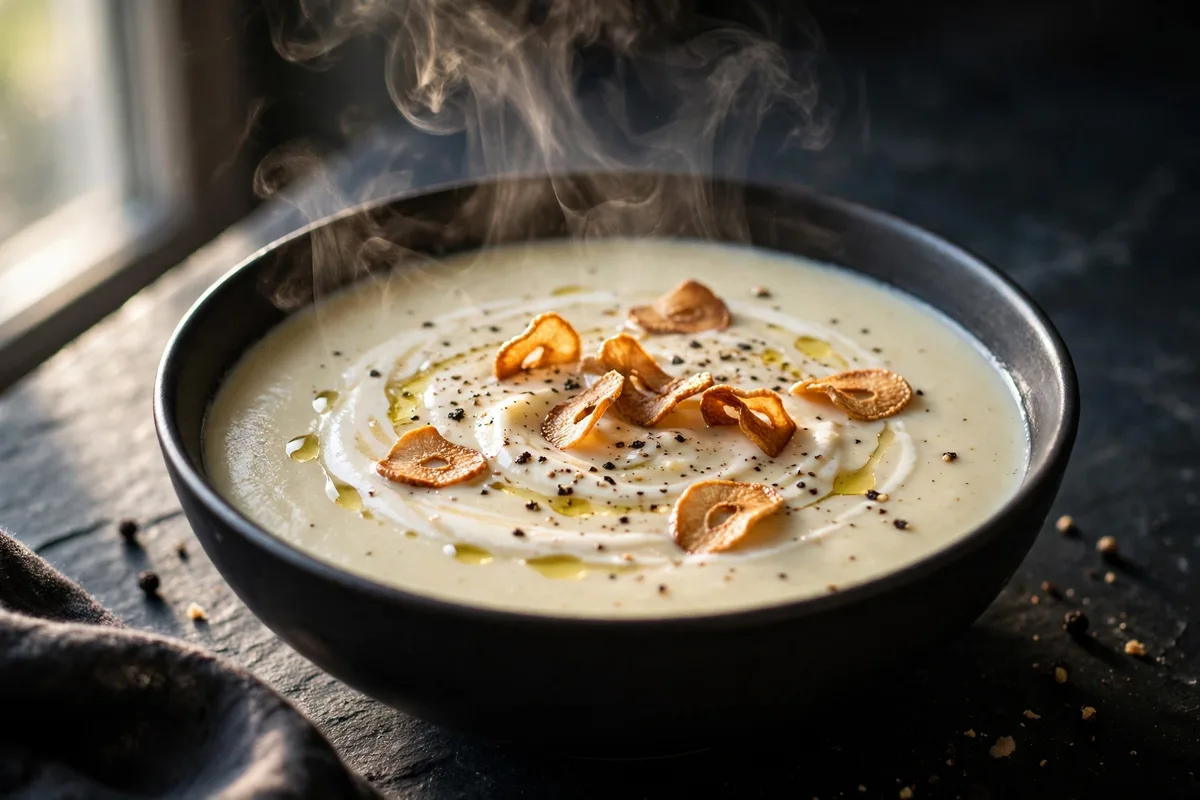
Roast a whole head of cauliflower with a full head of garlic (skin on) in olive oil at 400°F for 25 minutes, then blend with warm chicken broth, two tablespoons of butter, and a quarter cup of cream until completely smooth. This is a different take from the loaded version in our cauliflower soup collection — silkier, simpler, and built around the roasted garlic.
5. Zucchini Basil Coconut Soup (~3g net carbs, dairy-free)
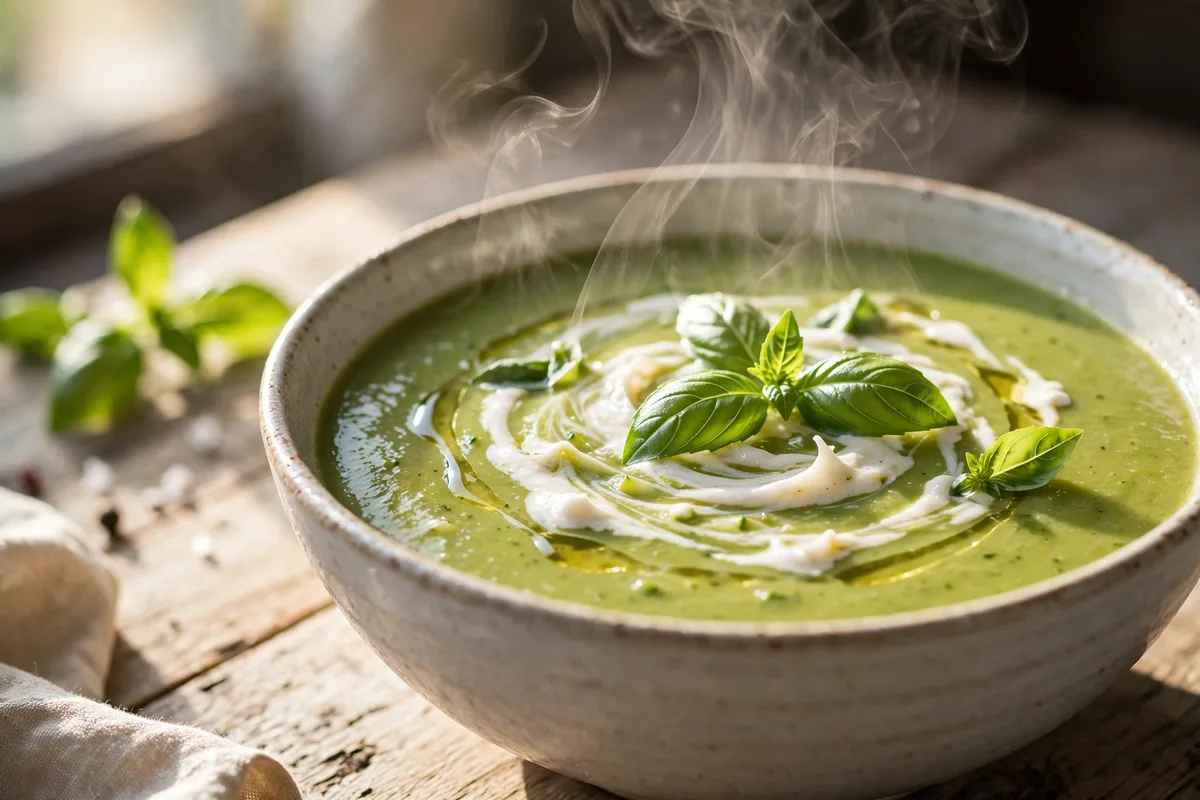
Sauté two diced zucchini with garlic, add two cups of vegetable or chicken broth, simmer 15 minutes, then blend with half a cup of canned coconut milk and a big handful of fresh basil. Zucchini runs about 2g of net carbs per cup, so the whole pot stays remarkably light.
6. Ginger Egg Drop Soup (~2g net carbs)

The lowest-carb bowl here, and the fastest: ten minutes, start to finish. Bring three cups of chicken broth to a bare simmer with sliced ginger and a splash of soy sauce, then drizzle in three beaten eggs while stirring slowly so they form silky ribbons instead of clumps. Each egg contributes less than a gram of carbs. Finish with sliced scallions and a few drops of sesame oil.
📌 Found your favorite bowl?
Pin these keto soup recipes to your low-carb board — the net-carb table is worth keeping handy for meal planning.
How to Make Any Soup Keto: 5 Swaps
You don’t need a special recipe to eat keto soup — you need the right substitutions. These five swaps turn almost any conventional soup into keto soup recipes you can make on repeat:
- Cauliflower for potatoes and rice. Riced cauliflower (about 3g net carbs per cup) disappears into brothy soups; blended, it stands in for potato in creamy ones. Same bulk, a fraction of the carbs.
- Zucchini for noodles. Spiralized or thinly sliced zucchini added in the last 3 minutes replaces pasta without the 40g carb penalty.
- Xanthan gum for flour. Whisk in just ¼ teaspoon per quart (about 1 liter) of soup — it thickens without adding measurable carbs. A little goes a long way; too much turns gummy.
- Cream cheese or heavy cream for milk. Milk runs about 12g of carbs per cup; heavy cream is roughly 0.4g per tablespoon. The math isn’t close.
- Check the broth. Choose broths with no added sugar, dextrose, or maltodextrin on the label. Bone broth is the safest default — it’s also the base of most high-protein soup bowls.
The macros are set by the ingredients, not the appliance — which is why these five swaps work across all keto soup recipes.
Keto Soup Mistakes That Add Hidden Carbs
Four traps catch almost everyone cooking keto soup recipes at home. First, canned soup: most canned tomato and vegetable soups contain added sugar or flour — homemade beats canned on keto nearly every time. Second, restaurant soups thickened with flour or cornstarch: a chain’s broccoli cheddar can run 15g+ of carbs per cup. Third, the mirepoix: fine as aromatics, dangerous as bulk — two carrots and a whole onion can add 15g of carbs to a pot. Fourth, the second bowl: at 2–6g per serving these soups are forgiving, but portions still count against your daily budget.
How to Store Keto Soup (Meal Prep)
Soup might be the easiest keto meal prep there is, and these keto soup recipes batch especially well. Refrigerate any of these bowls for 3–5 days in sealed containers; flavors actually improve overnight. Broth-based soups (the chicken, taco, and egg drop) freeze well for up to 6 months — freeze them flat in zip bags in single portions so they thaw in minutes. Skip the freezer for the creamy ones: dairy-based soups can separate when thawed and turn grainy. Reheat gently on low heat and never boil a cream soup, or it may curdle. Any of these is a cozy upgrade to your winter soup rotation, too.
FAQs
What soup can I eat on keto?
Any soup built on bone broth or stock with meat and non-starchy vegetables qualifies — the formula behind all dependable keto soup recipes. Think chicken soup with cauliflower rice, broccoli cheddar, or egg drop. Aim for under 5g of net carbs per serving, and check canned-soup labels: most contain added sugars or flour that break ketosis.
Is tomato soup keto-friendly?
Homemade tomato soup can be keto at roughly 3–6g of net carbs per serving when made with no-sugar-added tomatoes, broth, and cream. Most canned and restaurant tomato soups are not keto — they’re sweetened with added sugar and thickened with flour or cornstarch. If you buy canned tomatoes, choose ones whose ingredient list is just tomatoes, water, and salt.
How do you thicken keto soup without flour?
Whisk in ¼ teaspoon of xanthan gum per quart of soup — it thickens with virtually no carbs, though a little goes a long way. Cream cheese, heavy cream, and beaten egg yolks also add body the keto way. Or blend part of the soup itself: pureed cauliflower or zucchini thickens without any specialty ingredient at all.
Can you eat canned soup on keto?
Usually not. Most canned soups list added sugar, maltodextrin, wheat flour, or cornstarch in the ingredients, any of which can push a single serving past 15g of carbs. A few specialty low-carb brands exist, but read the nutrition label every time. Homemade soup gives you full control over the net carbs and is nearly always the safer choice.
How many net carbs should a keto soup have per bowl?
Aim for under 5g of net carbs in a standard ~1.5-cup bowl — about a tenth of a typical 20–50g daily keto budget, leaving room for the rest of your meals. All six keto soup recipes in this post land between 2g and 6g per bowl, which is why the per-bowl number matters more than a vague “low carb” label.
Final Thought
The best keto soup recipes don’t hide their numbers — they lead with them. Pick one bowl from the table and make it this week; small swaps at the pot change what lands in the bowl.
Which bowl are you making first? Tell us in the comments — and if you loved these, keep exploring: