
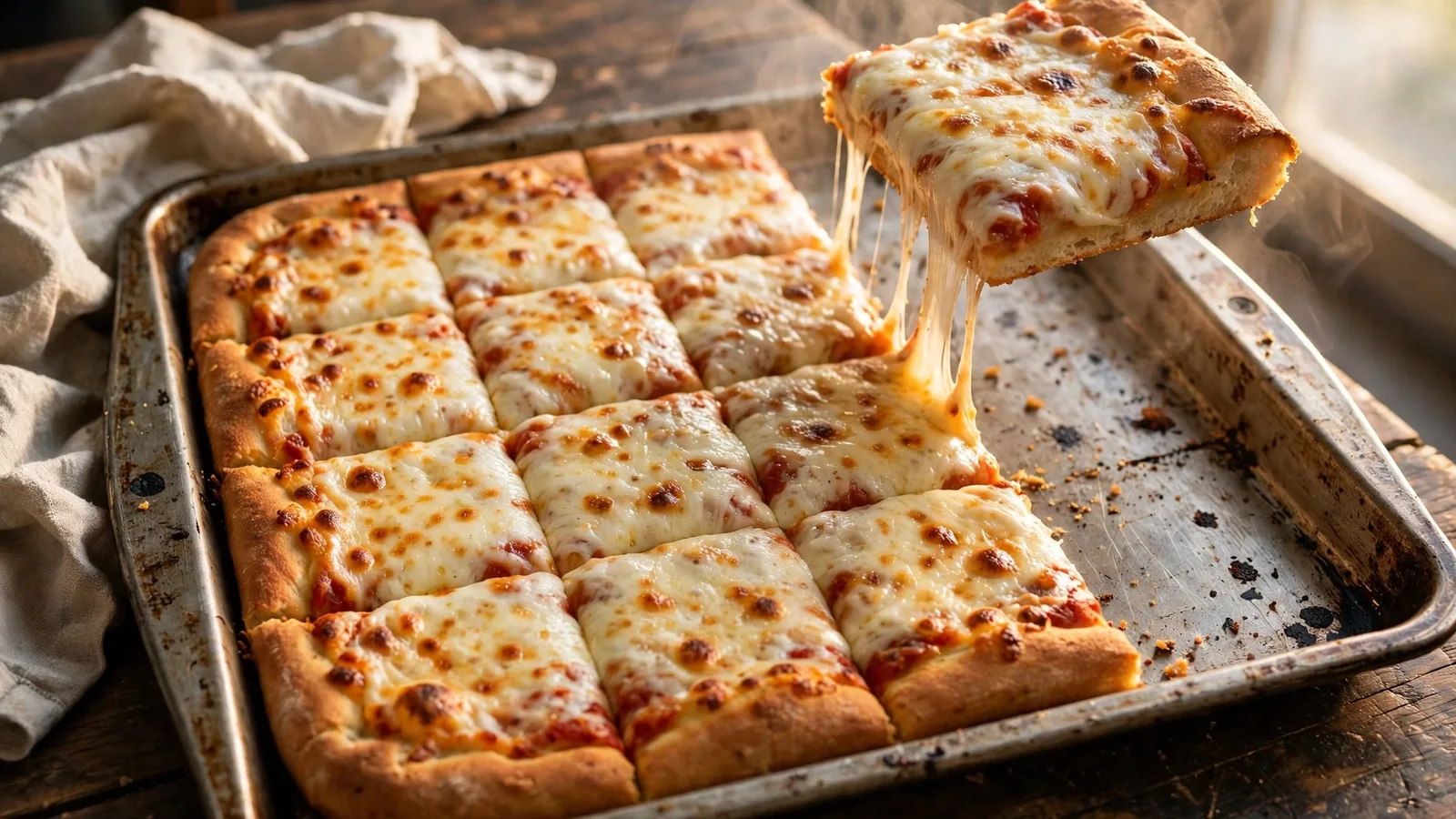
School pizza is the soft, rectangular slice served on cafeteria trays across America — a thick, bready crust baked in a sheet pan, covered edge-to-edge with slightly sweet tomato sauce and mild melted cheese. The authentic version traces back to a 1988 USDA school food-service recipe, and you can recreate it at home in about 90 minutes with a pourable batter dough and one half sheet pan.
Why Does School Pizza Taste Different from Regular Pizza?
School pizza tastes different because it was engineered for a cafeteria, not a pizzeria. The dough is a high-hydration batter you spread with a spatula instead of rolling, which bakes up thick and soft like bread rather than chewy like Italian crust. The cheese was USDA commodity low-moisture part-skim mozzarella — mild, ultra-melty, famously called “government cheese.” (The published profile of that commodity cheese lives on USDA FoodData Central, if you like comparing labels.) Toppings and sauce go all the way to the edge, so there is no crust border to leave behind.
A few concrete details explain the nostalgia. First, the pan: everything is baked in a 13x18x1-inch half sheet pan, which is why the slices are always rectangles. Second, the parbake: the crust is baked plain for 10 minutes before toppings go on, so the thick base sets without turning soggy. Third, the cornmeal dusting under the dough gives the bottom its slightly gritty, golden crunch — the part you probably forgot you missed.
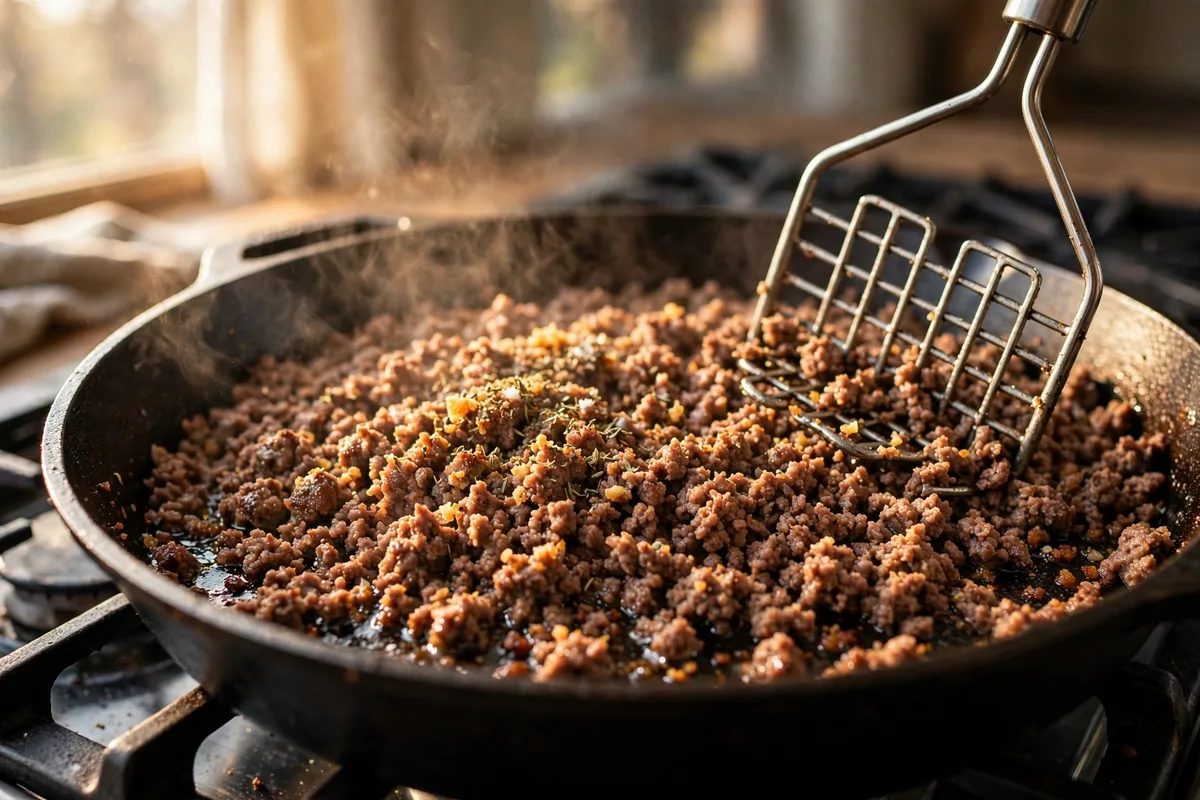
Fourth, the beef. Cafeterias served many school pizza slices with ground beef broken into tiny, uniform crumbles by huge kettle paddles. At home, you can mimic that texture by mashing the beef with a potato masher or pastry cutter while it browns, so you get fine crumbles in every bite instead of big chunks.
Want the full lunch-tray flashback? Serve this alongside our copycat corn nuggets — another school-lunch favorite — with a small cup of ranch and a cold glass of milk.
School Pizza Ingredients
This school pizza recipe follows the USDA-style method used by the best copycat versions: a pourable crust, a simple seasoned sauce, and seasoned beef under a blanket of cheese. It makes 12 rectangular slices.
For the crust
- 1 tablespoon shortening or neutral oil, for the pan
- 1 1/2 tablespoons cornmeal, for dusting the pan
- 1 packet (2 1/4 teaspoons) instant yeast
- 1 2/3 cups warm water (110°F — warm to the touch, not hot)
- 2 1/2 cups all-purpose flour
- 3/4 cup dry milk powder
- 2 tablespoons granulated sugar
- 1/4 teaspoon salt
- 1 1/2 teaspoons vegetable oil
For the sauce
- 1 can (8 ounces) tomato sauce
- 2 tablespoons tomato paste
- 1 tablespoon Italian seasoning
- 1/4 teaspoon garlic powder
- 1/4 teaspoon onion powder
- Pinch of black pepper
- 1/2 teaspoon sugar
For the topping
- 1 pound ground beef
- 1 teaspoon garlic powder
- 1 teaspoon onion powder
- 1 teaspoon Italian seasoning
- Salt and pepper, to taste
- 3 cups shredded low-moisture mozzarella
- 1/2 cup shredded mild cheddar (optional, for the classic golden blend)
How to Make School Pizza
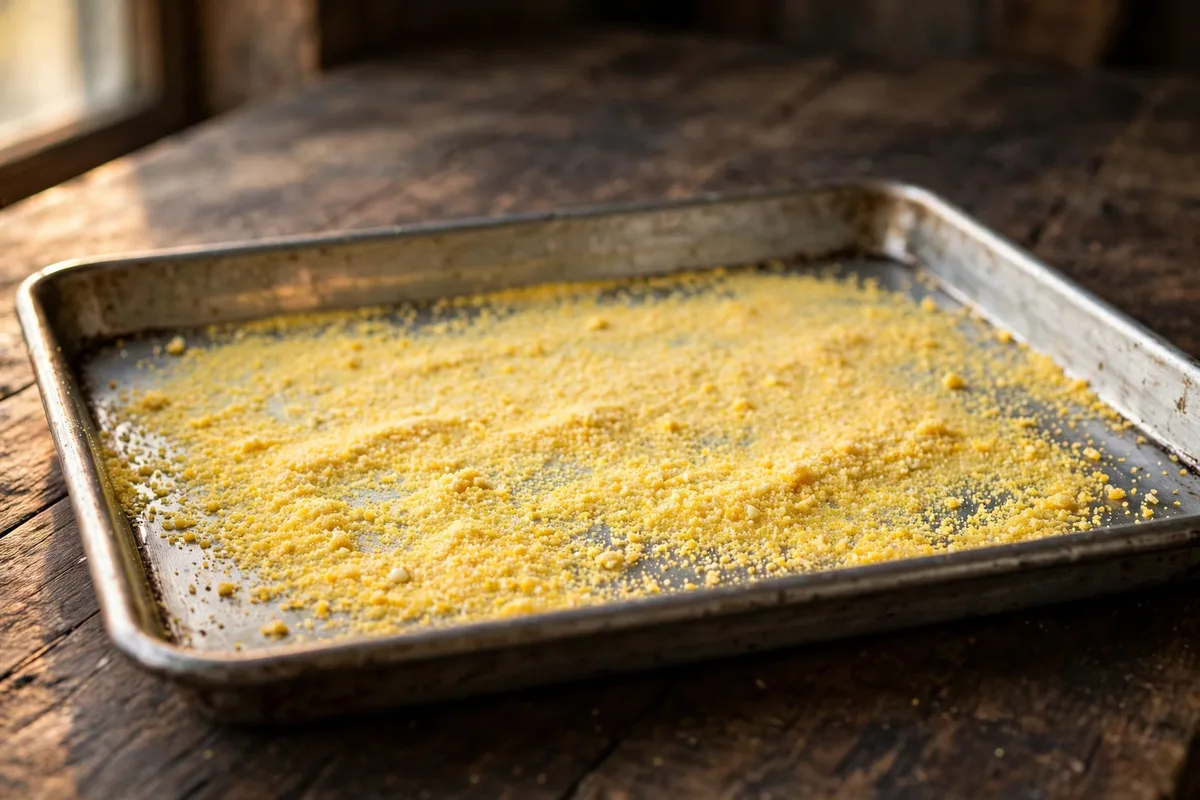
- Prep the pan. Heat the oven to 475°F. Coat a half sheet pan (13x18x1 inch) with the shortening or oil, then sprinkle the cornmeal over it and tilt the pan so the bottom is evenly dusted. The cornmeal keeps the thick crust from sticking and gives the bottom its signature crunch.

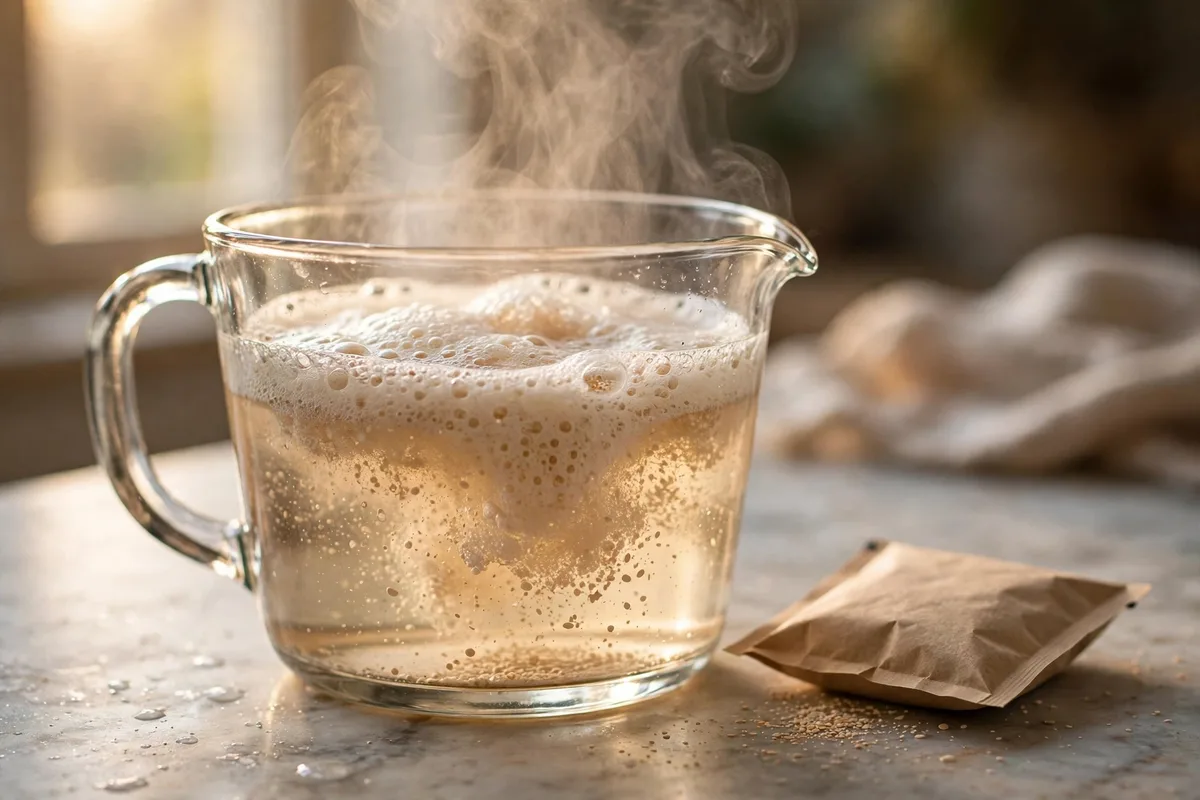
- Start the yeast. Pour the warm water into a large mixing bowl and sprinkle the yeast over it. Let it stand for about 5 minutes, until it looks slightly foamy. If the water is too hot it will kill the yeast, so aim for bathwater-warm.
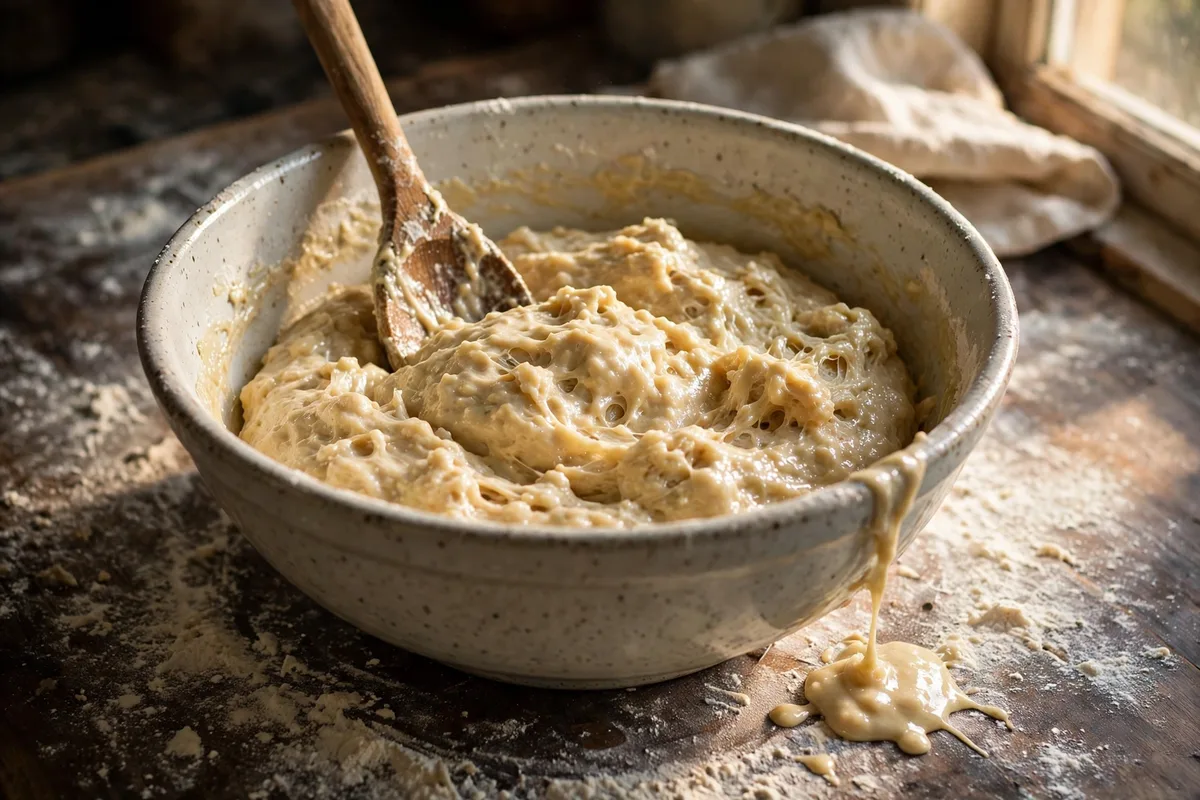
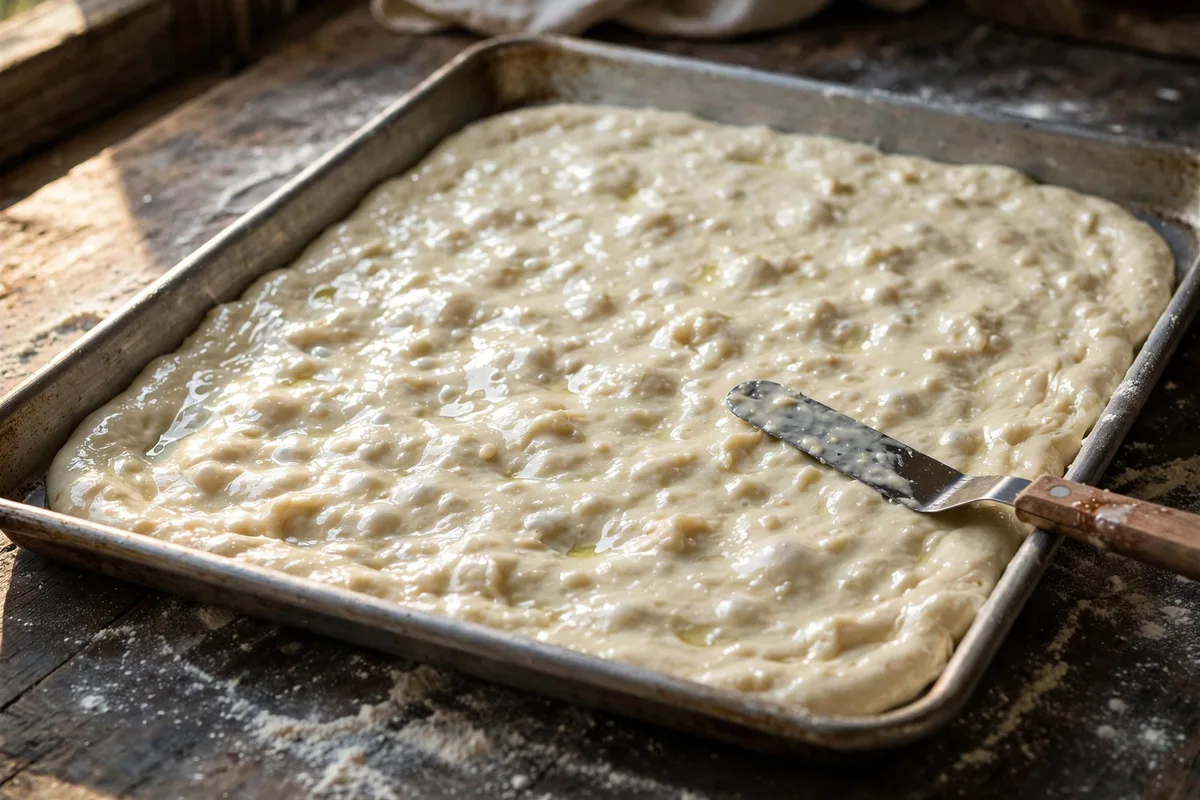
- Mix the batter dough. Add the flour, dry milk powder, sugar, salt, and oil to the yeast mixture. Beat for about 8-10 minutes (a stand mixer on low or a sturdy wooden spoon) until you have a loose, sticky batter. It should pour and spread — a few small lumps are completely fine. Do not add extra flour to make it look like regular dough; the wet batter is what bakes up soft and bready.
- Spread and rest. Scrape the batter into the prepared pan and use an oiled spatula or your hands to spread it all the way into the corners. Let it rest for 20 minutes while the oven finishes preheating. The short rest lets the yeast wake up and the batter relax into the pan.
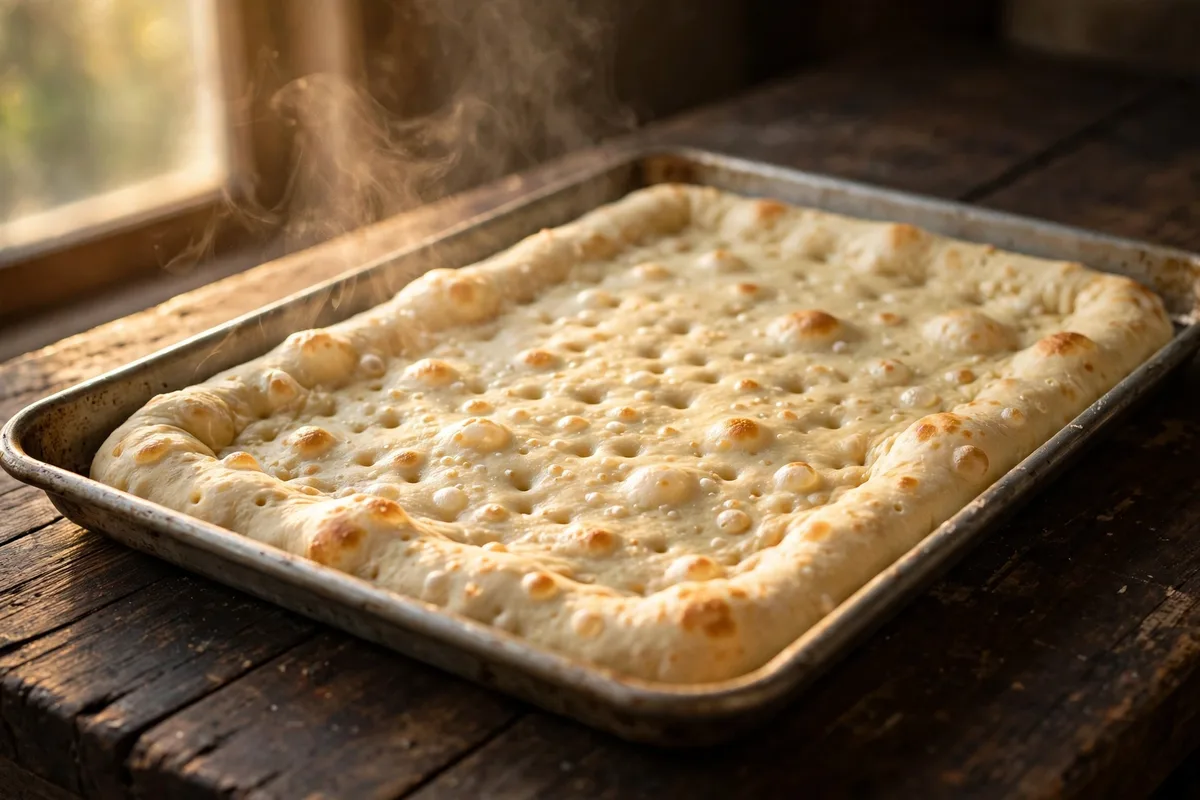
- Parbake the crust. Bake the plain crust for 10 minutes, until it looks just set and dry on top. This firms up the thick base so the sauce and cheese cannot make it soggy.
- Brown the beef. While the crust bakes, cook the ground beef in a large skillet over medium-high heat. Season with the garlic powder, onion powder, Italian seasoning, salt, and pepper. Break the meat into very fine crumbles with a potato masher or pastry cutter as it cooks — tiny, even crumbles are the authentic school look. Drain off all the fat.
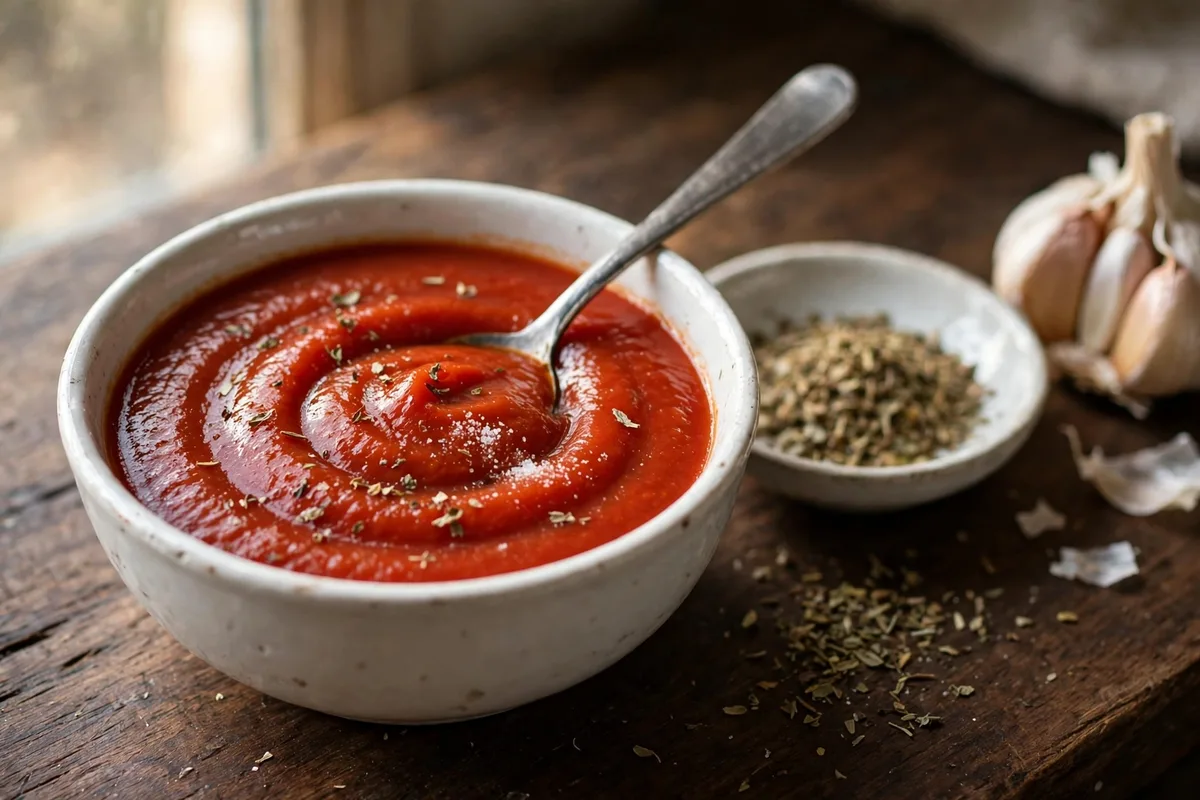
- Mix the sauce. Stir the tomato sauce, tomato paste, Italian seasoning, garlic powder, onion powder, black pepper, and sugar together in a small bowl. Taste it — it should be simple and slightly sweet, the way you remember it. Add another pinch of sugar if it tastes too sharp.
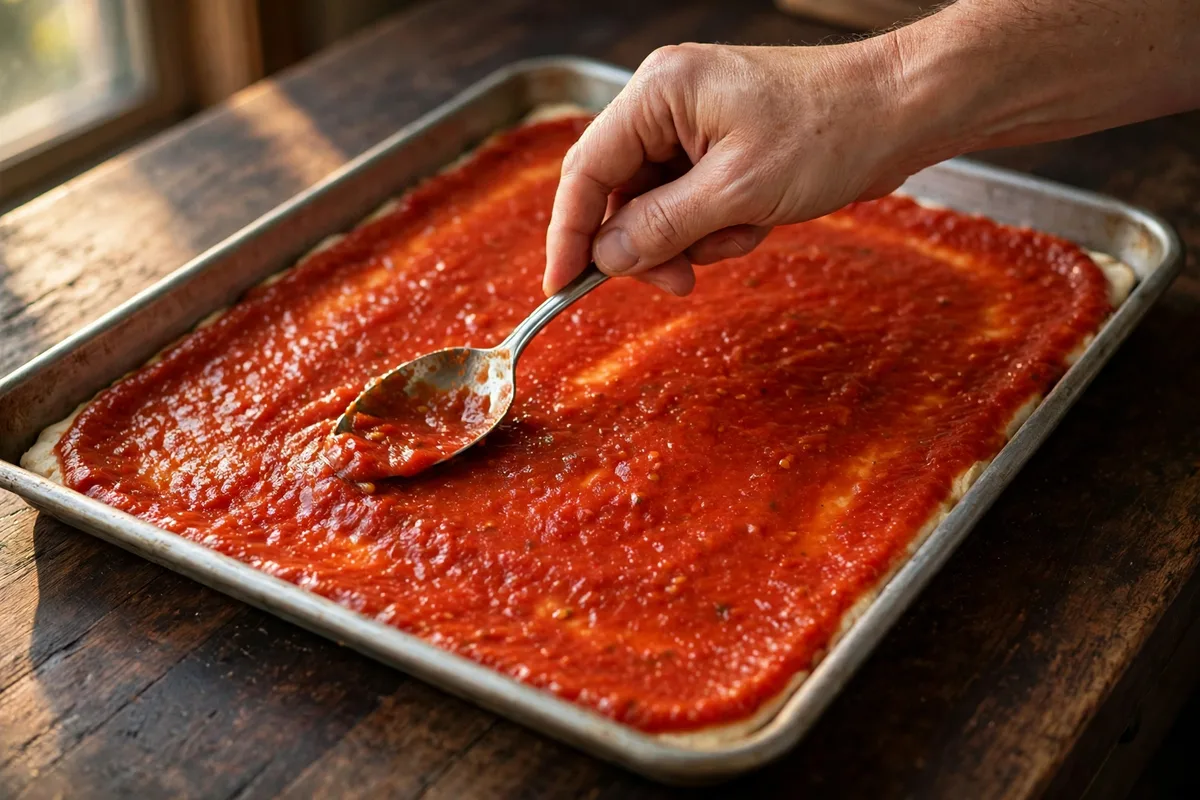
- Sauce the crust. Spread the sauce over the parbaked crust, going all the way to the edges. No border — that edge-to-edge coverage is the hallmark of the real thing, and it means every rectangular slice is all topping.
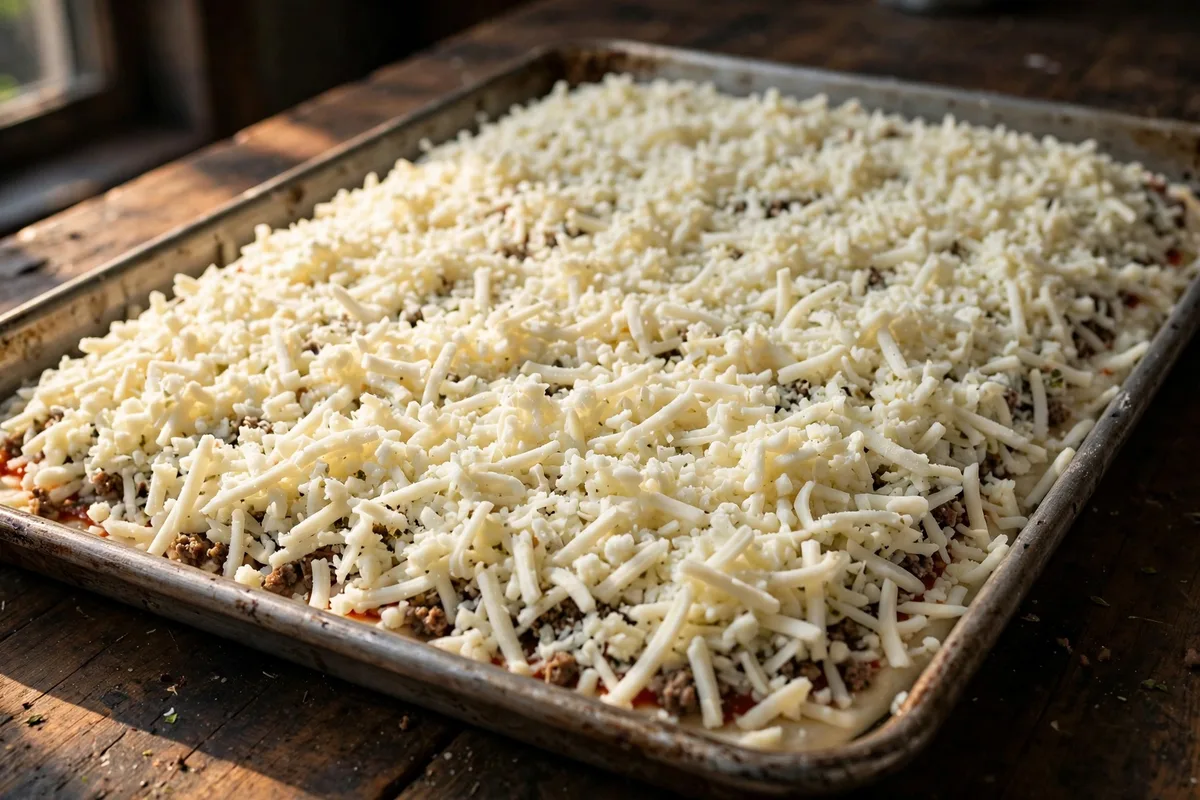
- Add beef and cheese. Scatter the cooked beef evenly over the sauce, then cover everything with the mozzarella and the optional cheddar, again spreading the cheese to the very edges. Generous is the word here; the cheese layer should completely hide the sauce.
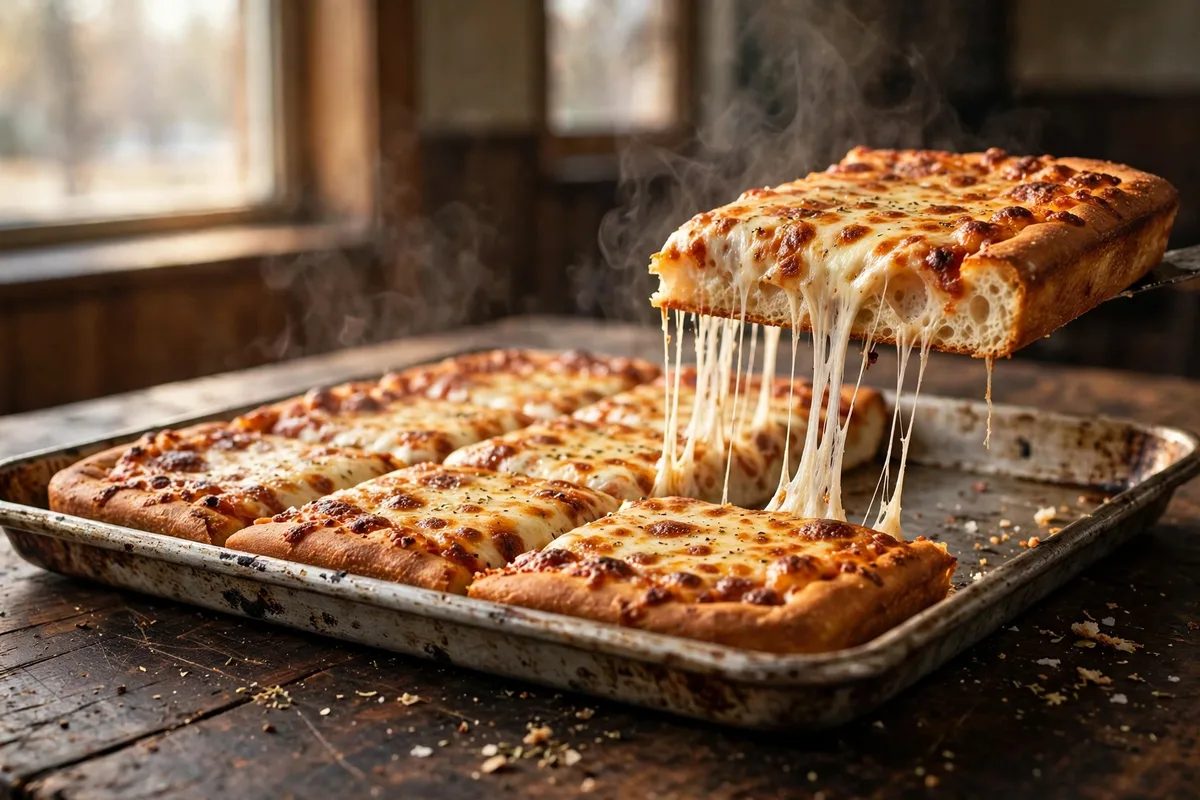
- Bake and cut. Return the pan to the 475°F oven and bake for 10-15 minutes, until the cheese is melted, bubbly, and just starting to brown at the edges. Let it rest for 5 minutes so the cheese sets and the slices cut cleanly, then cut into 12 rectangles and serve warm.
Tips for the Most Authentic Cafeteria Slice
Shred your own mozzarella if you can. Pre-shredded cheese is coated with starch to stop clumping, and that coating dulls the melt. A block of low-moisture mozzarella run through a box grater melts into the smooth, glossy blanket you remember.
Do not skip the cornmeal. It looks like a small detail, but it is the difference between a soft-bottomed slice and one with that lightly gritty, golden underside. Semolina flour works as a substitute if cornmeal is not on hand.
If sheet-pan baking is new to you, King Arthur Baking’s whole-wheat pizza crust recipe uses the same half-sheet-pan method and is a good confidence-builder before you start this one.
Use a rimmed half sheet pan, not a jelly roll pan with low sides — the taller rim keeps the batter from creeping and the cheese contained. If the bottom of your crust turns out greasy, the oven was not fully preheated; the crust needs to hit 475°F heat instantly instead of sitting in the pan oil.
This is a natural fit for your weeknight comfort-food rotation: one pan of school pizza feeds a crowd of six to eight, and the leftovers reheat beautifully. If cozy, crowd-friendly dinners are your thing, browse our comfort food recipes for more ideas in the same spirit.
Love this copycat? Save it for pizza night!
Pin this school pizza recipe so you always have pizza day on demand.
Variations to Try Next
Classic cheese: Skip the beef and double down on the cheese blend — mozzarella plus cheddar plus a handful of shredded American cheese gets you closest to that retro “government cheese” flavor.
Sausage: Swap the ground beef for 1 pound of mild Italian sausage, browned and drained well. Sausage was the other standard cafeteria topping, and it pairs beautifully with the sweet sauce.
Pepperoni: Lay pepperoni over the sauce before the cheese, the way pizzerias do — the cheese bakes over the pepperoni and the cups hold little pools of flavor.
Veggie: Keep the base identical and add sautéed mushrooms, diced bell peppers, and cooked onions. Add the vegetables under the cheese so they stay tender and the cheese still melts into one smooth layer.
For more crowd-pleasing dinners in this vein, our easy comfort food recipes roundup is a good next stop.
Storing, Freezing, and Reheating Leftovers
Cool the leftover school pizza slices, then refrigerate them in an airtight container for up to 3 days. For longer storage, freeze baked slices in a single layer until firm, then stack them with parchment paper between the slices. They keep for up to a month in the freezer.
Reheat on a sheet pan at 350°F until the cheese softens and the bottom feels warm, or from frozen at 375°F until hot in the center. A skillet over medium heat also works and gives you the crispiest bottom. Skip the microwave — it turns the thick crust rubbery and sad.
FAQs
Why did school pizza taste so good?
It was built for comfort, not authenticity. A thick, bready sheet-pan crust, a simple slightly sweet tomato sauce, and a mild low-moisture mozzarella blend baked edge-to-edge in industrial ovens gave it a soft-yet-crisp texture. Eating it on a lunch tray with your friends at age nine did the rest.
What kind of cheese was used on school pizza?
Most USDA school recipes called for low-moisture part-skim mozzarella, chosen for its reliable melt and low cost. Some districts blended in provolone or cheddar. To copy that retro flavor at home, mix shredded mozzarella with mild cheddar — and for the truest throwback, add a little shredded American cheese.
How do I reheat school pizza so it tastes fresh?
Reheat slices on a sheet pan at 350°F until the cheese softens and the base warms through. A hot skillet over medium heat gives an even crispier bottom, and a toaster oven or air fryer works too. Avoid the microwave — it makes the thick crust soggy instead of reviving the crisp edges.
Can I freeze school pizza slices?
Yes. Cool the baked slices, freeze them in a single layer until firm, then stack them with parchment paper between the slices and store up to one month. Reheat straight from frozen on a sheet pan at 375°F until hot in the center — no thawing needed.
Did this school pizza take you back to the lunch line?
Tell us in the comments: was your school a ground-beef pizza school or a sausage pizza school — and what was the side you always grabbed with it?
Keep cooking: